





India–New Zealand Free Trade Agreement: Opening New Horizons for Indian Exports
Landmark trade pact promises 100% zero-duty access to the New Zealand market, creating fresh opportunities for Indian exporters, farmers, MSMEs and service providers while strengthening India’s global trade ambitions.
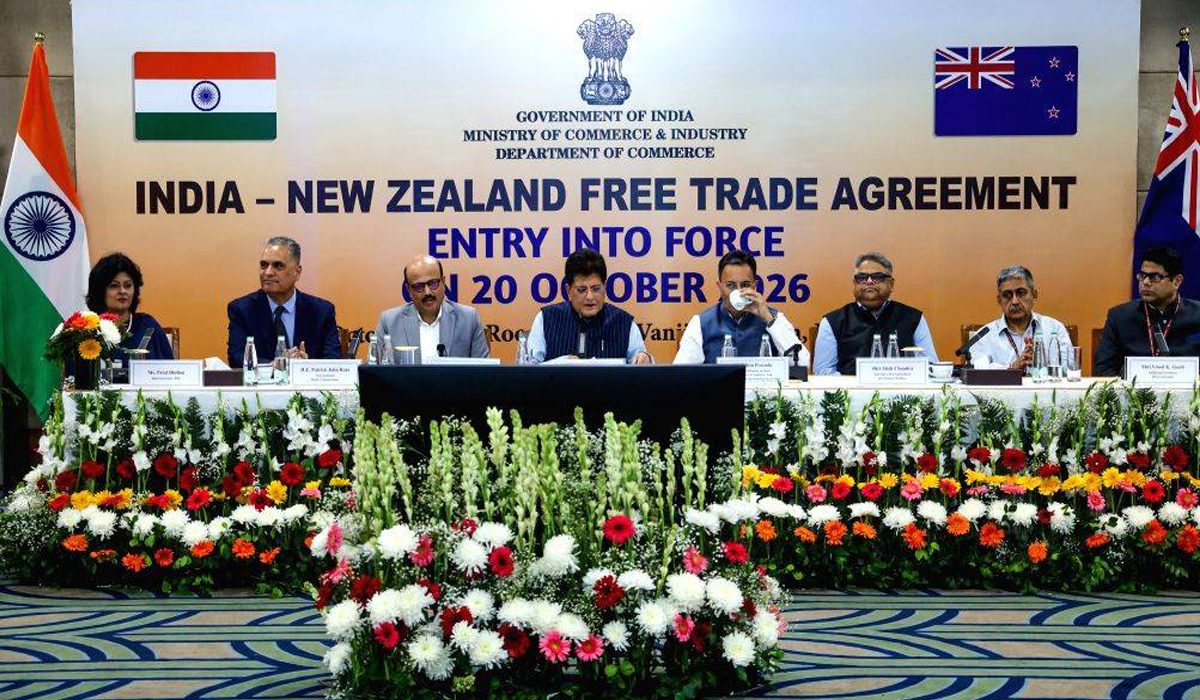
Signed on 27 April 2026 at Bharat Mandapam, New Delhi, the India–New Zealand Free Trade Agreement (FTA) entered into force on 20 October 2026, marking a significant milestone in bilateral economic relations. With 100% zero-duty access to the New Zealand market for Indian exports, the landmark agreement is expected to unlock new opportunities for Indian exporters, farmers, micro, small and medium enterprises (MSMEs), and service providers.
At Vanijya Bhawan in New Delhi, the Commerce Secretary highlighted the agreement’s potential to strengthen export competitiveness, expand market access and advance India’s global trade ambitions
With 100% zero-duty access to the New Zealand market for Indian exports, the agreement represents a major opportunity for Indian businesses seeking to expand their international footprint, improve export competitiveness and access new consumer markets.
A New Chapter in India’s Export Growth
Free trade agreements play a vital role in connecting domestic industries with international markets by reducing tariff barriers and creating more favourable conditions for cross-border commerce. The India–New Zealand FTA is expected to strengthen this process by enabling Indian exporters to compete more effectively in the New Zealand market.
The proposed benefits extend across a broad range of Indian industries, creating opportunities for businesses to explore new export destinations, diversify their customer base and build long-term commercial partnerships.
For Indian exporters, zero-duty access can help reduce the tariff component of landed costs, potentially making products more competitive in the destination market. The extent of the benefit will, however, depend on factors such as production costs, freight charges, compliance requirements, product standards and the ability of exporters to meet local demand.
Opportunities for Indian Farmers and Agricultural Exports
India’s agricultural sector stands to gain from improved access to international markets, particularly as producers and exporters seek to diversify destinations for their products.
The agreement presents opportunities for eligible Indian agricultural and processed food products to reach New Zealand consumers under more favourable tariff conditions. Exporters may explore market demand for products such as spices, tea, coffee, rice, processed foods and other agricultural goods, subject to the agreement’s product coverage and applicable import requirements.
For farmers, producer organisations and agricultural businesses, stronger export linkages can support value addition, encourage quality improvements and create opportunities to participate in international supply chains.
Realising these benefits will require continued attention to food safety, phytosanitary requirements, traceability, packaging and international quality standards. Export readiness and compliance will be essential to converting improved market access into sustainable commercial gains.
MSMEs: Expanding Beyond Domestic Markets
India’s MSMEs are an important pillar of the country’s manufacturing and export ecosystem. However, many smaller businesses face challenges in entering overseas markets, including limited market information, high logistics costs, complex regulatory procedures and difficulties in identifying international buyers.
The India–New Zealand FTA could help create a more favourable environment for MSMEs seeking to expand their global operations. Businesses in sectors such as textiles, apparel, handicrafts, engineering goods, leather products, processed foods and selected manufactured products may explore opportunities in the New Zealand market, depending on the agreement’s tariff schedules and applicable rules.
Improved market access can also encourage Indian enterprises to invest in product development, quality certification, digital marketing and international distribution networks.
To capitalise on these opportunities, MSMEs will need access to reliable trade information, export finance, buyer networks and practical guidance on customs procedures and regulatory compliance. Collaboration among government agencies, export promotion councils, industry associations and financial institutions will remain important in helping smaller enterprises participate in international trade.
Services and New Business Partnerships
Beyond merchandise exports, services represent another important dimension of India’s international trade ambitions. Indian companies and professionals have established capabilities in areas such as information technology, business services, consulting, education and other knowledge-based activities.
The agreement may create additional avenues for bilateral commercial engagement in services, subject to its specific commitments and applicable domestic regulations. Greater engagement could encourage partnerships between Indian and New Zealand businesses, facilitate professional exchanges where permitted and support collaboration in technology-driven industries.
For Indian service providers, understanding the agreement’s provisions on market access, professional requirements and regulatory procedures will be important in identifying commercially viable opportunities.
Strengthening Bilateral Economic Relations
The India–New Zealand FTA also carries broader strategic significance. By strengthening the framework for bilateral trade, the agreement can support closer business engagement, encourage investment and contribute to more diversified economic partnerships.
For New Zealand, stronger commercial engagement with India offers opportunities to deepen its economic relationship with one of the world’s major markets. For India, improved access to New Zealand complements its wider efforts to expand export destinations, strengthen international trade partnerships and enhance the competitiveness of domestic industries.
The agreement also highlights the growing importance of trade diplomacy in advancing economic cooperation. Modern trade agreements increasingly serve not only as instruments for tariff reduction but also as frameworks for building commercial relationships, improving market access and encouraging long-term collaboration between businesses.
Turning Market Access into Export Success
While tariff-free access creates an important foundation, the long-term success of the agreement will depend on how effectively Indian businesses use the opportunities available to them.
Exporters should undertake detailed market research, identify suitable product categories, assess consumer preferences and develop relationships with importers and distributors in New Zealand. They should also examine the agreement’s rules of origin, product-specific tariff schedules, customs procedures and relevant technical and sanitary requirements before making commercial decisions.
Export promotion councils and industry bodies can play a key role by facilitating buyer–seller meetings, providing market intelligence and helping businesses navigate documentation and compliance requirements. Digital commerce platforms and targeted trade missions may further help Indian enterprises connect with prospective overseas customers.
For MSMEs and first-time exporters in particular, practical support and awareness will be crucial to ensuring that the benefits of the agreement extend beyond large companies to a wider cross-section of India’s business community.
A Promising Outlook for India’s Global Trade Ambitions
The India–New Zealand Free Trade Agreement marks an important development in India’s pursuit of stronger export growth and deeper integration with international markets. The prospect of 100% zero-duty access to New Zealand offers a significant opportunity for Indian exporters to explore new markets, diversify their business operations and build lasting commercial relationships.
As the agreement’s provisions are implemented and businesses begin to assess their opportunities, its impact will ultimately be measured by the extent to which improved market access translates into higher exports, stronger participation by MSMEs, greater value addition and sustainable employment.
For India’s export and import sector, the agreement sends a clear message: international trade partnerships can create new avenues for growth when supported by competitive industries, effective trade facilitation and informed business participation.
The next step is to turn preferential market access into tangible commercial success—enabling Indian products, services and enterprises to reach new customers and strengthen India’s position in global trade.