




Egypt and India Move to Accelerate Plans for First Indian Industrial Zone in Suez Canal Economic Zone
Egypt and India are stepping up efforts to establish the first Indian industrial zone within the Suez Canal Economic Zone (SCZONE), as the two countries seek to expand joint manufacturing, attract new investments and strengthen their economic partnership.
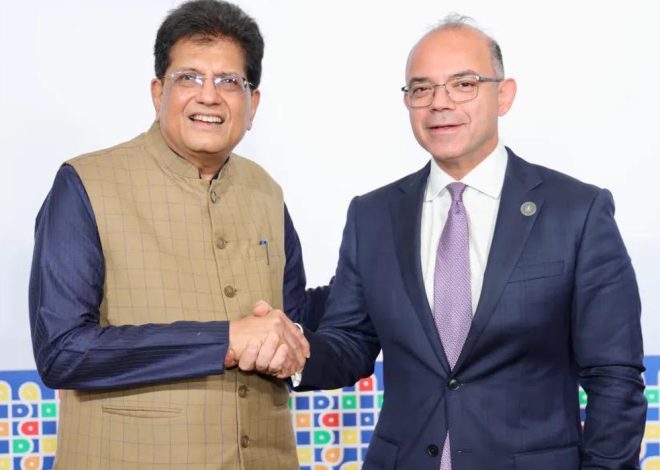
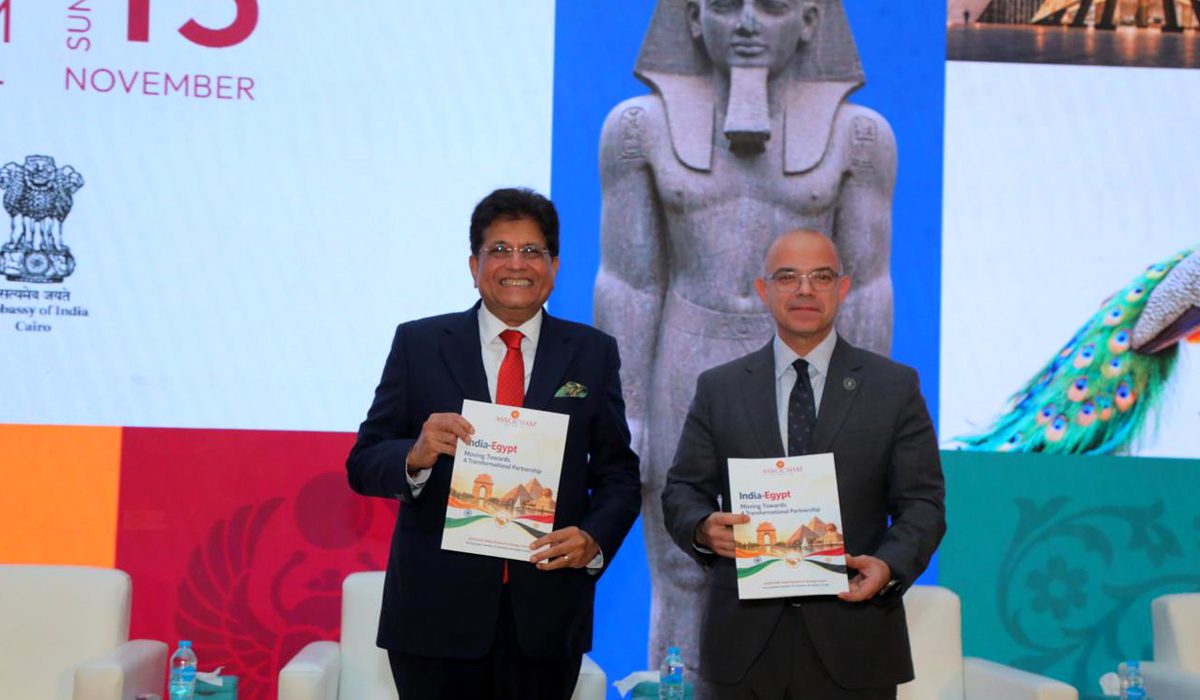
The proposed industrial zone was among the key issues discussed during the seventh session of the India-Egypt Joint Trade Committee and the India-Egypt Business Forum, co-chaired in Egypt's New Administrative Capital by Egyptian Minister of Investment and Foreign Trade Mohamed Farid Saleh and India's Minister of Commerce and Industry Piyush Goyal.
Speaking at the events, Farid said both countries were working to accelerate the steps required to establish the industrial zone, which is expected to create new opportunities for Indian companies to invest in Egypt and benefit from its strategic location and access to regional and international markets.
The project is intended to leverage Indian expertise and technology in several priority industries, including renewable energy, green hydrogen, energy storage, pharmaceuticals and data centers. It is also expected to support technology transfer, localize industrial production and increase the added value of manufacturing activities in Egypt.
Farid highlighted the strong political momentum underpinning bilateral economic relations, noting that closer ties between Egyptian President Abdel Fattah El-Sisi and Indian Prime Minister Narendra Modi had given trade and investment cooperation a significant boost and strengthened the shared vision for the partnership.
He stressed the importance of translating the longstanding friendship between the two countries into concrete projects and business partnerships that support development and deliver tangible benefits to both peoples.
Bilateral trade target set at US$12 billion by 2030
The Egyptian minister said Cairo and New Delhi aim to increase bilateral trade from US$6.5 billion in the 2025–2026 financial year to US$12 billion by 2030, with a focus on sectors offering significant potential for economic complementarity.
Priority areas include renewable energy, battery storage, automotive manufacturing, agricultural products, food processing and pharmaceuticals, as well as tourism, information technology, artificial intelligence and cybersecurity.
Farid also announced the activation of cooperation between Egypt's General Authority for Investment and Free Zones (GAFI) and India's Invest India to establish a joint investment information platform.
The proposed platform is designed to help companies identify available investment opportunities, access relevant data and turn initial proposals into viable projects, thereby facilitating stronger business links and encouraging investment flows in both directions.
He emphasized that Egypt represents a strategic platform for Indian investors seeking to expand into regional markets, benefiting from its geographic position, infrastructure and trade agreements that provide access to more than 1.5 billion consumers across Africa, the Arab world and Europe.
The minister added that the eighth session of the Joint Trade Committee, scheduled to take place in New Delhi in 2028, would provide an opportunity to assess progress in implementing the agreements and action plans reached during the current round.
India sees Egypt as a regional economic gateway
For his part, Indian Minister of Commerce and Industry Piyush Goyal reaffirmed India's leadership's commitment to deepening trade and investment cooperation with Egypt, describing the country as an important economic and commercial hub connecting Africa, Asia and Europe.
Goyal highlighted the depth of historical and commercial relations between the two nations and called on business communities in both countries to strengthen partnerships and pursue joint ventures that would take bilateral economic relations to a higher level.
He also expressed India's readiness to present recent developments in Egypt's investment and trade environment to Indian businesses, encouraging them to explore the opportunities available in the Egyptian market.
The Indian minister praised Egypt's free zone and investment zone systems, describing them as aligned with the needs of Indian investors. He further noted that the complementary structures of the two economies offered promising opportunities for cooperation, particularly in medical and pharmaceutical industries, engineering, food processing and financial technology.
The discussions reflect a broader effort by Cairo and New Delhi to translate growing political engagement into practical economic initiatives, with the proposed Indian industrial zone in the Suez Canal Economic Zone emerging as a key potential driver of investment, manufacturing cooperation and stronger regional supply chains.
About the Author