


Egypt Pledges Full Support to Indian Companies Seeking to Expand Investments in the Country
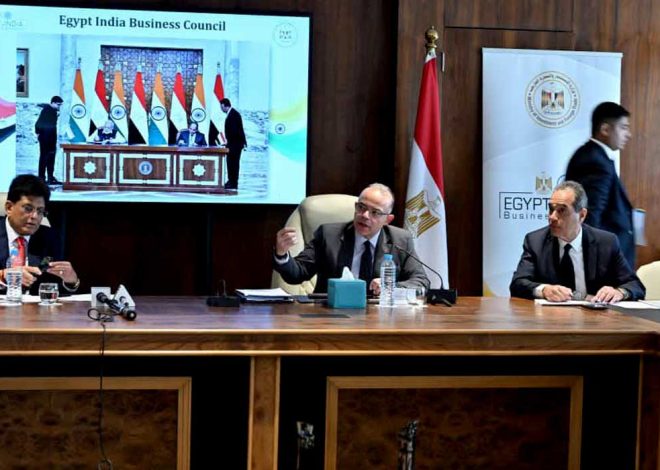
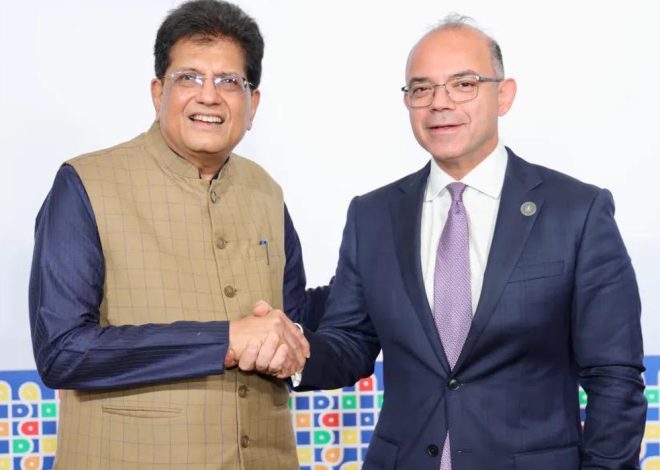
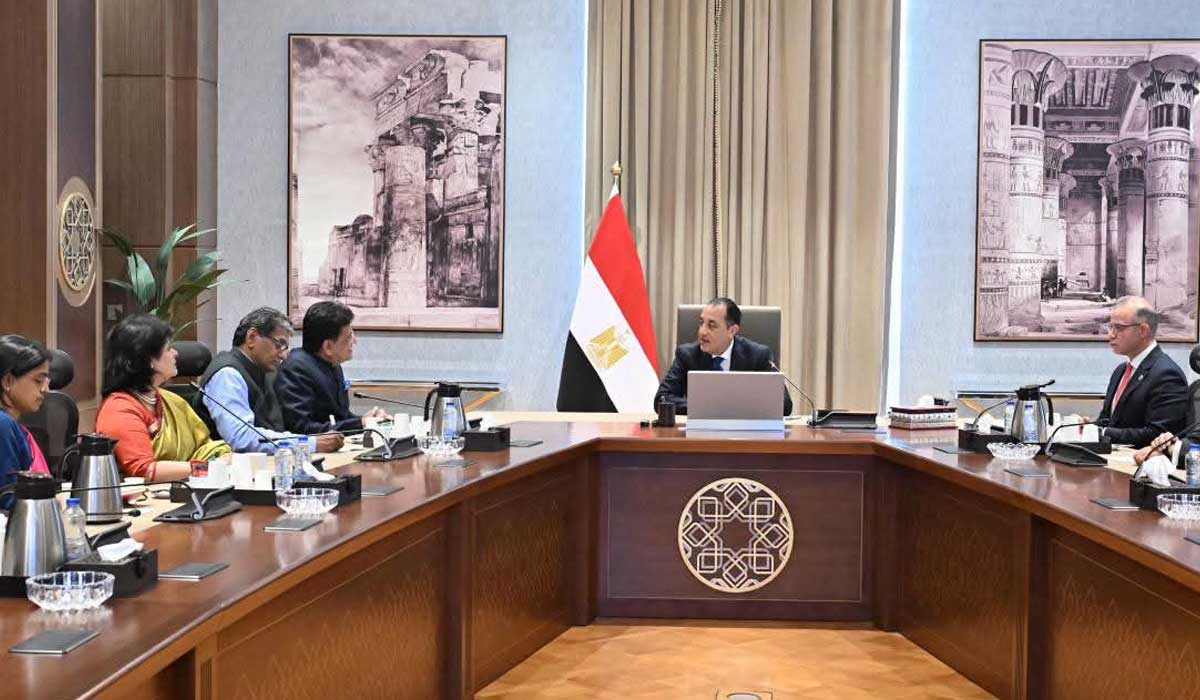
Egyptian Prime Minister Mostafa Madbouly met with India's Minister of Commerce and Industry, Piyush Goyal, in the New Administrative Capital to discuss ways of strengthening economic, trade and investment ties between the two countries, as Cairo and New Delhi seek to translate their strategic partnership into broader economic cooperation and joint investment opportunities.
The meeting, held at the Cabinet headquarters, brought together Egypt's Minister of Investment and Foreign Trade Mohamed Farid, Head of the Commercial Representation Authority Abdel Aziz El-Sherif, Head of the Export Development Authority Hatem El-Nawawi, India's Ambassador to Egypt Suresh K. Reddy, and India's Assistant Minister of Commerce, Petal Dillon.
Madbouly welcomed Goyal and the accompanying delegation, underscoring Egypt's appreciation of its longstanding historical ties with India. He noted that bilateral relations had reached a new milestone with their elevation to the level of a strategic partnership in 2023, reflecting the strong bonds between the two countries and the commitment of their leaderships to expanding cooperation.
He also highlighted the positive impact of the close relationship between Egyptian President Abdel Fattah El-Sisi and Indian Prime Minister Narendra Modi on bilateral ties, expressing appreciation for his previous meetings with the Indian leader and conveying his greetings to him.
The Egyptian Prime Minister said Goyal's visit reflected the shared determination to build on the progress achieved in political relations and expand economic and commercial engagement, particularly by strengthening links between the Egyptian and Indian business communities.
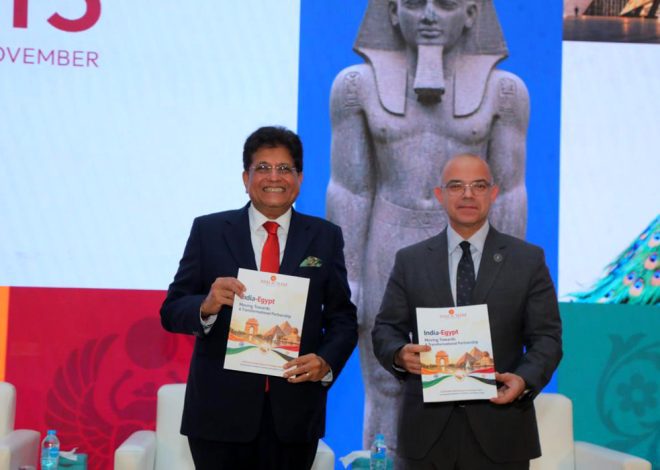
In this regard, Madbouly welcomed Egypt's hosting of the seventh session of the Egypt-India Joint Trade Committee and the Egypt-India Business Forum, describing them as important platforms for connecting companies and economic institutions, identifying promising investment and trade opportunities, and translating them into tangible projects and partnerships.
Ambitious target for bilateral trade
Highlighting the growing economic relationship, Madbouly said bilateral trade between Egypt and India reached approximately $6.6 billion in 2025. He stressed that the two countries possess considerable potential to expand trade flows, expressing Egypt's ambition to double bilateral trade to around $12 billion in the coming years through intensified joint efforts and greater private-sector engagement.
Indian investments in Egypt currently stand at approximately $4.5 billion, according to the Prime Minister, who reaffirmed the government's commitment to supporting Indian companies operating in the Egyptian market, facilitating the expansion of their existing businesses and attracting additional Indian investors.
Madbouly cited the successful presence of several major Indian companies in Egypt, including TCI Sanmar, Aditya Birla and Uflex. He noted that a substantial share of Indian investment is concentrated in the chemical and petrochemical industries, while considerable opportunities remain for expanding into other sectors, drawing on India's diverse industrial expertise and capabilities.
The Prime Minister also recalled visits to several factories and industrial facilities owned and operated by Indian investors in Egypt, praising their contribution to the national economy and stressing the importance of encouraging further expansion of their activities.
He reiterated that the Egyptian government is working to improve the country's investment climate through institutional and legislative reforms, streamlined procedures and measures to address investors' challenges, with the aim of enhancing the competitiveness of the Egyptian economy and attracting more foreign direct investment.
Expanding cooperation across strategic sectors
Madbouly identified several priority areas for Egyptian-Indian cooperation, including food security, information and communications technology, pharmaceuticals and healthcare, renewable energy, textiles and spinning, automotive manufacturing and components, as well as the chemical industries.
He emphasized the importance of strengthening industrial integration and capitalizing on the respective competitive advantages of both economies.
The Prime Minister further highlighted Egypt's strategic position as a gateway for Indian companies seeking access to African markets and several markets across the Middle East, supported by the country's network of free trade agreements.
Against this backdrop, he renewed Egypt's welcome for the proposal to explore the establishment of an Indian industrial zone within the Suez Canal Economic Zone (SCZONE). Such a zone, he said, would provide Indian companies with an attractive platform to establish manufacturing projects and benefit from Egypt's strategic geographical location, developed infrastructure and investment and logistical advantages.
Madbouly also welcomed potential cooperation between Egypt's Sovereign Fund and India's National Investment and Infrastructure Fund (NIIF), alongside other Indian investment institutions and funds, to promote joint investment partnerships and explore new opportunities for implementing projects of mutual interest.
India sees significant untapped potential
For his part, Goyal reaffirmed the strength and depth of Egyptian-Indian relations, emphasizing the commitment of both countries' leaderships to expanding cooperation across various fields.
He expressed appreciation for his visit to Egypt and the productive meetings held with ministers and business leaders, describing them as a reflection of the promising prospects for bilateral cooperation.
The Indian minister also praised Egypt's ancient civilization, highlighting his visits to the Grand Egyptian Museum and the Pyramids. He commended the New Administrative Capital as an example of rapid implementation, integrated urban development and high-quality planning and architectural design.
Goyal stressed that Egypt and India, as two of the world's oldest civilizations, have the potential to become major trading partners. He called for greater efforts to elevate bilateral relations and capitalize on significant opportunities that, in his view, have remained underutilized over recent decades.
He described the 2023 strategic partnership as an important framework for identifying future areas of cooperation, adding that the $12 billion bilateral trade target should be regarded as an initial milestone that could pave the way for much broader economic engagement.
Goyal said the coming months would see the identification of priority sectors and the formation of specialized working groups to examine opportunities for economic integration. He also proposed organizing reciprocal sector-specific trade missions to connect Egyptian and Indian companies, identify business opportunities and accelerate the implementation of joint projects.
Among the areas offering considerable potential, he highlighted industrial cooperation, the establishment or development of new ports along the Suez Canal, shipbuilding, railway development and partnerships between infrastructure companies in both countries.
He also pointed to opportunities in renewable energy and green hydrogen production, as well as automotive manufacturing and components. Tourism and the exchange of expertise in museum management were other areas identified for closer cooperation.
The Indian minister further stressed the importance of facilitating travel for businesspeople and investors between the two countries and simplifying procedures to make business operations more efficient.
Investment opportunities and new trade arrangements
During the meeting, Egypt's Minister of Investment and Foreign Trade, Mohamed Farid, presented the outcomes of a series of meetings held throughout the Indian delegation's visit, involving ministers responsible for investment and foreign trade, industry, transport, foreign affairs and international cooperation, and planning and economic development.
Farid said the discussions had produced constructive exchanges on strengthening economic and investment cooperation, alongside an agreement to establish joint working groups tasked with identifying appropriate frameworks and examining available options for advancing trade relations.
He added that Egypt had presented a range of investment opportunities to the Indian side, including the possibility of allocating land for a specialized Egyptian-Indian investment zone. Several available sites are expected to be presented during the ministerial-level meetings of the Joint Trade Committee for consideration and assessment.
The Egyptian minister also reaffirmed Cairo's readiness to strengthen partnerships with Indian investment funds and institutions.
Discussions further covered opportunities in tourism and real estate development, with the Egyptian side expressing interest in attracting new Indian investments in property development and hotel management, in line with Egypt's plans to expand its hotel capacity.
Toward a more ambitious trade framework
Concluding their meeting, the two sides agreed to work towards developing a more ambitious vision for the future of Egyptian-Indian trade relations and to explore the possibility of concluding a preferential trade agreement between the two countries.
They also emphasized the importance of continued coordination and consultations, building on the outcomes of Goyal's visit, the Joint Trade Committee meetings and the Egypt-India Business Forum.
The discussions reflect a shared determination to give greater economic substance to the strategic partnership established in 2023, with a focus on expanding trade, attracting investment, strengthening industrial cooperation and creating new opportunities for businesses in both countries.
About the Author

Nessma Youssef
Nessma Youssef is an Egyptian journalist with a specialization in diplomacy and foreign affairs. She serves as a senior editor at the prominent Egyptian daily, and is also known for her expertise as a diplomatic correspondent and writer, focusing on international relations and global tourism.