



Modern Diplomacy in the Era of Innovation: Building Global Bridges Through Science, Leadership, and Ethical Collaboration
"Modern diplomacy is no longer shaped only by political dialogue. It is increasingly built through science, innovation, ethical leadership, and the power of global collaboration.”
— Dr. Amb.Diplomat Shaymaa Abdel Nabi
In the 21st century, diplomacy is no longer confined to traditional political negotiations or formal state relations. The world has entered a new era where innovation, Medical science, entrepreneurship, and ethical leadership are shaping international cooperation. Modern diplomacy is increasingly driven by collaboration between governments, private sectors, scientific communities, and global leaders who share a vision of sustainable development and collective progress.
Today’s diplomatic landscape requires new approaches that go beyond borders and sectors. The convergence of technology, healthcare, entrepreneurship, and sustainability is redefining how nations interact and how global partnerships are formed. In this evolving environment, innovation and responsible leadership are becoming essential tools for building trust and creating lasting global impact.
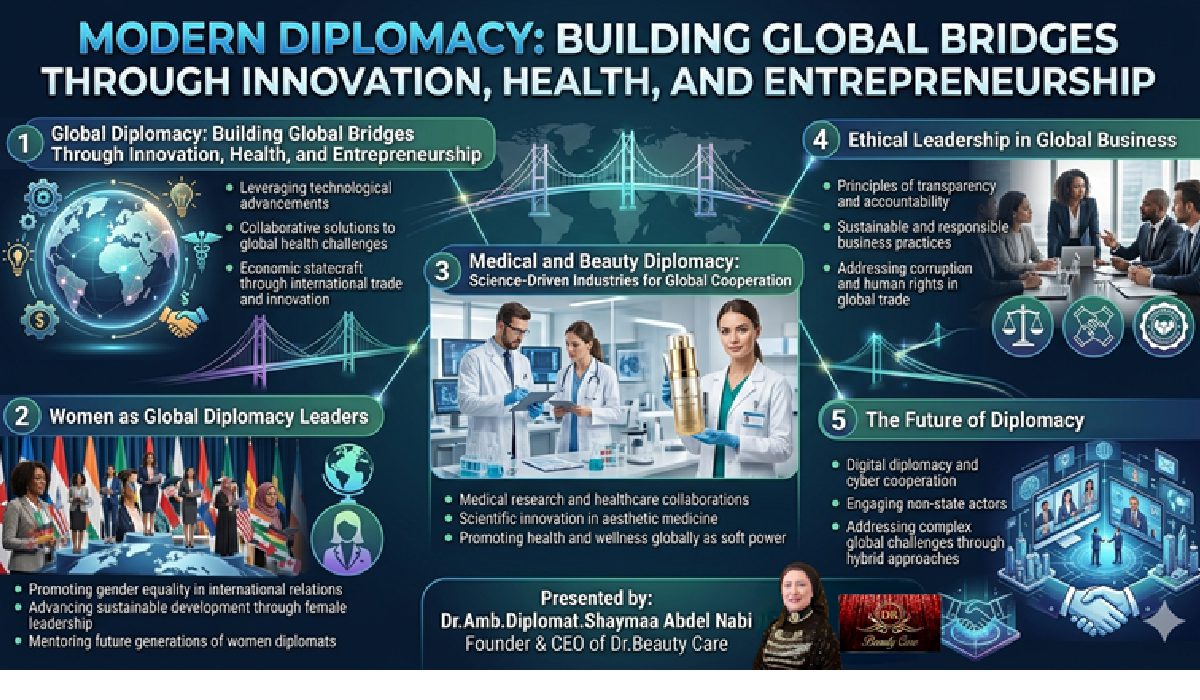
Modern Diplomacy: Building Global Bridges Through Innovation, Health, and Entrepreneurship
Innovation has become one of the strongest pillars of modern diplomacy. Scientific research, technological advancement, and entrepreneurial initiatives now serve as powerful bridges between nations. Countries increasingly collaborate through research partnerships, healthcare initiatives, and technological exchanges that contribute to both economic development and global well-being.
Health diplomacy, in particular, has become an essential component of international cooperation. Global health challenges have demonstrated that no nation can address complex health issues alone. Collaboration in medical research, healthcare systems, and biotechnology strengthens international relations and reinforces the importance of knowledge sharing.
Entrepreneurship also plays a crucial role in connecting global markets. Entrepreneurs and innovators often act as informal ambassadors, creating partnerships that promote trade, investment, and cultural exchange. In many ways, business leaders today contribute significantly to shaping diplomatic relationships through economic cooperation and innovation-driven industries.
Women as Global Diplomacy Leaders
Women are increasingly shaping the future of diplomacy and international leadership. Across governments, international organizations, and the private sector, women are bringing new perspectives to global dialogue, emphasizing inclusive development, collaboration, and long-term sustainability.
Women leaders often prioritize community impact, social responsibility, and empowerment in their initiatives. Their contributions extend beyond policy-making to building networks that support education, entrepreneurship, and gender equality worldwide.
Encouraging women to participate in global leadership is not only a matter of equality but also a strategic necessity. Diverse leadership strengthens decision-making and promotes more comprehensive solutions to global challenges. As more women take leading roles in diplomacy and international institutions, they contribute to building a more balanced and inclusive global system.
Medical and Beauty Diplomacy: Science-Driven Industries for Global Cooperation
The global health and beauty industries represent an emerging dimension of what could be described as medical and beauty diplomacy. Science-driven wellness and aesthetic innovations are connecting researchers, laboratories, and businesses across borders.
The beauty and wellness sector today is not merely about aesthetics; it increasingly reflects scientific progress, dermatological research, biotechnology, and clinical innovation. International collaboration in these fields promotes knowledge exchange, ethical product development, and improved standards within the global health and wellness ecosystem.
When science and innovation guide industry development, these sectors can contribute significantly to economic diplomacy. Partnerships between laboratories, research institutions, and companies from different countries foster technological advancement while also strengthening international economic ties.
Ethical Leadership in Global Business
As global connectivity expands, trust has become one of the most valuable currencies in international relations and global business. Ethical leadership is therefore essential in maintaining credibility, fostering sustainable partnerships, and promoting responsible development.
Transparency, integrity, and accountability are fundamental principles that guide modern global leadership. Organizations and leaders who prioritize ethical standards build stronger relationships with international partners and create long-term value for societies.
Sustainability is also a key factor shaping the future of global cooperation. Businesses and institutions must align their strategies with environmental responsibility, social impact, and inclusive economic growth. Ethical leadership ensures that innovation and progress are balanced with responsibility toward people and the planet.
The Future of Diplomacy
Modern diplomacy is evolving into a multidimensional system where collaboration between sectors is essential for addressing global challenges. Innovation, scientific advancement, women's leadership, and ethical governance will continue to shape the next generation of diplomatic engagement.
Building global bridges today requires more than formal agreements; it requires trust, knowledge sharing, and visionary leadership. By embracing innovation and responsible collaboration, the international community can create a future where diplomacy supports sustainable development, economic growth, and human well-being across borders.
About The Author