

BRICS 2026: Three Leaders, Three Steps and a New Global Future
From New Delhi, India, China and Russia can turn BRICS from a platform of emerging powers into a practical engine of Trust, Trade and Technology
New Delhi is once again at the centre of global diplomacy. As leaders gather for the 18th BRICS Summit, the grouping stands at a defining moment – not simply because it has expanded, but because the world around it has changed.
What began as an economic idea involving Brazil, Russia, India and China has evolved into a much larger platform. Today, BRICS comprises 11 member countries and 10 partner countries, bringing together economies, resources, markets and political perspectives spanning Asia, Africa, the Middle East and Latin America.
But size alone does not create influence.
The real question facing BRICS in 2026 is simple: Can this diverse coalition convert its collective weight into practical cooperation?
India’s answer could be built around three words: Trust. Trade. Technology.
Three Nations, Three Leaders, One Strategic Opportunity
Within the wider BRICS family, the relationship among India, China and Russia carries particular strategic significance.
India, China and Russia are among the original pillars of the BRICS story and remain central to its geopolitical weight. Their economies, populations, energy interests, technological capabilities and diplomatic networks give them an ability to influence the direction of the wider grouping.
Yet their relationship is not without challenges.
India and China have unresolved strategic differences. Russia’s geopolitical circumstances have transformed its economic and diplomatic relationships. India, meanwhile, continues to maintain partnerships with the United States, Europe, Japan and other major economies.
That is precisely why BRICS cannot be built on political uniformity.
It must instead be built on strategic coexistence.
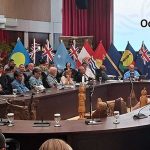
The presence of Prime Minister Narendra Modi, President Xi Jinping and President Vladimir Putin at the New Delhi summit gives the three major powers an opportunity to demonstrate that countries with different interests can still cooperate where their interests converge.
The future strength of BRICS may therefore depend less on creating a single political position and more on creating multiple areas of practical cooperation.
Step One: TRUST — The Foundation
No economic partnership can survive without political confidence.
For BRICS, trust does not mean that every member must agree on every international issue. It means creating enough confidence to keep dialogue open even when disagreements are significant.
India’s diplomatic approach has consistently emphasised dialogue, sovereignty, strategic autonomy and a multipolar international system. These principles can provide valuable space for BRICS members to cooperate without demanding ideological conformity.
The New Delhi summit therefore offers an opportunity to strengthen institutional dialogue, crisis communication and confidence-building among members.
Trust must become the first currency of BRICS.
Without it, trade initiatives will remain limited and technological cooperation will remain fragmented.
Step Two: TRADE — Turning Potential into Prosperity
BRICS represents enormous economic potential, but potential is not the same as integration.
The expanded grouping brings together major producers of energy, food, minerals, manufacturing goods and technology. Yet intra-BRICS trade and investment still have considerable room to grow.
This is where BRICS can become more practical.
Simpler customs procedures, stronger logistics networks, greater use of local currencies, improved payment interoperability and more predictable investment frameworks could help businesses move beyond diplomatic declarations.
India’s proposal to strengthen cross-border digital payment connectivity is particularly significant. Reports ahead of the New Delhi summit indicate that India is advocating greater interoperability among members’ central-bank digital currencies to facilitate cross-border payments.
The objective should not necessarily be to create a single BRICS currency.
A more realistic ambition is to make trade easier, faster and less expensive.
If a manufacturer in India can source critical minerals from Africa, machinery from China, energy from Russia or the Gulf, and access markets in Brazil or Indonesia through more efficient payment and logistics systems, BRICS begins to become a genuine economic network rather than simply an annual summit.
Step Three: TECHNOLOGY — The Great Equaliser
The next phase of global power will increasingly be determined by technology.
Artificial intelligence, semiconductors, digital public infrastructure, cybersecurity, biotechnology, quantum computing, clean technologies and advanced manufacturing are rapidly reshaping economies and national security.
BRICS has an opportunity to build a technology ecosystem that connects its diverse strengths.
India brings considerable experience in digital public infrastructure and technology-enabled public services. China possesses enormous manufacturing and technological capabilities. Russia has deep expertise in science, energy and strategic technologies. Other BRICS members bring strengths in energy, minerals, agriculture, finance, healthcare and emerging industries.
The opportunity lies in connecting these capabilities.
Rather than attempting to create a closed technological bloc, BRICS could focus on technology partnerships, research networks, standards cooperation, skills development and responsible AI governance.
This would make technology a bridge rather than another dividing line in global politics.
11 Members, 10 Partners — A Larger BRICS, A Larger Responsibility
The expansion of BRICS has changed its character.
The 11 members now include Brazil, Russia, India, China, South Africa, Egypt, Ethiopia, Indonesia, Iran, Saudi Arabia and the United Arab Emirates.
Alongside them are 10 partner countries, extending BRICS’ reach even further across the Global South.
This expansion is both an opportunity and a test.
A larger BRICS can represent more voices in global governance. But a larger grouping also means more economic models, foreign-policy priorities and geopolitical interests.
The answer cannot be to make BRICS more rigid.
The answer is to make it more useful.
A BRICS that delivers better trade connectivity, development finance, healthcare cooperation, energy security, technology partnerships and resilient supply chains will have far greater influence than one that merely issues political statements.
New Delhi’s Moment
India’s 2026 BRICS chairship comes at a time when the international system is experiencing profound economic and geopolitical transformation.
India has placed resilience, innovation, cooperation and sustainability at the heart of its BRICS agenda.
The New Delhi summit can therefore become more than another gathering of world leaders.
It can be a test of whether BRICS can move from expansion to effectiveness.
The grouping does not need to become an alliance.
It does not need to become an anti-Western bloc.
And it does not need to eliminate differences among its members.
What it needs is a practical common agenda.
Trust to keep the dialogue alive.
Trade to create shared prosperity.
Technology to build the future.
The Future Is Bigger Than BRICS
The most important outcome of the New Delhi summit may not be a single declaration or initiative.
It may be the emergence of a new philosophy of international cooperation – one in which countries with different political systems and strategic interests can work together where their interests intersect.
That is where the real promise of BRICS lies.
Three major powers—India, China and Russia—can help provide strategic weight. Eleven members can provide economic scale. Ten partners can extend the network. But only cooperation can provide lasting strength.
The BRICS of the future will not be defined by how loudly it challenges the existing world order.
It will be defined by how effectively it helps build a better one.
And from New Delhi in 2026, that future can begin with three simple but powerful steps:
TRUST. TRADE. TECHNOLOGY.
That is the BRICS opportunity.
That is India’s moment.
And that could be BRICS’ strongest future.