

Modi in Central Asia: What India Seeks from Uzbekistan and the SCO
From connectivity and trade to critical minerals, security and diplomacy, Narendra Modi’s Central Asian engagement reflects India’s effort to deepen its role in a strategically important Eurasian region while working alongside major powers, including China and Russia.
Prime Minister Narendra Modi’s recent engagement with Central Asia comes at a moment when the region is becoming increasingly important to the economic and strategic calculations of major powers.
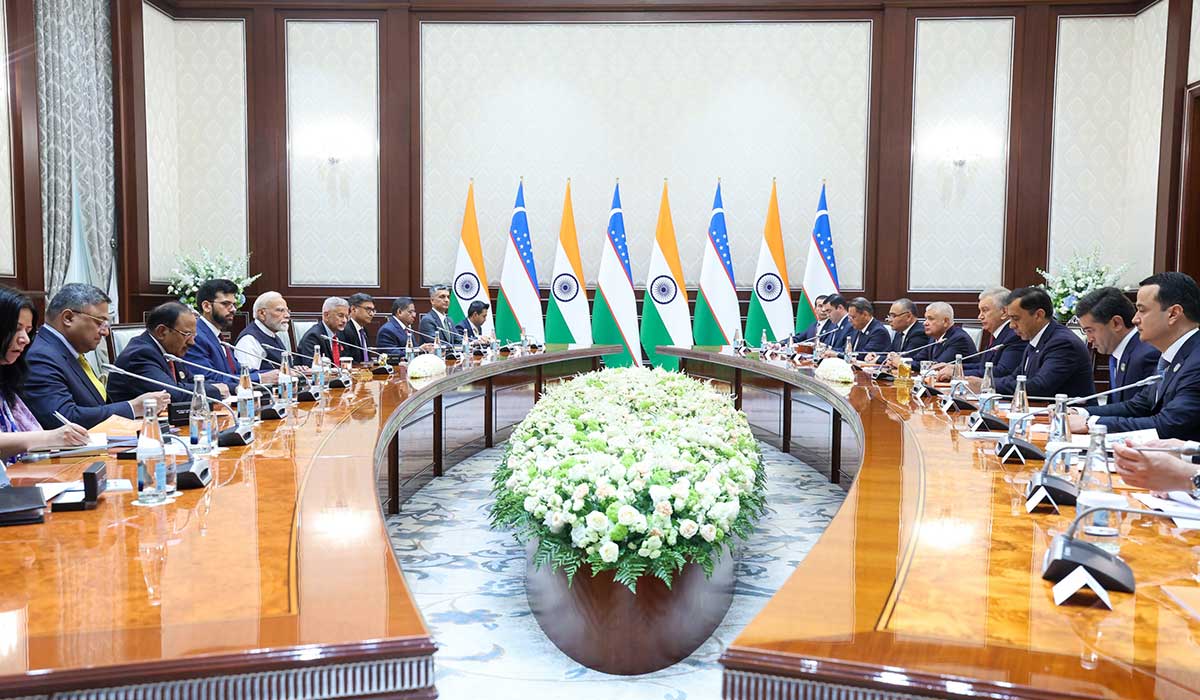
His visit to Uzbekistan, followed by participation in the Shanghai Cooperation Organization (SCO) summit, highlighted two complementary dimensions of India’s approach: building stronger bilateral partnerships with individual Central Asian states and using multilateral institutions to expand its role across the wider Eurasian landscape.
For New Delhi, the objective is not simply to increase India’s presence in Central Asia. It is to create the economic, technological and diplomatic links that can give India a more meaningful role in a region connecting South Asia with Russia, China, the Middle East and Europe.
Uzbekistan as an entry point into Central Asia
Uzbekistan occupies a particularly important place in this strategy.
During Modi’s visit, India and Uzbekistan elevated their relationship to a Comprehensive Strategic Partnership, signalling an ambition to move beyond traditional diplomatic cooperation and develop a more substantive economic relationship.
The two countries have set an ambitious target of increasing bilateral trade to more than $5 billion by 2030. Their discussions covered pharmaceuticals, automobiles, electrical and engineering goods, healthcare, information technology, education, tourism and investment.
The emphasis on pharmaceuticals and technology is especially significant. India possesses globally competitive pharmaceutical and IT industries, while Uzbekistan is seeking to expand manufacturing, technology and investment as part of its economic modernization.
The partnership could therefore develop around complementary strengths rather than simply conventional merchandise trade.
The same logic applies to critical minerals. India and Uzbekistan agreed to explore cooperation in geological exploration, mining, processing and the development of integrated mineral value chains.
For India, access to reliable supplies of critical minerals is becoming an increasingly important economic and strategic priority as the country expands manufacturing, renewable energy and advanced technologies.
Central Asia can potentially contribute to that diversification.
Geography remains India’s biggest challenge
Yet India's ambitions in Central Asia face a fundamental obstacle: geography.
India has no direct land corridor to the region. Its ability to expand trade therefore depends on transport links through third countries and on the development of reliable multimodal routes.
This explains the importance New Delhi attaches to the International North-South Transport Corridor (INSTC) and Iran’s Chabahar port.
A functioning connectivity network could provide India with greater access to Central Asian markets while giving Central Asian economies an additional route toward Indian markets and the wider Indian Ocean.
This is not merely a transportation issue. Connectivity determines whether economic partnerships can develop at scale.
India’s approach also reflects its preference for connectivity projects that respect national sovereignty and territorial integrity. Modi reiterated this principle at the SCO summit, while calling for more efficient customs procedures, digital documentation and logistics systems.
The challenge for New Delhi is therefore to turn political support for connectivity into commercially viable routes capable of handling substantially greater volumes of trade.
Why the SCO matters to India?
The SCO provides a different but equally important platform.
India became a full member of the organization in 2017, joining a framework that brings together China, Russia, the Central Asian republics, Iran, Pakistan and Belarus.
Its significance for New Delhi lies precisely in this diversity.
The organization allows India to engage simultaneously with several countries that are central to its Eurasian policy, including China and Russia, while maintaining direct relationships with the Central Asian states.
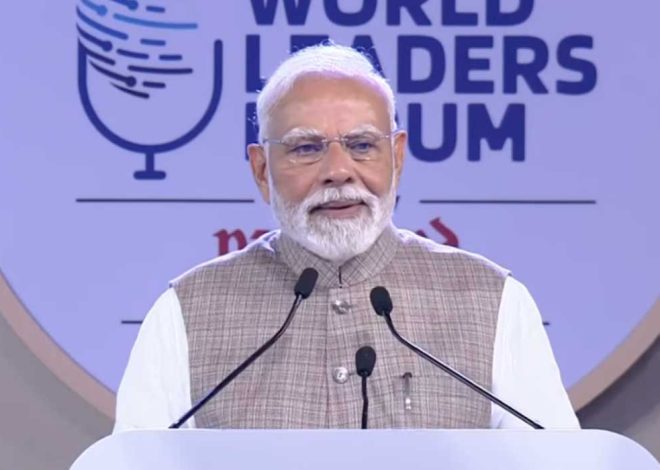
At the latest summit, Modi placed his vision for the SCO around three themes: Security, Connectivity and Opportunity.
Security remains particularly important.
India has consistently used the SCO to advocate stronger international cooperation against terrorism, terrorist financing, radicalization and organized crime. Afghanistan, drug trafficking and regional instability are also part of this security agenda.
But New Delhi increasingly wants the SCO to deliver economic and social benefits as well.
Trade facilitation, transport connectivity, digital cooperation, entrepreneurship, education and youth exchanges can give the organization a broader role in regional development.
This reflects an important evolution in India's thinking: Eurasian engagement cannot be built solely around security. Economic interdependence and people-to-people connections are equally important elements of long-term regional stability.
Managing relations with China
China is inevitably part of India's Central Asian calculations, but the relationship does not have to be viewed exclusively through the lens of competition.
China is one of the region's most important economic partners, while India and China are themselves major Asian economies with overlapping interests in trade, energy, connectivity and regional stability.
At the same time, the two countries have unresolved strategic differences, including their boundary dispute.
That makes forums such as the SCO particularly valuable.
They provide an institutional setting in which India and China can cooperate on areas of common interest while continuing to manage differences through bilateral diplomatic mechanisms.
Recent India-China efforts to stabilize relations have created some additional space for engagement. For New Delhi, the objective is not to exclude China from Central Asia, but to ensure that India's own economic and strategic relationships in the region are sufficiently strong and diversified.
This distinction is important.
India's Central Asian strategy is better understood as an effort to expand its strategic options rather than construct an opposing bloc.
Russia remains part of the equation
Russia adds another layer to the regional picture.
For decades, Moscow has maintained deep political, security and economic ties with Central Asia. India, meanwhile, continues to regard Russia as an important strategic partner.
The SCO provides a rare multilateral environment in which India can engage with both Russia and China while maintaining its own independent foreign-policy priorities.
This fits into New Delhi's broader tradition of strategic autonomy.
India has simultaneously strengthened relationships with the United States, Europe, Japan and other Indo-Pacific partners while preserving important relationships with Russia, Iran and countries across Central Asia.
Central Asia therefore fits naturally into India's policy of diversification.
From political goodwill to economic results
The real significance of Modi's engagement will ultimately be measured not by the number of agreements signed but by whether they produce sustained economic activity.
The $5 billion India-Uzbekistan trade target is ambitious compared with current trade levels. Reaching it will require better connectivity, fewer trade barriers, greater investment and stronger private-sector participation.
The same applies to critical minerals and technology cooperation.
India has considerable expertise in pharmaceuticals, digital technologies, education and capacity building. Central Asian states, meanwhile, possess natural resources, growing markets and a strategic geographical position.
The opportunity lies in combining these assets.
This could also create a more diversified economic relationship in which India is not simply a buyer or seller but a partner in manufacturing, technology transfer, research, education and skills development.
A broader Eurasian strategy
Seen from this perspective, Modi's Central Asian engagement is part of a much larger Indian strategy.
New Delhi is seeking stronger connections across the space between the Indian Ocean and Eurasia. Uzbekistan offers an important bilateral partner and a potential gateway into Central Asia. The SCO offers a multilateral platform for political and security engagement. Connectivity projects can link these relationships to markets beyond the region.
The strategy is therefore less about choosing between competing powers and more about creating room for India to work with different partners according to its interests.
That approach is particularly relevant as Central Asian countries themselves pursue diversified foreign relations. Kazakhstan, Uzbekistan, Kyrgyzstan, Tajikistan and Turkmenistan are increasingly engaging with multiple external partners, seeking investment, technology, infrastructure and access to global markets.
India can become one of those partners.
Its advantage will not necessarily come from matching the scale of every other major power's economic presence. Instead, it can build influence around areas where it has distinctive capabilities: pharmaceuticals, information technology, digital public infrastructure, education, healthcare, space cooperation and human-resource development.
What India ultimately seeks
At its core, India's Central Asian strategy is about access, influence and strategic flexibility.
India wants better access to Eurasian markets and resources. It wants stronger political relationships with the states of Central Asia. It wants connectivity that can overcome the limitations imposed by geography. And it wants multilateral institutions such as the SCO to remain useful platforms for cooperation among countries with different interests.
The relationship with China will remain an important part of this equation, but it is only one part.
The larger story is India's attempt to establish itself as an active Eurasian stakeholder while maintaining constructive relationships with all the major powers shaping the region.
If New Delhi can turn its diplomatic outreach into trade, investment, connectivity and technology partnerships, Central Asia could become more than a distant strategic neighborhood.
It could become an important link between India's growing economy, the Eurasian heartland and the wider global economy.
About the Author