




The Octagon: Egypt Reimagines Strategic Leadership in the New Republic
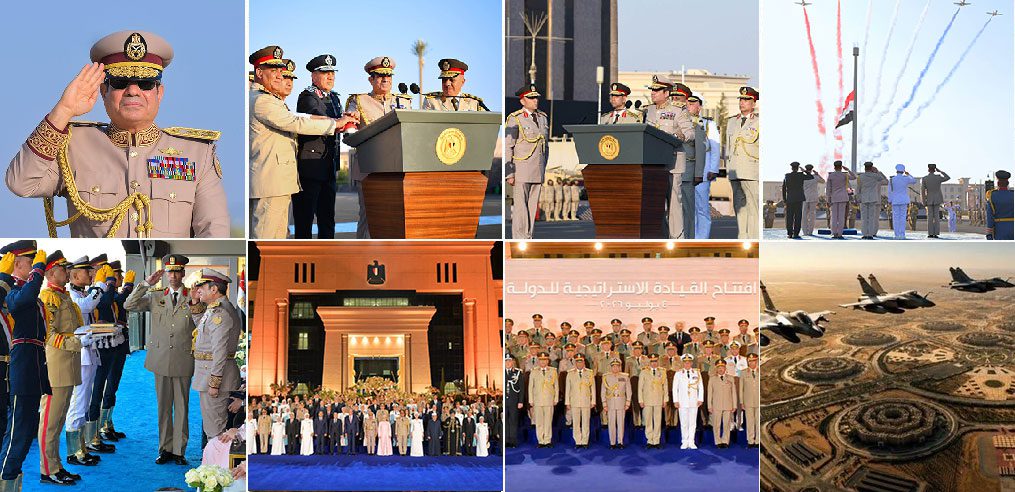
On the evening of July 4, 2026, the inauguration of Egypt's new Strategic Command Headquarters, known as "The Octagon" in the New Administrative Capital marked far more than the opening of a military facility. It represented the completion of one of the New Republic's most significant national projects and symbolized a broader transformation in Egypt's philosophy of governance—one that integrates security, advanced technology, and strategic decision-making.
In the presence of senior state officials and military commanders, Abdel Fattah El-Sisi, President of the Arab Republic of Egypt, signed the official document inaugurating the Strategic Command Headquarters during celebrations marking the 13th anniversary of the June 30 Revolution. The timing carried a clear message. As President El-Sisi explained in his address, the project did not emerge in isolation but was shaped by the lessons learned from the critical period Egypt experienced beginning in 2011, when the state reassessed the mechanisms needed to protect its institutions and ensure the continuity of governance under all circumstances.
The President described the new Strategic Command Headquarters as "a qualitative leap in command, control, and operational management," supported by advanced technological infrastructure, secure communications systems, and sophisticated capabilities for collecting and analyzing information while linking strategic and executive leadership levels within a unified framework that ensures maximum integration and rapid response.
He stressed that its mission extends beyond managing military operations, serving instead as a cornerstone of the state's ability to confront diverse challenges and exceptional circumstances through a comprehensive vision that places Egypt's security and stability above all else in a rapidly changing world marked by increasingly complex threats.
From the Lessons of 2011 to a More Resilient State
President El-Sisi linked the inauguration of The Octagon to the profound transformations Egypt underwent following the events of 2011, noting that the pressure exerted on key state institutions at that time—including attempts to besiege sovereign institutions—made it imperative to rethink how the state should be managed and protected.
He explained that the establishment of the New Administrative Capital was never intended to be merely an urban development project. Rather, it forms part of a broader national vision aimed at relocating state institutions into an environment better equipped to ensure coordination, continuity, and effective governance, preventing the recurrence of the circumstances Egypt faced during that turbulent period.
The President also emphasized that the New Republic has been built upon the principle of pursuing development and modernization alongside the fight against terrorism. Egypt, he said, chose not to postpone its national development agenda despite facing successive security and economic challenges—from combating terrorism and overcoming the COVID-19 pandemic to navigating global economic disruptions, the war in Gaza, and broader regional tensions.
Within this context, he underscored that safeguarding the state depends not only on military strength but also on building modern institutions capable of managing crises and making informed decisions at the right moment.
A Comprehensive Center for Strategic Decision-Making
Located at the heart of Egypt's New Administrative Capital, The Octagon extends across approximately 22,000 feddans, with a total built-up area of nearly 4.7 million square meters, making it one of the largest integrated defense complexes in both the region and the world.
The headquarters features a distinctive octagonal architectural design comprising eight eight-sided main buildings, all interconnected with the central command and general staff building through an integrated network of corridors that facilitates seamless coordination and communication among various departments.
Beyond its command facilities, the complex includes 13 integrated strategic and logistical zones, each assigned specialized operational responsibilities, enhancing institutional efficiency while ensuring continuous readiness under various circumstances.
The establishment of the Strategic Command Headquarters aims to unify the Armed Forces General Command alongside key ministries and sovereign institutions within a single integrated command structure, accelerating the flow of information, improving decision-making, and strengthening coordination in accordance with the world's most advanced command-and-control concepts.
The project was designed and executed entirely by Egyptian expertise and national companies, reflecting the engineering and construction capabilities that Egypt has developed through its major national projects over the past decade.
A Digital Brain for the State
What distinguishes The Octagon is not merely its size, but the advanced digital ecosystem upon which it operates.
The complex is built around a sophisticated command-and-control system supported by highly secure, ultra-high-speed communications networks utilizing 5G and 6G technologies, enabling the instantaneous and secure exchange of information across command centers.
It also incorporates artificial intelligence and Big Data analytics to provide decision-makers with accurate, real-time information, significantly enhancing operational management and strategic response capabilities.
In the field of cybersecurity, the headquarters features an advanced digital infrastructure that includes highly secure closed networks, state-of-the-art cyber protection systems, and a fully secured national data center, ensuring the highest levels of protection for critical information and digital infrastructure.
This integrated system is supported by six specialized operational centers, including the Unified Strategic Data Center, the Cyber Network Control Center, and the National Crisis and Emergency Management Center, all working together to ensure operational continuity and strengthen the state's preparedness for a wide range of scenarios.
A Vision Beyond the Military Dimension
The Octagon reflects a broader evolution in Egypt's concept of national security, which today extends beyond conventional military capabilities to encompass the protection of digital infrastructure, information management, cybersecurity, information warfare, and other non-traditional threats that increasingly define the security landscape of the twenty-first century.
From this perspective, the headquarters seeks to unify operations rooms and sovereign institutions within a single command center, improve coordination among state agencies, accelerate decision-making, and establish a unified national center for crisis and emergency management, thereby strengthening Egypt's national security and enhancing the state's ability to respond rapidly to evolving challenges.
A Message to Egypt and the World
The decision to inaugurate the Strategic Command Headquarters on the 13th anniversary of the June 30 Revolution was far from symbolic coincidence. Rather, it underscored the connection between Egypt's restoration of state stability after years of turmoil and its transition toward building more advanced institutions capable of meeting future challenges.
In his address, President El-Sisi reaffirmed that the New Republic is committed to building a modern state—industrial, agricultural, technologically advanced, attractive to investment, and capable of developing education, public services, and qualified human capital. He stressed that development will remain an irreversible strategic choice, accompanied by greater transparency, expanded private-sector participation, digital transformation, and continued economic reform.
The ceremony concluded with a spectacular drone display that illuminated the skies above the New Administrative Capital with the message, "Long Live the Peoples of the World Who Love Peace," followed by the performance of Egypt's national anthem.
The finale carried a message extending beyond the inauguration itself. While The Octagon embodies the remarkable advancement of Egypt's institutional and technological capabilities, it also reflects the country's vision that strength is ultimately a means of safeguarding stability and preserving peace, with security and development standing as two inseparable pillars of the New Republic.
About the Author