




Modi – Takaichi Talks in New Delhi: A Defining Moment in India – Japan Strategic Convergence
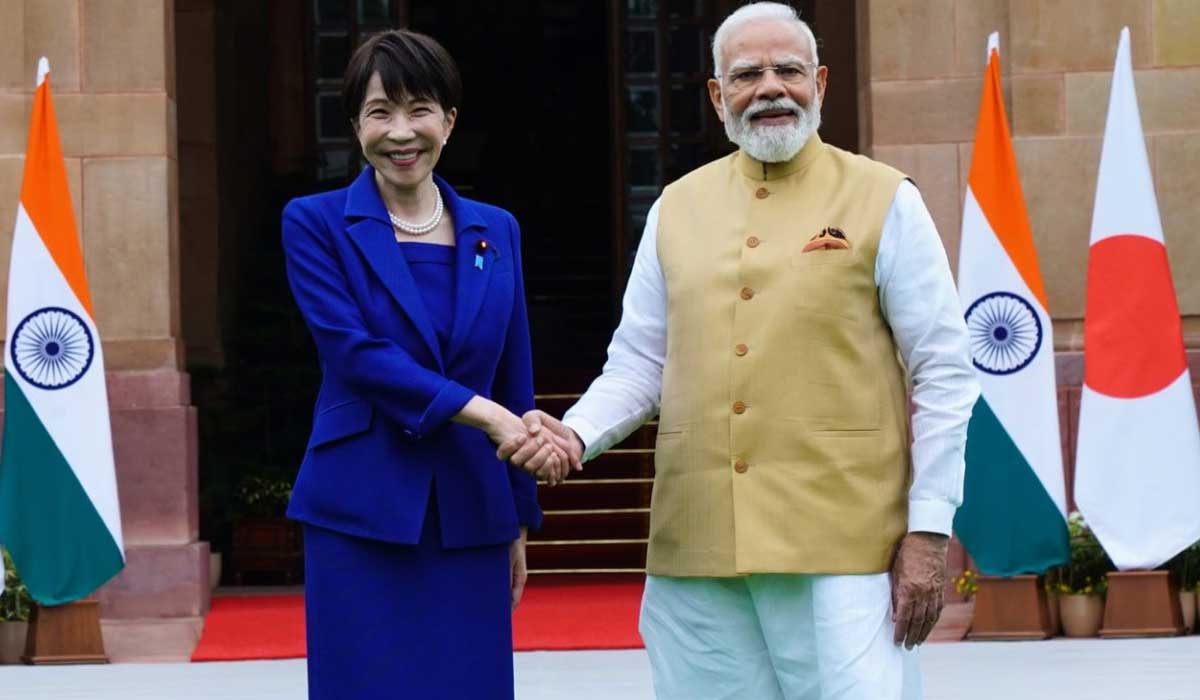
New Delhi is set to witness a significant diplomatic engagement as Prime Minister Narendra Modi hosts his Japanese counterpart Sanae Takaichi for high-level bilateral talks that are expected to add fresh momentum to one of Asia’s most steadily strengthening partnerships.
The visit comes at a moment when the global order is being reshaped by competing economic blocs, technological rivalries, and an urgent rethinking of supply chain security. Against this backdrop, India and Japan are not merely maintaining ties – they are actively refining a shared strategic language built on trust, stability, and long-term convergence of interests.
At its core, the Modi – Takaichi dialogue is expected to move beyond routine diplomatic reaffirmations. Both leaders are anticipated to focus on expanding the architecture of cooperation across defence, advanced manufacturing, digital innovation, clean energy transitions, and resilient infrastructure systems. What makes this engagement particularly notable is not just the breadth of the agenda, but the intent to translate shared vision into measurable outcomes.
India and Japan have, over the past decade, gradually evolved from traditional partners into co-architects of regional stability in the Indo-Pacific. Their cooperation today is defined less by symbolism and more by structured collaboration – whether in building resilient semiconductor ecosystems, diversifying critical mineral supply chains, or strengthening maritime security frameworks that safeguard open sea lanes.
Defence and security cooperation is expected to feature prominently in the discussions, reflecting a mutual recognition of the shifting strategic realities of the region. Without adopting confrontational rhetoric, both sides have consistently emphasized deterrence through preparedness, interoperability, and technological advancement. This approach has allowed the partnership to grow steadily without destabilizing regional sensitivities.
Equally important is the economic dimension of the engagement. Japan remains a crucial source of long-term investment and technological expertise for India’s infrastructure and industrial transformation. From high-speed rail initiatives to urban mobility systems and smart city frameworks, Japanese participation has often brought precision, discipline, and scale to India’s developmental ambitions. The New Delhi talks are expected to reinforce this trajectory with renewed commitments and forward-looking projects.
What also distinguishes this meeting is its timing. As global supply chains fragment and nations reassess dependencies, India and Japan are positioning themselves as reliable anchors in an uncertain environment. Their partnership increasingly reflects a broader philosophy: that economic security is inseparable from national security, and that resilience is now a defining feature of diplomacy.
Beyond agreements and announcements, however, the significance of the Modi–Takaichi talks lies in continuity. It signals that the India–Japan relationship is no longer reactive to global shifts—it is becoming anticipatory, shaping its own direction through consistent engagement and shared strategic foresight.
As the two leaders meet in New Delhi, the expectation is not just for new initiatives, but for a reaffirmation of a deeper idea—that two democracies separated by geography but united by strategic vision can help steady the course of an increasingly complex world –