

Neighbourhood First in Action: PM Modi Reaffirms Nepal as a Core Partner in Regional Diplomacy
India signals continuity and stability in its Himalayan neighbourhood through high-level engagement with RSP leader Rabi Lamichhane
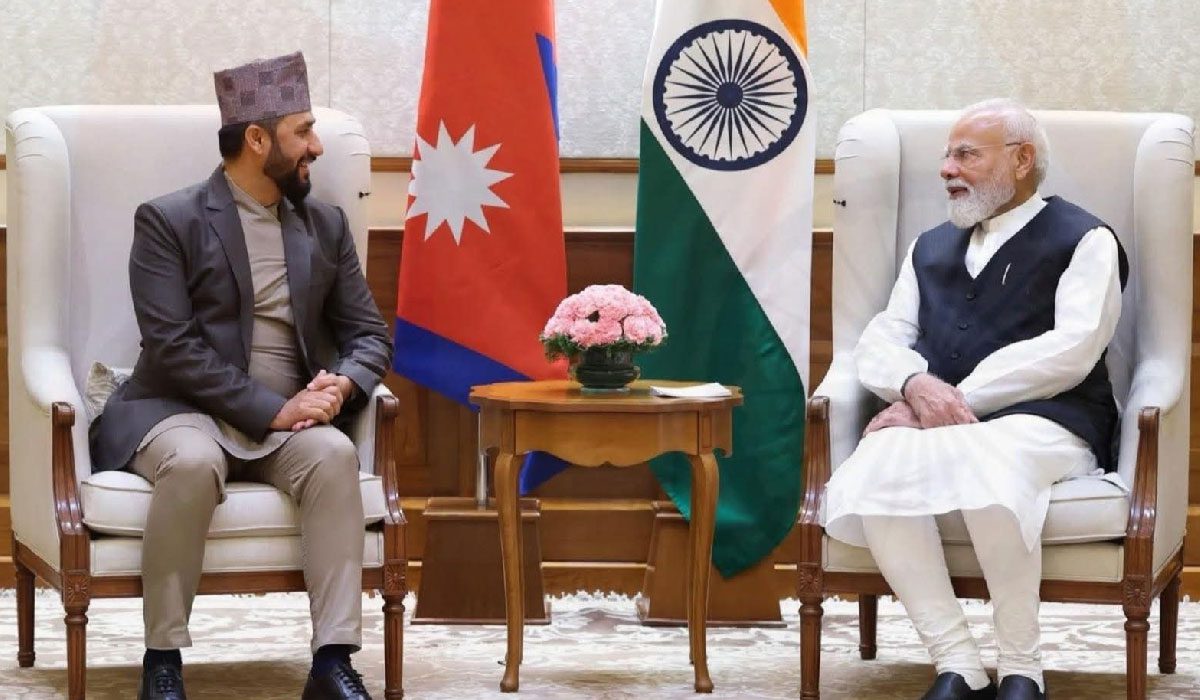
Prime Minister Narendra Modi’s meeting with Rastriya Swatantra Party (RSP) Chairman Rabi Lamichhane in New Delhi once again highlighted the central place of Nepal in India’s Neighbourhood First policy. The interaction underscored New Delhi’s consistent approach of treating Nepal not just as a neighbouring state, but as a key partner in its broader regional vision for connectivity, development, and stability in South Asia.
The meeting comes at a time when India is placing renewed emphasis on strengthening ties with its immediate neighbours through sustained political dialogue and expanding economic cooperation.
Nepal’s Strategic Place in India’s Neighbourhood First Vision
Nepal occupies a unique position in India’s foreign policy framework due to its open border, deep cultural linkages, and long-standing economic interdependence. These factors make the relationship both sensitive and strategically significant.
During the interaction, Prime Minister Modi reaffirmed India’s commitment to supporting Nepal’s development priorities and advancing cooperation in areas that directly impact people on both sides of the border. The focus remained on building a relationship anchored in stability, mutual trust, and practical cooperation.
Expanding the Scope of Bilateral Cooperation
India–Nepal relations continue to evolve beyond traditional diplomatic engagement into more structured cooperation across multiple sectors. Key areas of focus include:
- Energy cooperation, particularly hydropower development and cross-border electricity trade
- Infrastructure and connectivity projects linking border regions
- Trade facilitation and economic integration
- Strengthening transport and logistics networks
These areas have become central to efforts aimed at improving regional economic integration and enhancing cross-border opportunities for growth.
Connectivity and Everyday Linkages
Beyond formal agreements and policy frameworks, India–Nepal relations are deeply rooted in everyday human connections. The open border allows for free movement of people, supporting trade, employment, education, and family ties across both sides.
This people-centric dimension continues to be one of the strongest pillars of the relationship, giving India–Nepal relations a depth that goes beyond conventional state-to-state diplomacy.
A Steady Partnership in a Changing Region
The interaction between Prime Minister Modi and Rabi Lamichhane reflects India’s broader approach of maintaining steady and predictable relations with its immediate neighbourhood. In an increasingly complex regional environment, Nepal remains a key partner in India’s efforts to promote connectivity, development cooperation, and regional stability.
While political landscapes may shift, the underlying foundation of India–Nepal relations—geography, culture, and shared interests—continues to provide strong continuity.
The meeting reinforces a familiar but important message in India’s foreign policy: the neighbourhood remains the first priority, and Nepal continues to occupy a central place within it.