
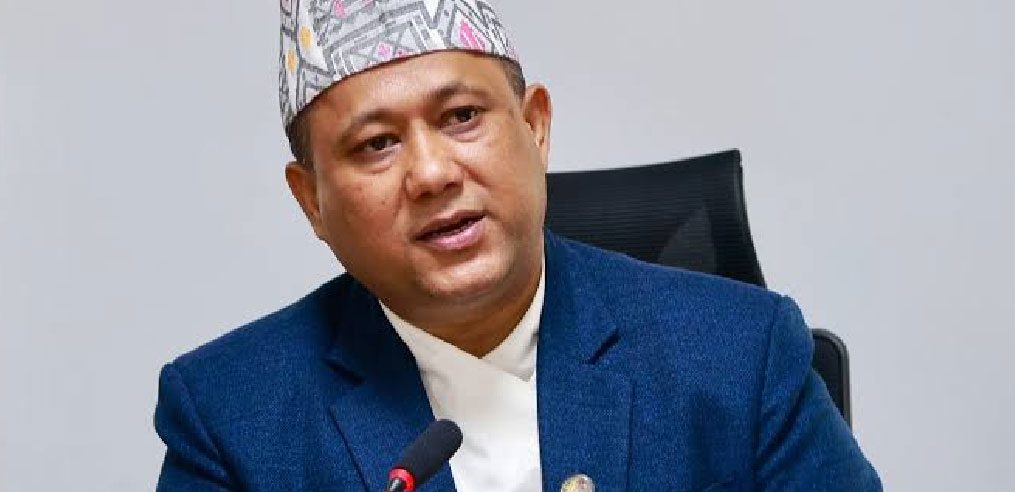
The Kathmandu Calibrations: Shisir Khanal and Nepal’s New Era of Balanced Diplomacy
The recent consecutive diplomatic visits of Nepal’s newly appointed Foreign Minister, Shisir Khanal, to New Delhi and Beijing signal a major turning point in Himalayan geopolitics. Following a massive political shift in Kathmandu that brought the youth-backed Rastriya Swatantra Party (RSP) into a ruling coalition alongside Prime Minister Balendra Shah, Nepal's foreign policy is undergoing a visible transformation. Historically, Kathmandu’s interactions with its giant neighbors were heavy with the ideological baggage of old political parties, often causing unpredictable shifts between pro-India and pro-China stances. Minister Khanal’s back-to-back trips represent a deliberate shift toward "development diplomacy"—a strategy focused on national economic needs and neutral engagement rather than old political loyalties.
In New Delhi, Khanal’s primary goal was to reset bilateral relations by presenting the new administration as a reliable, pragmatic partner free from past political disputes. By explicitly stating that the new government does not carry the historical grievances of traditional political factions, Khanal opened the door for a more practical, business-like relationship with India. The discussions in India focused on mutual economic benefits, border management, and energy cooperation. This strategic presentation was crucial to assure New Delhi that the populist, youth-led movement in Kathmandu would not lead to instability or anti-India policies. Instead, it offered a predictable relationship based on shared economic prosperity and regional security.
Directly following his departure from India, Khanal’s four-day official visit to Beijing was a crucial exercise in defensive diplomacy and reassurance. The political transition in Kathmandu—sparked by the "Gen Z" youth movement—had raised concerns in Beijing. Chinese policymakers worried that the new administration might lean toward Western interests, pointing to rapid approvals of tech initiatives like Starlink, growing data infrastructure partnerships, and high-level visits from American diplomats. Meeting with Chinese Foreign Minister Wang Yi, Khanal actively worked to counter these perceptions. He firmly reassured Beijing of Nepal’s strict adherence to the One-China policy, pledged that Nepali territory would not be used for any anti-China activities, and defended Kathmandu’s domestic anti-corruption investigations—such as the probe into the Pokhara International Airport project—as matters of domestic law rather than external geopolitical pressure.
Beyond addressing security anxieties, the Beijing talks focused on restarting stalled economic and infrastructure projects under the Belt and Road Initiative (BRI). While Khanal reaffirmed Nepal's commitment to the BRI framework, the discussions revealed a more careful approach from Kathmandu, which seeks to review and adapt project lists to match actual national priorities rather than accepting broad, debt-heavy agreements. Key infrastructure items on the table included the maintenance of the Syafrubesi-Rasuwagadhi Highway, the cross-border Kerung-Kathmandu railway line, and vital energy transmission infrastructure. By focusing heavily on these physical connection points and encouraging Chinese business investments, Khanal attempted to shift the bilateral relationship from ideological alignment to concrete infrastructure development.
Ultimately, Khanal’s quick, successive visits to India and China show a refined execution of "balanced diplomacy" tailored for a highly competitive global environment. By engaging both Asian superpowers within a single month, Nepal is trying to escape the classic trap of being treated as a passive buffer state or a playground for proxy competition between major powers. The new foreign policy framework seeks to balance India’s deep cultural and geographic ties against China’s massive infrastructure capabilities, all while protecting sovereign space for technological and development partnerships with the West. For international observers, Khanal’s diplomatic debut demonstrates that Nepal’s new generation of leaders is moving away from purely reactive diplomacy, choosing instead a calculated, non-aligned approach that prioritizes national development above all else.
About the Author