


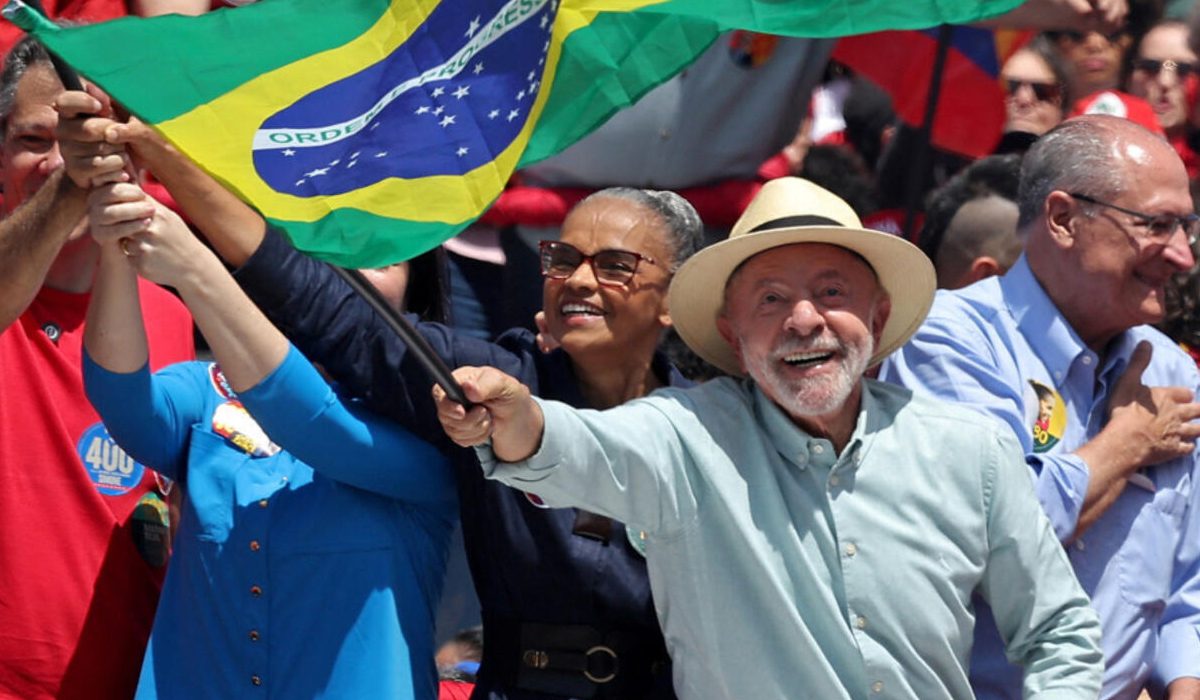
Lula’s Historic Fourth Term: Brazil’s Global Role, BRICS and the Future of India–Brazil Relations
Brazilian President Luiz Inácio Lula da Silva’s victory in the presidential runoff on 25 October 2026 marks a significant moment in the country’s political history. Securing a fourth, non-consecutive term, Lula returns to office amid domestic economic challenges, changing international trade policies and renewed interest in cooperation among emerging economies.
His next presidency will have implications not only for Brazil’s domestic agenda but also for its relationships with the United States, BRICS members and strategic partners such as India. The central question is how Brazil can strengthen its economic resilience while maintaining constructive relations with a diverse range of international partners.
A Remarkable Political Comeback
Lula’s political journey has spanned decades, including two consecutive presidential terms from 2003 to 2010 and his return to office in 2023. His latest victory, with approximately 51.8% of valid votes, demonstrates the continued support for his political programme while also highlighting Brazil’s persistent political divisions.
His political agenda has emphasised social welfare, employment, poverty reduction and Brazil’s international engagement. During his previous administrations, Brazil expanded its diplomatic presence and became increasingly active in multilateral discussions on development and global governance.
However, the close election result indicates that many Brazilians continue to support alternative political priorities. The new administration will need to respond to concerns about the cost of living, public security, economic management and the effectiveness of public services.
Lula’s return therefore represents both an opportunity and a responsibility. His ability to deliver domestic improvements while preserving Brazil’s international influence will shape the legacy of his next term.
US Tariffs: Managing Economic Differences Through Diplomacy
Trade relations with the United States will remain an important consideration for Brazil. On 15 July 2026, the Office of the US Trade Representative announced a 25% tariff on certain Brazilian goods following an investigation under Section 301 of the Trade Act of 1974. The US government cited concerns involving several Brazilian trade and regulatory practices, while the measures raised questions about the future direction of bilateral economic relations.
Tariffs can affect export competitiveness, business costs and investment decisions. Their impact depends on the products covered, applicable exemptions and the ability of companies to adjust their supply chains.
For Brazil, the priority is to protect its commercial interests while keeping channels for dialogue with Washington open. Negotiations may help address specific trade concerns, while greater export diversification can reduce exposure to individual markets.
Further escalation should not be assumed. Equally, Brazil has reason to prepare for continued uncertainty in international trade.
The broader lesson is that economic resilience depends on a combination of diplomacy, competitive industries and access to multiple markets. Brazil can pursue these objectives without treating its relationship with the United States and its engagement with BRICS as mutually exclusive choices.
Domestic Challenges and the Road Ahead
Lula’s electoral victory does not remove the domestic constraints facing his government. Fiscal management, economic growth, employment and public security will remain important priorities.
Brazil must balance social programmes with sustainable public finances and encourage investment that supports productivity and job creation. Infrastructure development, education, technological innovation and improvements in public services will also be essential to long-term economic progress.
Political negotiations will be particularly important. Reuters has reported that a more conservative Congress could complicate the administration’s legislative agenda. Building support across political divisions will therefore be necessary to advance policy proposals and maintain institutional stability.
Environmental policy presents another major opportunity. Brazil’s forests, biodiversity and agricultural capabilities give it an important role in international discussions on climate change and sustainable development. Policies that combine environmental protection with investment, innovation and economic opportunity could strengthen Brazil’s international partnerships.
Ultimately, the credibility of Brazil’s foreign policy will depend partly on its ability to deliver stable and sustainable development at home.
BRICS: Expanding Opportunities for Emerging Economies
BRICS provides Brazil with a platform to pursue cooperation on trade, development finance, technology and global governance. For Lula’s administration, engagement with the grouping offers opportunities to diversify economic relationships and strengthen Brazil’s voice in international institutions.
Brazil and India share interests in increasing the representation of emerging economies in global decision-making. Cooperation among BRICS members can also support infrastructure investment, renewable energy, agricultural development, scientific research and supply-chain diversification.
Nevertheless, BRICS members have different national priorities and international relationships. Cooperation should therefore be understood as an opportunity to advance shared interests, rather than evidence of a unified position on every geopolitical issue.
The grouping’s practical value will depend on its ability to produce measurable outcomes, including stronger commercial links, viable investment projects and more effective development cooperation.
For Brazil, a constructive approach would be to use BRICS to expand its economic choices while maintaining productive relationships with the United States, Europe and other international partners.
India–Brazil Relations: A Partnership with Room to Grow
India and Brazil have developed a broad relationship encompassing trade, energy, agriculture, pharmaceuticals, science and technology, and multilateral diplomacy.
According to India’s Consulate General in São Paulo, bilateral trade reached approximately US$15.21 billion in 2025, making Brazil India’s largest trading partner in Latin America. The two countries have also established a target of increasing bilateral trade to US$20 billion over five years.
These figures provide a foundation for further cooperation, although achieving the trade target will require sustained business engagement and attention to market-access barriers.
Brazil offers opportunities in agricultural products, energy, biofuels and critical minerals. India contributes pharmaceutical manufacturing, industrial products, digital capabilities and a large consumer market. These complementary strengths create scope for partnerships that extend beyond traditional commodity trade.
Potential areas of cooperation include renewable energy, agricultural technology, healthcare, biotechnology, mineral processing and industrial research. Joint ventures could help both countries develop local capabilities, create employment and strengthen supply chains.
Expanding the India–MERCOSUR preferential trade agreement and addressing regulatory and logistical barriers could also help businesses explore additional opportunities.
Brazil’s Options in a Changing Trade Environment
As international trade becomes more closely connected with geopolitical considerations, Brazil has an incentive to broaden its commercial partnerships. India can contribute to this strategy without being viewed as a replacement for the United States or any other major market.
Three priorities deserve attention.
First, improve market access. India and Brazil can explore broader trade preferences, address non-tariff barriers and strengthen communication between businesses and regulators.
Second, encourage investment and technology partnerships. Cooperation in pharmaceuticals, biofuels, clean energy, agricultural technology and critical-mineral processing could create higher-value economic activity in both countries.
Third, coordinate constructively in multilateral forums. Through BRICS, the G20 and other institutions, India and Brazil can support transparent trade rules, development cooperation and a stronger voice for emerging economies.
Such cooperation will require negotiation and compromise. Both countries have domestic industries and commercial interests that need to be considered. Progress will depend on practical agreements, clear regulations and sustained engagement rather than diplomatic declarations alone.
For Brazil, closer ties with India would broaden its economic options. For India, a stronger partnership with Brazil would deepen its engagement with Latin America and create opportunities in emerging industries.
Conclusion: Partnership, Not Polarisation
Lula’s fourth term begins at a time of considerable international uncertainty. Brazil must address domestic economic and political challenges while managing trade differences with Washington and pursuing opportunities through BRICS and other partnerships.
India–Brazil relations offer a constructive avenue for cooperation. By strengthening trade, encouraging investment and developing technological partnerships, the two countries can support their respective development priorities and expand their international economic options.
Brazil does not need to choose between its relationship with the United States and closer engagement with India or BRICS. Its interests are better served by maintaining open diplomatic channels, diversifying trade and pursuing cooperation wherever practical benefits exist.
For Brazil and India, the opportunity lies in building a partnership based on mutual interests, economic resilience and constructive diplomacy. In a changing global order, expanding cooperation may prove more valuable than allowing international differences to narrow the possibilities for engagement.
About the Author