





From Observer to Convener: A New Chapter in Digital Multilateralism
A changing multilateral landscape
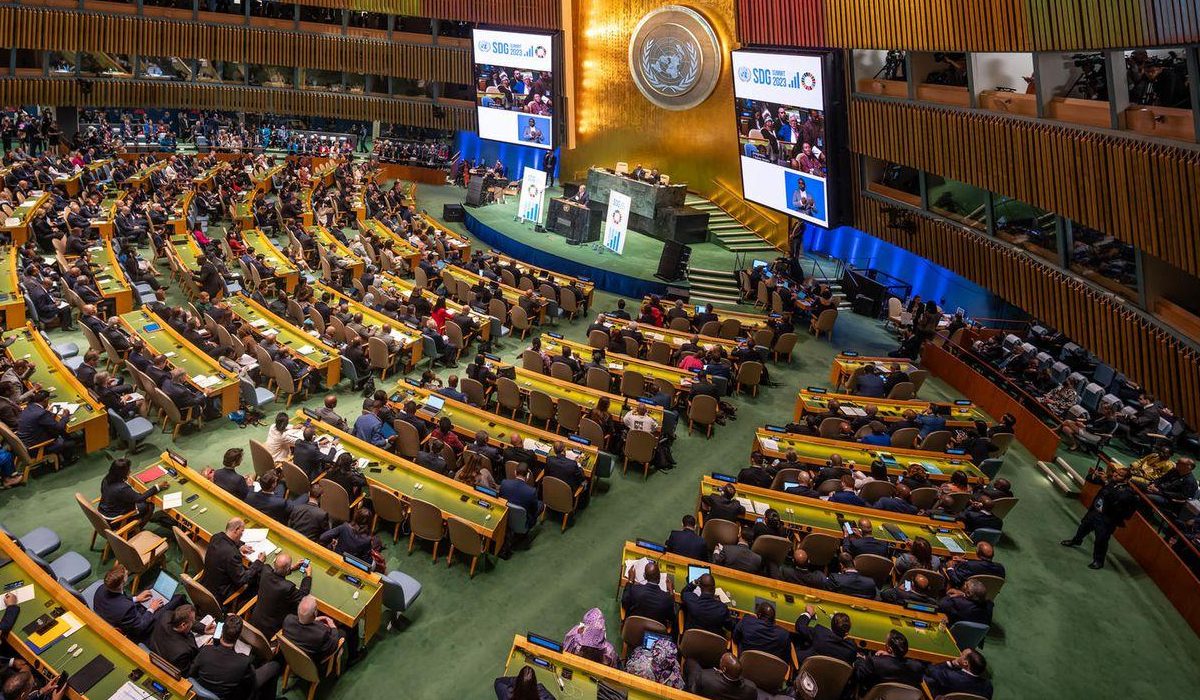
During the high-level week of the United Nations General Assembly, New York becomes a meeting point for government representatives, diplomats, international organizations and technology leaders. Alongside the formal proceedings, numerous discussions take place on issues shaping international cooperation.
Among these conversations, the growing importance of digital cooperation has become increasingly visible. Discussions on protecting critical civilian digital infrastructure, strengthening resilience and ensuring that technology serves the public interest reflect the expanding role of digital issues in international diplomacy.
For me, these developments represent something more significant than an increase in discussions around technology. They reflect how the multilateral ecosystem is evolving, with specialized intergovernmental organizations increasingly contributing their expertise, networks and member-state perspectives to shared global challenges.
A shared project
The Digital Cooperation Organization (DCO) was founded in 2020 with a shared vision: that digital prosperity is a collective objective and that advancing it requires cooperation beyond national strategies.
Our engagement with the United Nations and the wider multilateral community has been an important part of this journey. Through participation in international discussions, including the Summit of the Future and the Global Digital Compact process in 2024, we have continued to engage with partners on the opportunities and challenges of digital transformation.
Over time, our role has increasingly involved bringing governments and other stakeholders together to exchange perspectives, identify common priorities and explore practical avenues for cooperation.
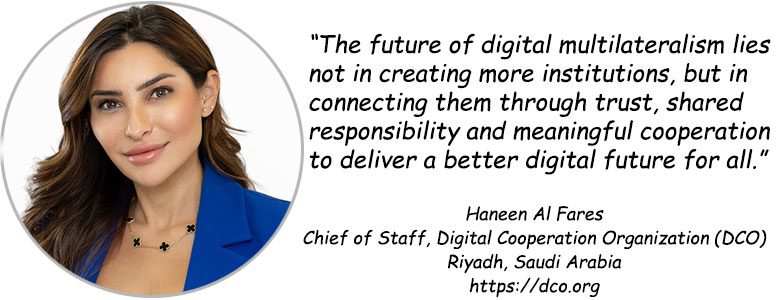
I believe this journey reflects a broader development within international relations. Newer intergovernmental organizations are not necessarily seeking to create parallel structures; rather, they can contribute specialized knowledge and focused cooperation to an already established multilateral framework.
Connection is a choice
The United Nations retains what only the United Nations can offer: universality, convening power and the normative authority that comes from bringing nations together.
Specialized organizations contribute something different: focused mandates, concentrated expertise and platforms through which member states can pursue practical cooperation in particular areas.
Their value lies not in creating another layer of multilateralism, but in connecting their specialized work to the universal system.
Connection is a choice, and it is made through dialogue, partnerships and sustained cooperation.
Digital cooperation offers an important example of how this can work. Governments, international institutions, technology companies and civil society increasingly recognize that digital transformation cannot be addressed through isolated national initiatives. It requires shared approaches, knowledge exchange and collective action.
Interconnected mandates
The boundaries between policy areas are becoming less distinct because the challenges themselves are increasingly interconnected.
Water systems, for example, depend increasingly on data, sensors and digital connectivity. At the same time, digital infrastructure relies on energy, cooling and water resources. These connections demonstrate why international cooperation must increasingly bring different areas of expertise together.
For organizations working in specialized fields, this creates opportunities to identify common priorities and develop partnerships that respond to shared challenges.
At the DCO, we see digital cooperation as an enabler of broader development objectives. Emerging technologies, including artificial intelligence, can support solutions in areas such as water security, sustainable development and public service delivery.
The challenge is to ensure that these technologies are developed and applied responsibly, inclusively and in ways that deliver meaningful benefits to communities.
Reinforcing a universal system
I want to emphasize that complementarity cannot be taken for granted. It requires clarity of mandate: understanding where each organization can add distinctive value and concentrating efforts accordingly.
It also requires respect for institutional responsibilities, effective coordination and shared measures of delivery, so that cooperation is judged by outcomes rather than communiqués.
None of this replaces the United Nations. On the contrary, specialized organizations can strengthen the universal system by bringing additional expertise, partnerships and practical capabilities to international cooperation.
In a period marked by fiscal pressures, technological disruption and growing geopolitical complexity, institutional duplication should be avoided. Complementarity is increasingly a necessity.
Looking ahead, the success of digital multilateralism will depend not simply on the number of organizations participating in international discussions, but on their ability to work together towards shared objectives.
The multilateral system is evolving, and its circle of cooperation is widening. The task before us is to ensure that this broader engagement translates into meaningful outcomes for governments, businesses and, most importantly, the people we serve.