




India Takes Centre Stage at Egypt Fashion Week, Opening New Avenues for Textile and Fashion Partnerships
Indian designers and business leaders are set to join Egyptian counterparts in Cairo, as the two countries seek to turn their shared fashion heritage into opportunities for cultural exchange, industrial cooperation and trade.
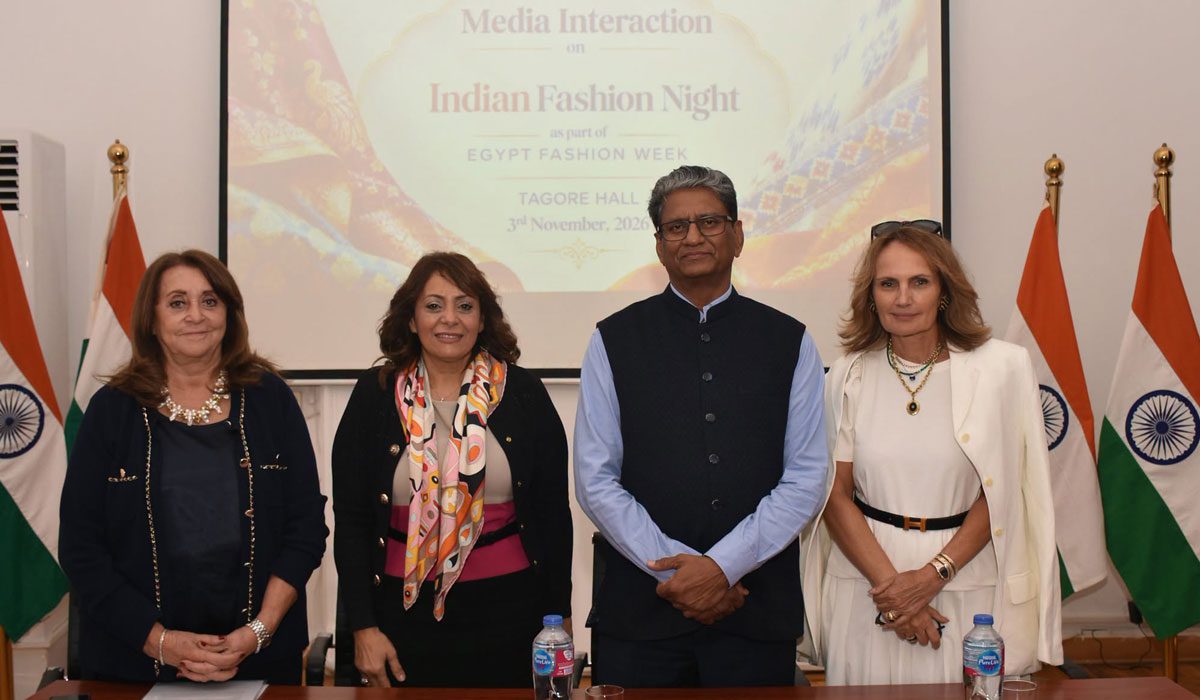
India and Egypt are seeking to deepen their longstanding cultural and economic ties through fashion and textiles, as the Indian Embassy in Cairo prepares to host “Indian Fashion Night” on November 12, 2026, marking the opening event of Egypt Fashion Week.
The event, to be held at the residence of India's Ambassador to Egypt, Suresh K. Reddy, will feature collections by prominent Indian designers travelling to Cairo for the occasion, alongside Egyptian artists and models showcasing Indian-inspired outfits. The program will also include cultural performances organized by the Maulana Azad Indian Cultural Centre (MACIC), affiliated with the Indian Council for Cultural Relations (ICCR).
Organized in cooperation with the Egyptian Fashion and Design Council (EFDC) and the BRICS Women's Business Alliance (BRICS WBA), with support from India's Ministry of Textiles, the event aims to strengthen connections between the two countries' fashion and textile industries while highlighting their shared cultural heritage.
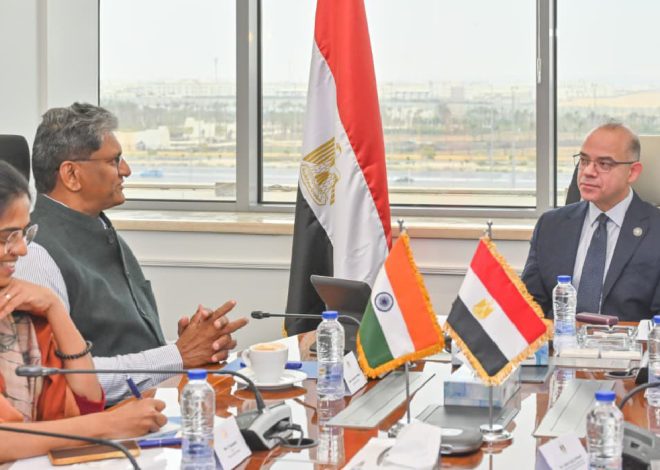
Speaking at a press conference announcing the event, Ambassador Reddy stressed that the initiative goes beyond fashion presentations, offering a platform to explore business opportunities, exchange expertise and develop joint projects.
He highlighted India's position as one of the world's largest fashion and clothing markets, pointing to the significant scale of its textile and apparel trade, which he estimated at between $250 billion and $270 billion.
Reddy also underlined the demographic similarities between the two countries, noting that India's population is predominantly young, with an average age ranging from 22 to 30. Egypt likewise has a large young population, creating similarities in consumer preferences and fashion trends that could support closer cooperation.
The ambassador emphasized the importance of connecting skilled professionals, designers and entrepreneurs in both countries, encouraging them to exchange ideas, explore market opportunities and consider joint ventures.
He also highlighted the role of the BRICS Women's Business Alliance, established in 2021 to strengthen links among women entrepreneurs across BRICS member states. He welcomed its partnership with the Indian Embassy and the Egyptian Fashion and Design Council, stressing the potential to connect Egyptian and Indian businesswomen and expand their cooperation.
Looking ahead, Reddy pointed to opportunities in emerging areas such as sustainable fashion, research and innovative textile materials, noting that developments in these fields offer further scope for collaboration. He also indicated that the Indian side was considering organizing a fashion show in an open-air venue in Egypt.
Fashion as a Tool of Cultural Diplomacy
Susan Thabet, representing the Egyptian Fashion and Design Council, welcomed India's participation as the guest country at this year's Egypt Fashion Week, highlighting the shared interests of the two countries, particularly in textiles and fashion.
She explained that promoting cultural diplomacy through fashion is among the council's main objectives, describing fashion as an accessible means of bringing people and countries together.
“Everybody loves fashion. It's an easy way to bring countries and people together,” Thabet said, noting that Egypt Fashion Week offers an ideal platform to showcase Indian designers and bring textile industry experts to Cairo to meet their Egyptian counterparts.
She added that the participation of Indian designers and professionals would create opportunities to exchange expertise, explore partnerships and strengthen connections between the two creative industries.
Thabet also expressed appreciation for the sponsors and partners supporting the event.
BRICS Women's Business Alliance Seeks to Connect Businesses and Markets
Beyond its cultural dimension, Indian Fashion Night is expected to provide a platform for strengthening commercial links and opening new markets for businesses operating in the fashion and textile sectors.
Marian Ghaly, President of the Egypt Chapter of the BRICS Women's Business Alliance, said the initiative aims to connect manufacturers, exporters, importers and entrepreneurs from different BRICS countries, creating opportunities for commercial partnerships and expanding access to international markets.
She stressed that Egypt has distinctive products and strong industrial capabilities in fashion and textiles that deserve greater international exposure. The event, she explained, could help translate these capabilities into cooperation agreements, new business relationships and expanded opportunities for manufacturers and exporters.
Ghaly identified India as an important partner in supplying yarn and fabrics, noting that Egyptian manufacturers rely on Indian suppliers for various production requirements, including raw materials, yarn and machinery.
She also highlighted the participation of major Indian companies operating in the yarn sector, explaining that bringing suppliers and manufacturers together could generate sustainable economic activity and strengthen industrial links between the two countries.
The alliance's involvement, she added, reflects the significant presence of women in the fashion and textile industries, both as entrepreneurs and professionals.
Ghaly described the event as particularly relevant to the alliance because it brings together several elements needed for business development, including industrial cooperation, financing, mentorship and capacity-building.
She explained that small and medium-sized enterprises could benefit from financing opportunities, including grants, alongside technical guidance and training to improve production capabilities and management practices. Such support would help smaller businesses meet international standards and access global markets, moving beyond domestic sales towards sustainable exports.
From Importing Fabrics to Joint Manufacturing
The potential for direct industrial cooperation between India and Egypt was also highlighted by fashion designer and Vice President of Bishara Fashion Group, Marie Louis Bishara, who stressed India's established expertise in producing wool blends, polyester-viscose blends and fabrics used in men's suits and formalwear.
She noted that India is home to some of the world's leading manufacturers of suiting fabrics, making it a major sourcing destination for Egyptian fashion companies.
Bishara explained that her company imports a substantial proportion of its raw materials from India, including no less than 200,000 metres of polyester-wool fabric annually.
She cited the uniforms produced by her company for EgyptAir as an example of existing cooperation: the designs are Egyptian, while the fabrics are sourced from India.
However, she argued that future cooperation should go beyond importing finished fabrics and focus on establishing joint manufacturing capabilities in Egypt.
She called for partnerships that would bring Indian expertise in blended yarns and fabrics to Egyptian factories, particularly in producing wool-polyester and wool-viscose blends.
Bishara pointed to recent investments in Egypt's textile industry, particularly in Mahalla El-Kubra and Robbiki, but noted that there remains room to diversify local production beyond the traditional focus on cotton and polyester-cotton fabrics.
Cooperation with India could help introduce specialised production lines for wool and viscose blends, enabling Egyptian factories to manufacture higher-value fabrics locally.
Rather than relying on imported finished materials, she proposed that Egyptian and Indian companies cooperate in producing yarn and developing fabrics in Egypt, combining Indian technical expertise with Egypt's industrial infrastructure.
Such partnerships could reduce shipping costs, strengthen local supply chains and give Egyptian manufacturers access to specialized production knowledge.
A Growing Market with Mutual Opportunities
The prospects for cooperation come amid the expansion of India's fashion and clothing industry. According to figures cited by the Indian Embassy, India's clothing market was estimated at approximately $96 billion in 2025 and is projected to reach around $146 billion by 2029.
This growth is driven by the country's young population, rising consumer demand, expanding markets in smaller cities and rural areas, and strong demand for clothing associated with festivals and special occasions.
India's long tradition of craftsmanship, diverse textile techniques and growing contemporary design sector also provides opportunities for international partnerships.
For Egypt, closer engagement with India could offer access to textile materials, manufacturing expertise and new technologies, while creating opportunities to promote Egyptian designs and products in the Indian market.
The two countries share longstanding historical connections in textiles, handicrafts and the arts. Indian Fashion Night seeks to build on this heritage, transforming cultural exchange into practical opportunities for trade, investment and industrial cooperation.
By bringing together designers, manufacturers, artisans and entrepreneurs, the initiative highlights the potential of fashion to strengthen bilateral relations while supporting the growth of the creative economy, small businesses and women-led enterprises.
About the Author