




India and Egypt Agree to Explore Bilateral Trade Agreement as Economic Ties Gain Momentum
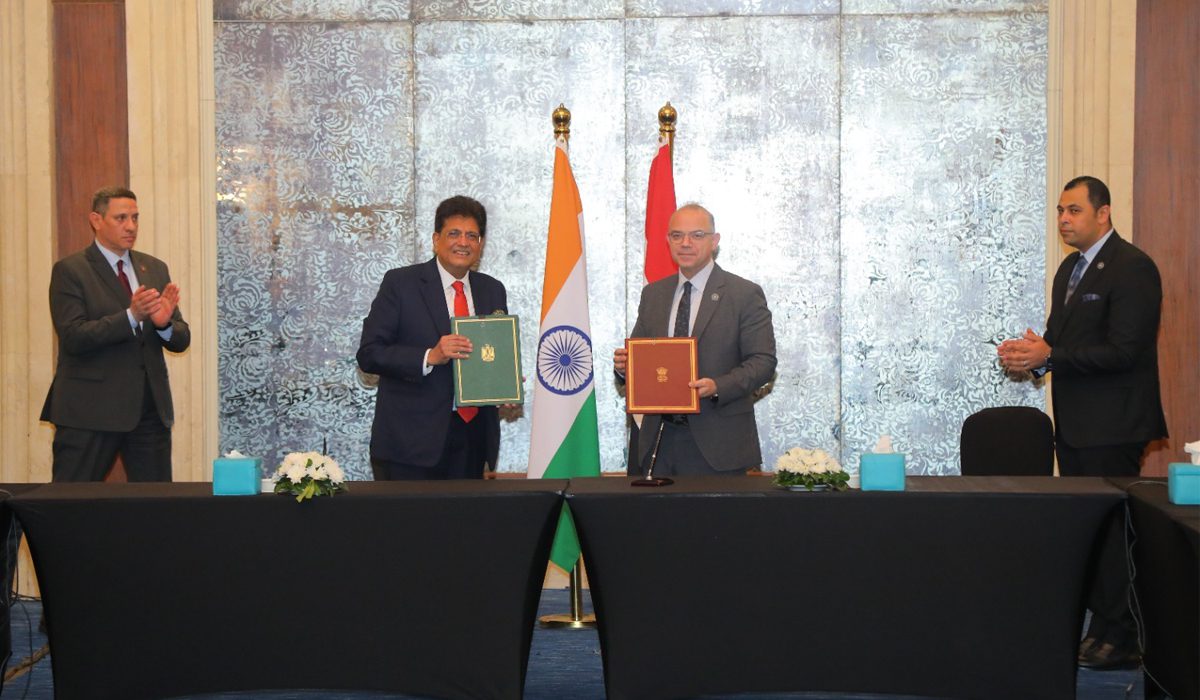
India and Egypt have agreed to establish a joint working group to explore the terms of reference for a bilateral trade agreement, in a move aimed at expanding trade, improving market access and strengthening investment ties between the two countries.
The agreement was reached during the seventh session of the India-Egypt Joint Trade Committee (JTC), co-chaired on Sunday in Egypt’s New Administrative Capital by India’s Minister of Commerce and Industry, Piyush Goyal, and Egypt’s Minister of Investment and Foreign Trade, Mohamed Farid Saleh.
The meeting marked the first time the committee, a key institutional mechanism for bilateral economic cooperation, was convened at the ministerial level, reflecting the importance both governments attach to strengthening the economic dimension of their strategic partnership.
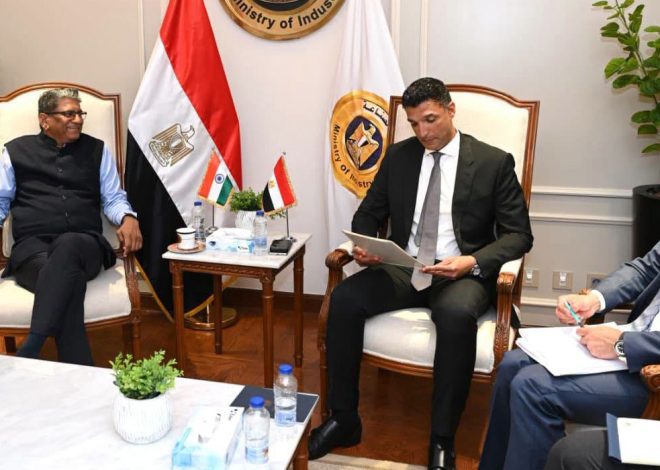
The two ministers also held bilateral talks ahead of the committee meeting, focusing on expanding trade, facilitating investment and building sustainable industrial and commercial partnerships. Discussions provided an opportunity to review existing trade relations, address challenges facing businesses and identify new areas of cooperation.
Bilateral trade between India and Egypt rose by 35% to reach US$6.5 billion in the 2025–2026 financial year, covering the period from April 2025 to March 2026. Trade momentum has continued into the current financial year, with exchanges reaching US$5.04 billion between April and September 2026, up 65% from US$3.08 billion during the same period in 2025.
The figures highlight the growing momentum in commercial relations, as well as the potential to diversify the bilateral trade basket. Both countries see significant opportunities for expanding trade in industrial goods, energy and fertilizers, chemicals, pharmaceuticals, engineering products, textiles and agricultural commodities.
A major focus of the discussions was on increasing trade flows, developing supply chains and establishing more predictable trade channels. The two sides explored ways to address non-tariff barriers, streamline customs procedures, strengthen standards and conformity assessment mechanisms, and improve access to each other's markets.
They also discussed practical challenges affecting business operations, including product registration and trade-related regulatory procedures.
Investment cooperation and business-to-business engagement featured prominently on the agenda, with both sides expressing interest in promoting joint manufacturing ventures and expanding investment in priority sectors. These include pharmaceuticals and medical devices, engineering and electrical equipment, fertilizers, textiles, renewable energy and emerging technologies.
The discussions also covered opportunities for Indian investment in Egypt's industrial zones and for Egyptian companies to tap into India's expanding manufacturing and services sectors.
In this context, both sides expressed interest in strengthening the framework for cooperation between Invest India and Egypt's General Authority for Investment and Free Zones (GAFI), including a proposed digital platform to facilitate the exchange of investment information and promote business partnerships.
Egypt's strategic location, proximity to the Suez Canal and access to African, Arab and European markets make it an attractive destination for export-oriented manufacturing and a potential hub for regional supply chains. India, meanwhile, offers Egyptian businesses access to a large and dynamic market, alongside opportunities for technology cooperation, manufacturing partnerships and investment.
The ministerial-level meeting comes amid growing political momentum in India-Egypt relations, following the meeting between Egyptian President Abdel Fattah El-Sisi and Indian Prime Minister Narendra Modi on the sidelines of the BRICS Summit in India in September 2026.
The Joint Trade Committee is expected to help translate this momentum into tangible economic outcomes, including increased trade, new investment projects, joint manufacturing initiatives, improved market access and more resilient supply chains connecting India, Egypt and their wider regional markets.
The two sides agreed to hold the eighth session of the Joint Trade Committee in New Delhi in 2028, on a date to be mutually determined.
About the Author