




Egypt and India Deepen Industrial Partnership: Cairo Seeks Greater Indian Investment in Manufacturing
As India continues to strengthen its economic footprint across the Global South, Egypt is positioning itself as a strategic industrial gateway for Indian manufacturers seeking access to African, Middle Eastern, and European markets.
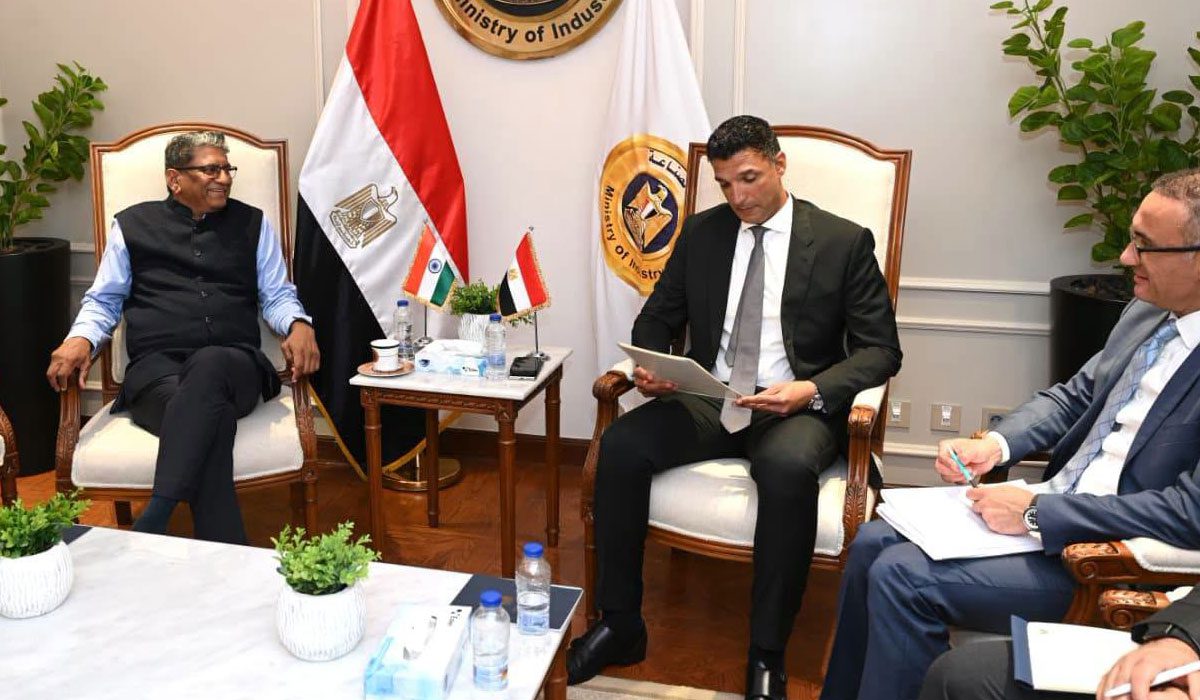
This vision was reaffirmed during a meeting between Egypt's Minister of Industry, Khaled Hashem, and India's Ambassador to Egypt, Suresh K. Reddy, where both sides explored new avenues for expanding industrial cooperation and attracting greater Indian investment into Egypt's manufacturing sector.
The discussions reflected the growing momentum in Egypt-India economic relations, with particular emphasis on translating longstanding political ties into tangible industrial partnerships capable of serving both economies.
A Shared Industrial Agenda
The meeting focused on priority industries identified by both governments, including renewable energy, food processing, automotive manufacturing, pharmaceuticals, and electronics—sectors that have become central to the industrial development strategies of both Egypt and India.
Minister Hashem emphasized that bilateral economic relations have witnessed remarkable growth in recent years, supported by the expanding presence of Indian companies operating across various sectors in Egypt. However, he stressed that the next phase should move beyond traditional trade toward deeper industrial integration through joint projects and stronger private-sector engagement.
He also called for revitalizing the Egyptian-Indian Business Council to facilitate direct communication between investors and industrial stakeholders in both countries.
Egypt as India's Manufacturing Gateway
A key theme of the discussions was Egypt's ambition to become a regional manufacturing and export hub for Indian companies.
The Egyptian minister highlighted several competitive advantages that the country offers foreign investors, including its strategic geographic location, extensive network of free trade agreements with African, Arab, and European markets, a skilled industrial workforce, and a package of government-backed investment incentives.
He encouraged Indian companies—both large corporations and medium-sized enterprises—to establish manufacturing operations in Egypt, not only to serve the domestic market but also to use the country as a platform for exporting to neighboring countries and the wider African continent.
Hashem also underlined the importance of attracting Indian industrial developers to establish new industrial zones under Egypt's industrial developer model, arguing that successful Indian investments could encourage many more companies to enter the Egyptian market.
Indian Confidence in the Egyptian Market
For his part, Ambassador Suresh K. Reddy reaffirmed India's confidence in Egypt as a strategic partner and an increasingly attractive destination for industrial investment.
He noted that Indian businesses view Egypt as a regional hub for manufacturing, exports, and investment, thanks to its strategic location and the economic reforms undertaken by the Egyptian government in recent years.
The ambassador pointed to the success of several Indian companies already operating in Egypt, including TCI Sanmar Chemicals, describing them as examples of the long-term potential of bilateral industrial cooperation.
BRICS and a New Chapter in Cooperation
The meeting also reflected the broader international context in which Egypt and India are strengthening their economic engagement.
Ambassador Reddy invited the Egyptian Minister of Industry to participate in the upcoming BRICS Industry Ministers' Meeting, while also proposing the organization of a business roundtable with leading Indian manufacturers to explore new investment opportunities in Egypt.
The invitation underscores the increasingly important role of the BRICS framework in fostering South-South economic cooperation, particularly as member states seek to diversify supply chains, strengthen industrial resilience, and expand investment across emerging markets.
Looking Ahead
As Egypt pursues an ambitious industrial modernization agenda and India continues to expand its global manufacturing capabilities under initiatives such as "Make in India," the interests of both countries are becoming increasingly aligned.
The latest discussions in Cairo suggest that the next phase of Egypt-India relations will be defined not only by growing trade volumes but also by industrial partnerships, technology transfer, and joint manufacturing projects that position Egypt as India's bridge to Africa—and India as one of Egypt's most important economic partners in Asia.
About the Author