



Indian States
States and Union Territories
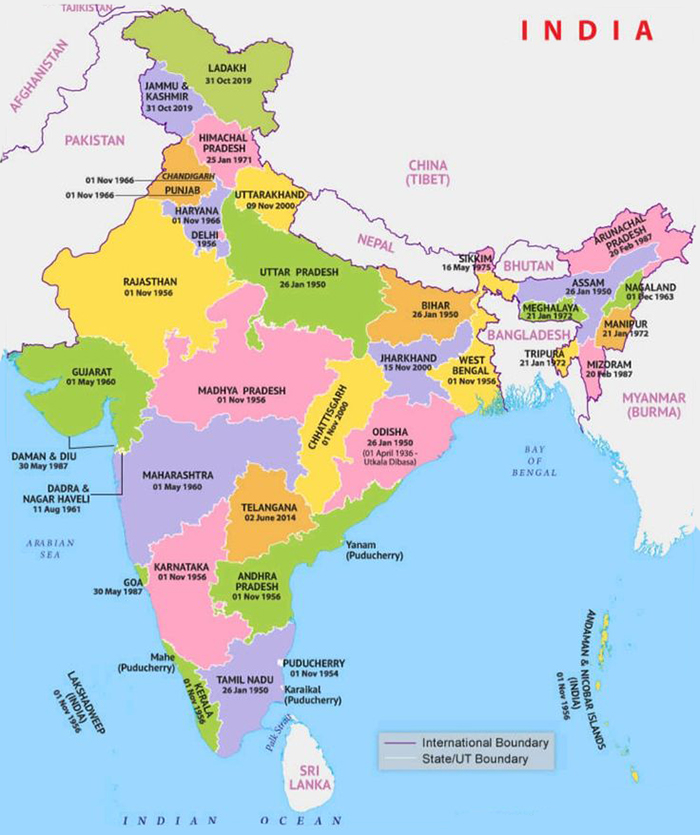 India, a union of states, is a Sovereign, Secular, Democratic Republic governed by a Parliamentary system. The President serves as the constitutional head of the Union's Executive. In the individual states, the Governor—appointed as the President's representative—functions as the Executive head. The governance structure of the states mirrors that of the Union. India comprises 28 states and 8 Union Territories. Union Territories are directly administered by the President through appointed Administrators.
Each State and Union Territory, regardless of size, possesses its own distinct demographic profile, history, culture, traditional attire, festivals, and languages. This section provides an introduction to the diverse States and Union Territories of India and invites you to discover the richness of their unique identities.