


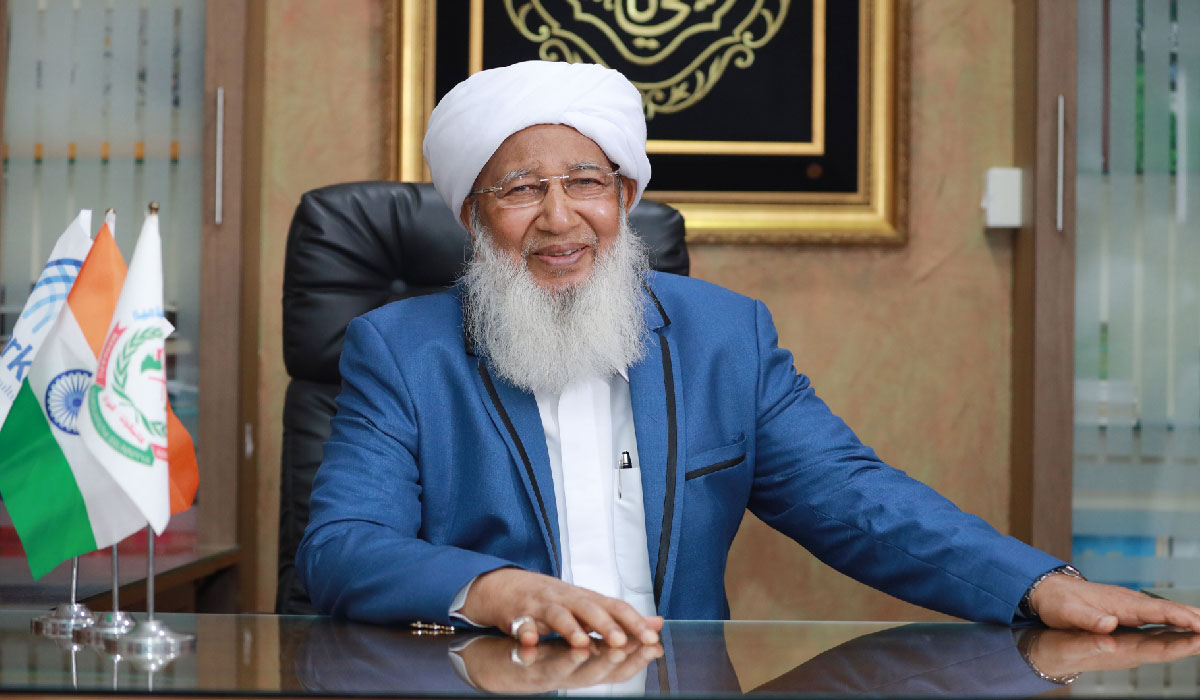
Grand Mufti of India Welcomes India’s Stance at the United Nations Supporting an Independent Palestine and Describes it as a Wise Decision
His Eminence Sheikh Abu Bakr Ahmed, the Grand Mufti of India, has passionately endorsed India’s resolute position at the United Nations, championing the establishment of an independent Palestinian state. He hailed this stance as a profound reflection of India’s enduring commitment to humanitarian values and its historic legacy of advocating for oppressed communities worldwide.
The Grand Mufti lauded India’s vote alongside the global majority in support of recognizing Palestine, describing it as a wise and courageous decision. This act underscores India’s steadfast dedication to global peace and justice, standing in solidarity with the Palestinian people, who have endured decades of occupation and the denial of their fundamental rights.
Beyond a mere political gesture, Sheikh Abu Bakr emphasized that India’s position is a powerful moral and cultural statement. It projects India as a global leader that upholds peace, condemns injustice, and fosters dialogue and coexistence. He called on the international community to take decisive steps to end the Israeli occupation, halt ongoing aggressions, and empower Palestinians to establish their sovereign state with East Jerusalem as its capital.
The Palestinian cause, the Mufti stressed, transcends borders—it is a universal humanitarian issue that resonates with the global conscience. Continued violence and oppression in Palestine threaten not only regional stability but the peace of the world at large.
In closing, His Eminence offered a heartfelt prayer for a just and lasting peace in Palestine, envisioning a fully sovereign Palestinian state that safeguards human dignity and delivers the justice long sought by its people.
These remarks were delivered at the prestigious International Milad Conference in Calicut, Kerala, where thousands gathered in a vibrant display of unity. The event underscored the deep public support for just causes, with the Palestinian struggle at the forefront.
Reinforcing India’s commitment, Ambassador Parvathaneni Harish, India’s Permanent Representative to the United Nations, recently addressed the UN Security Council, urging an immediate and comprehensive ceasefire in Gaza. He declared that temporary pauses in hostilities fall short of addressing the humanitarian crisis, emphasizing the need for sustained aid, the release of hostages, and a return to diplomacy as the only viable path to peace. Ambassador Harish reaffirmed India’s unwavering support for a two-state solution, stating, “There is no substitute for peace.”
According to the Indian Embassy in Cairo, India’s principled stance has sparked widespread admiration. A prominent activist remarked, “India’s clarion call for a ceasefire and humanitarian aid in Gaza shines as a beacon of hope for marginalized communities everywhere.” Another observer added, “By championing peace and justice, India cements its role as a global leader in fostering stability and compassion.” These voices reflect the profound impact of India’s position on the international stage.