

Beyond Oil: What Delcy Rodríguez’s India Visit Reveals About India–Venezuela Relations
As New Delhi and Caracas explore cooperation in energy, critical minerals, trade, and Global South diplomacy, the relationship is gradually expanding beyond its traditional foundations.
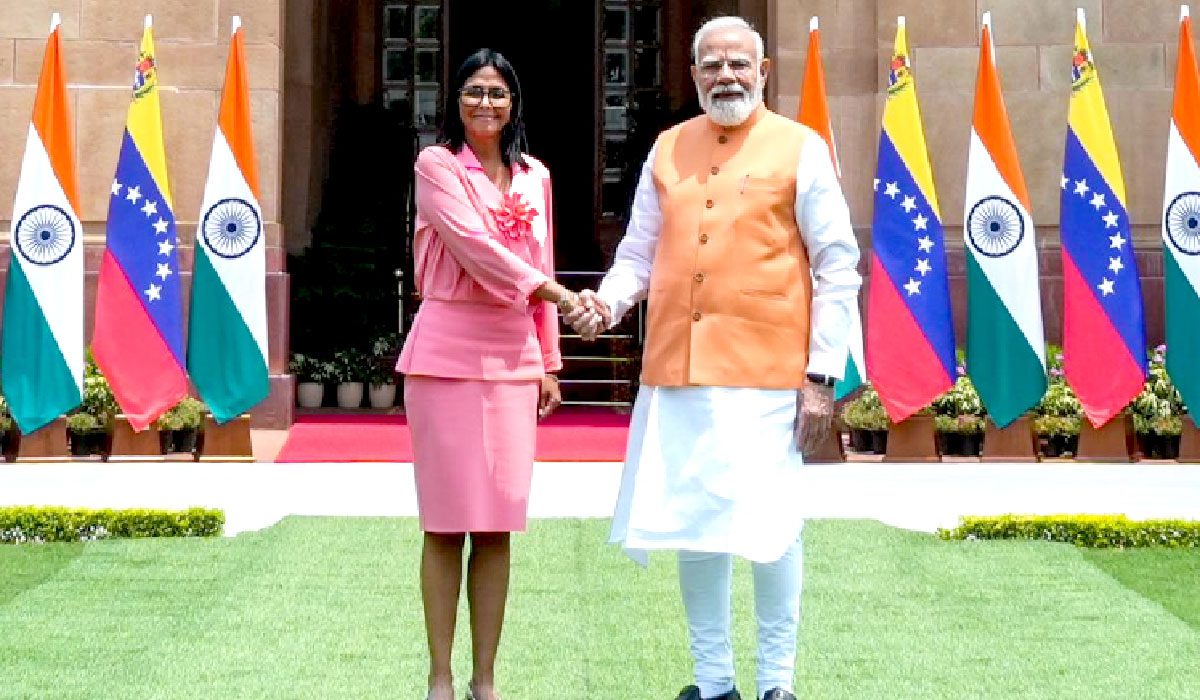
High-level diplomatic visits often attract attention for the meetings they produce, but their true significance lies in what they reveal about changing strategic priorities. The recent visit of Venezuela’s Acting President, Delcy Rodríguez, to India offered precisely such an insight. Through her engagements with Prime Minister Narendra Modi and External Affairs Minister S. Jaishankar, the visit highlighted an emerging effort by both countries to broaden a relationship that has historically been centered on energy trade.
At a time of geopolitical uncertainty, supply-chain disruptions, and growing competition over strategic resources, India and Venezuela are increasingly finding common ground in areas that extend well beyond oil. While energy remains the cornerstone of bilateral relations, recent discussions suggest a shared interest in developing a more diversified and future-oriented partnership.
Energy Cooperation Remains Central
Energy was naturally at the heart of the discussions in New Delhi.
As one of the world’s fastest-growing energy consumers, India continues to seek reliable and diversified sources of crude oil. Venezuela, home to some of the largest proven oil reserves globally, remains an important potential partner in this regard. During talks with Prime Minister Modi, both sides explored opportunities to strengthen cooperation in oil production, refining, and long-term energy engagement.
For India, energy diversification is an economic and strategic necessity. For Venezuela, closer engagement with major energy-importing economies offers opportunities to expand trade and attract investment. This convergence of interests ensures that energy cooperation will remain a key pillar of the bilateral relationship for the foreseeable future.
Expanding the Agenda to Critical Minerals
Perhaps the most noteworthy aspect of the visit was the attention given to critical minerals and mining cooperation.
The global transition toward renewable energy, electric mobility, and advanced technologies has intensified competition for strategic resources. Countries are increasingly seeking secure and diversified access to minerals essential for batteries, clean energy technologies, and industrial manufacturing.
Against this backdrop, discussions on critical minerals indicate that India and Venezuela are exploring areas of cooperation with long-term strategic relevance. Rather than remaining confined to a traditional buyer-seller dynamic in the energy sector, both governments appear interested in identifying new avenues for economic engagement that align with future industrial priorities.
This shift reflects a broader trend in international relations, where access to strategic resources is becoming as important as access to energy supplies.
Economic Pragmatism in a Changing Global Economy
The visit also underscored the growing importance of economic pragmatism in bilateral diplomacy.
In an increasingly uncertain global environment, countries are seeking partnerships that can support economic resilience, investment opportunities, and supply-chain diversification. India and Venezuela may be separated by geography, but both recognize the value of expanding cooperation in sectors such as trade, healthcare, technology, and industrial development.
The discussions in New Delhi suggested a willingness on both sides to explore practical areas of collaboration rather than limiting engagement to traditional diplomatic exchanges. Such an approach reflects a recognition that economic partnerships are becoming an increasingly important component of foreign policy.
The Global South Dimension
Another significant aspect of the visit was the emphasis on cooperation among developing nations.
India has consistently advocated for greater representation of developing countries in global governance institutions and has sought to strengthen engagement across Latin America, Africa, and Asia. Venezuela likewise views cooperation among countries of the Global South as an important element of a more balanced international order.
The conversations between Rodríguez and Indian leaders reflected this shared perspective. While differences in geography and political systems remain, both countries appear interested in expanding dialogue on issues affecting developing economies, including energy security, development financing, and international economic governance.
In this sense, the visit was not merely about bilateral relations; it also highlighted a broader effort to strengthen South-South engagement in a rapidly evolving world.
Why the Visit Matters
The significance of Delcy Rodríguez’s visit extends beyond the immediate discussions held in New Delhi.
The meetings demonstrated that India and Venezuela are exploring opportunities to build a broader and more diversified relationship at a time when global economic and geopolitical dynamics are undergoing significant change. Energy cooperation remains important, but it is increasingly being complemented by conversations on critical minerals, investment, trade, and international cooperation.
Importantly, the visit did not produce a dramatic diplomatic breakthrough, nor was it expected to. Its value lies instead in the political message it conveyed: both countries are willing to explore new areas of engagement and adapt their relationship to emerging global realities.
The Next Phase of India–Venezuela Relations
India–Venezuela relations are unlikely to be transformed overnight. However, the recent visit suggests that both governments see potential in expanding cooperation beyond traditional sectors and identifying areas of mutual benefit in a changing international landscape.
As concerns over energy security, strategic resources, and economic resilience continue to shape foreign policy decisions worldwide, partnerships built on practical interests are becoming increasingly important. The conversations in New Delhi indicate that India and Venezuela are seeking to position their relationship within this broader trend.
Whether these ambitions translate into concrete outcomes will depend on sustained engagement and follow-through in the months ahead. Nevertheless, Delcy Rodríguez’s visit has provided a timely reminder that bilateral relations are not static. They evolve in response to new challenges, new opportunities, and changing strategic priorities.
For India and Venezuela, that evolution may already be underway.