
Between Moscow and the World: Jaishankar–Putin Meeting Highlights India’s Strategic Balancing
At a time of growing geopolitical competition, New Delhi signals that strategic autonomy remains at the heart of its foreign policy
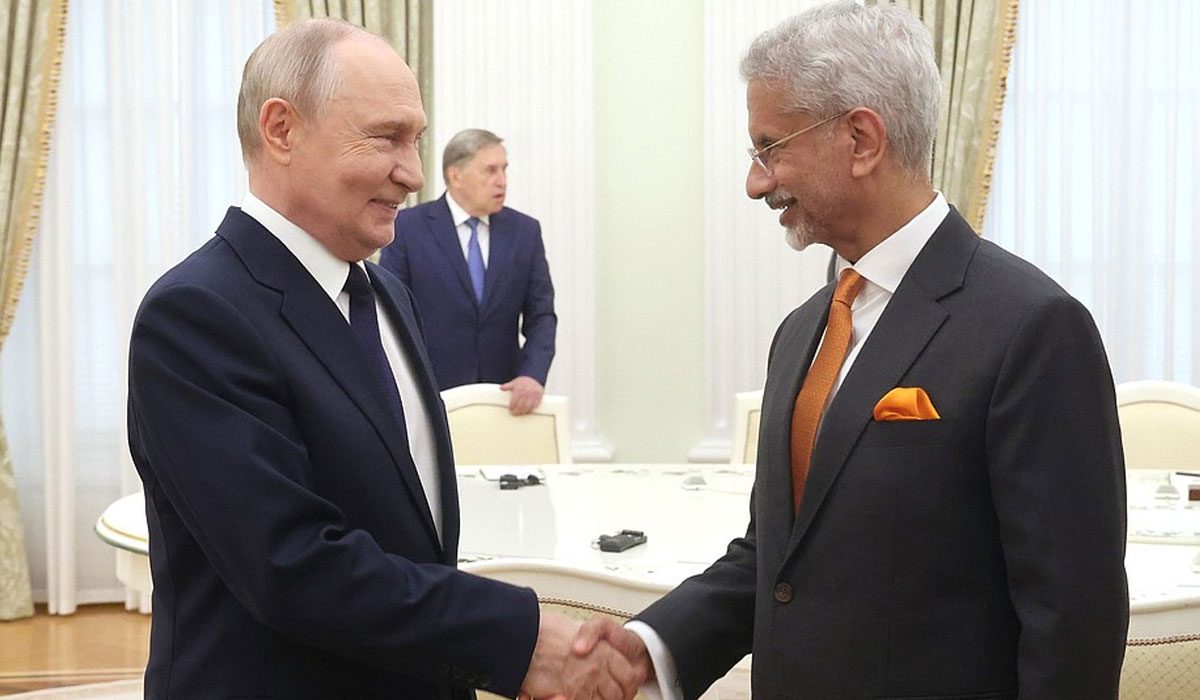
External Affairs Minister Dr. S. Jaishankar met Russian President Vladimir Putin in Moscow on Monday and conveyed the greetings of Prime Minister Narendra Modi. Jaishankar also delivered a personal communication from the Prime Minister to President Putin during his two-day official visit to Russia.
The meeting comes at a significant moment for India’s foreign policy. Global alliances are being reshaped by trade disputes, the Ukraine conflict, energy competition and growing strategic rivalry among major powers. Against this backdrop, India’s continued high-level engagement with Moscow demonstrates that its relationship with Russia remains an important pillar of its external relations.
Jaishankar’s meeting with Putin followed the 27th India–Russia Intergovernmental Commission on Trade, Economic, Scientific, Technological and Cultural Cooperation, which he co-chaired with Russian First Deputy Prime Minister Denis Manturov. Discussions covered trade, energy, fertilisers, nuclear cooperation, technology and broader economic engagement.
The economic dimension of the relationship has become particularly important. India continues to seek stable supplies of energy and fertilisers, while both countries are exploring ways to expand bilateral trade and improve connectivity and payment mechanisms.
The timing of the meeting is equally significant. India is currently navigating a complicated relationship with the United States, including disagreements over tariffs, trade, immigration and India’s energy ties with Russia. Yet New Delhi continues to engage Washington on defence, technology, critical minerals and the Indo-Pacific.
The Moscow engagement therefore reflects a broader principle of Indian diplomacy: strategic autonomy means maintaining the freedom to work with different powers according to national interests rather than becoming dependent on any single geopolitical bloc.
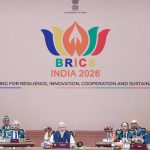
Jaishankar conveyed that Prime Minister Modi looks forward to meeting President Putin at the forthcoming SCO Summit and to welcoming him to India for the BRICS Summit. The two leaders are also expected to hold their annual bilateral summit.
For India, the Russia relationship extends beyond historical friendship. It encompasses defence, energy, nuclear cooperation, fertilisers, trade and strategic coordination. At the same time, India’s expanding partnerships with the United States, Japan, Europe, ASEAN and other countries demonstrate that New Delhi is pursuing a deliberately diversified foreign policy.
The Jaishankar–Putin meeting therefore carries a message that extends beyond Moscow: India intends to remain an independent strategic actor in an increasingly fragmented world.
As geopolitical competition intensifies, India’s challenge will be to preserve these multiple partnerships without allowing any one relationship to dictate its choices. That balancing act may become one of the defining features of Indian diplomacy in the years ahead.