



Beyond Borders: India and Italy Turn Culture into a Bridge for Strategic Partnership
As India and Italy deepen their Special Strategic Partnership, heritage, tourism, cinema, education and creative exchange are emerging as powerful instruments of cultural diplomacy.
Diplomacy is often measured through agreements, trade figures and strategic partnerships. Yet some of the strongest connections between nations are created far beyond conference rooms-through art, heritage, cinema, education, food and the simple experience of discovering another culture.
For India and Italy, culture is increasingly becoming such a bridge.
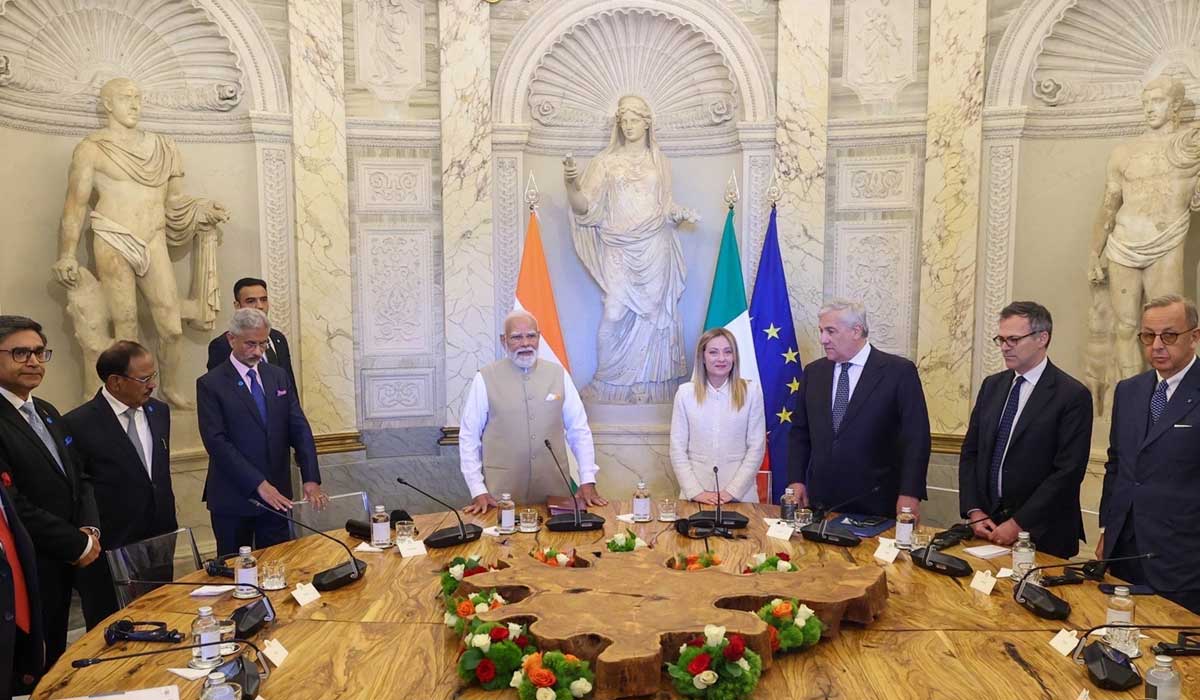
During Prime Minister Narendra Modi’s official visit to Italy in May 2026, India and Italy elevated their bilateral relationship to a Special Strategic Partnership, while identifying culture as an important pillar of their engagement. The two countries also expressed their intention to observe 2027 as the “Year of Culture and Tourism between Italy and India.”
This cultural momentum has since found a practical expression in tourism cooperation.
The 2nd India–Italy Joint Working Group on Tourism, held on 29 September 2026, brought officials and tourism stakeholders from both countries together to discuss tourism data exchange, promotion of lesser-known destinations, cine-tourism, destination twinning, skills and capacity building, and stronger Business-to-Business engagement.
Heritage as a Diplomatic Bridge
India and Italy share a profound heritage legacy. Their historic monuments, archaeological sites, artistic traditions and living cultures offer enormous possibilities for institutional cooperation.
The Joint Declaration welcomed cooperation involving the National Maritime Heritage Complex at Lothal, along with a programme to twin Indian and Italian sites inscribed on the UNESCO World Heritage List. Such initiatives can encourage exchanges of expertise in heritage preservation, interpretation, management and public engagement.
This represents cultural diplomacy in a meaningful form-not simply presenting heritage to the world, but creating opportunities for institutions and communities to learn from one another.
Cinema, Tourism and the Power of Storytelling
Cinema provides another natural meeting point between the two countries.
India and Italy have identified film and audiovisual cooperation as an area of engagement, while the tourism JWG has specifically highlighted cine-tourism.
Films can introduce audiences to unfamiliar landscapes and cultures long before they make a journey. A location seen on screen can become an invitation to discover its history, cuisine, people and traditions.
Greater cooperation between Indian and Italian creative industries could therefore connect cultural diplomacy with tourism promotion in an increasingly visual and digital world.
Tourism as People-to-People Diplomacy
The latest tourism dialogue reflects a broader understanding of what international tourism can achieve.
Promoting lesser-known destinations can diversify visitor experiences. Destination twinning can connect heritage communities. Skills development can strengthen professional exchanges. B2B engagement can bring tourism businesses closer together, while data-sharing can support more informed tourism planning.
Together, these initiatives can transform tourism from a conventional economic activity into a wider platform for people-to-people diplomacy.
Looking Towards 2027
The proposed India–Italy Year of Culture and Tourism 2027 provides an important opportunity to bring these strands together.
The Joint Declaration envisages initiatives including a major exhibition highlighting the long-standing cultural relationship between the two countries and an India Italy Cultural Forum bringing together institutions, experts and representatives of the creative industries.
The opportunity now lies in translating these commitments into sustained exchanges, partnerships and programmes that reach beyond government institutions.
India and Italy may be separated geographically, but their cultural landscapes offer countless points of connection. From ancient heritage to contemporary creativity, museums to cinema, tourism to education, culture can provide a language through which two societies understand each other beyond traditional diplomatic channels.
As the two countries prepare for 2027, the India–Italy relationship demonstrates an important lesson for modern diplomacy:
Sometimes the most enduring bridges between nations are built not through borders, but through culture.