




India and Indonesia Look Beyond Trade Figures to Build a Stronger Economic Partnership
With bilateral trade reaching USD 24.78 billion, New Delhi and Jakarta explore new opportunities in investment, manufacturing, digital services, clean energy and regional connectivity.
India and Indonesia are looking to strengthen their economic partnership through greater trade diversification, improved market access, expanded services-sector engagement and stronger investment cooperation. The latest discussions between the two countries reflect a shared interest in building a broader economic relationship and exploring new opportunities across emerging sectors.
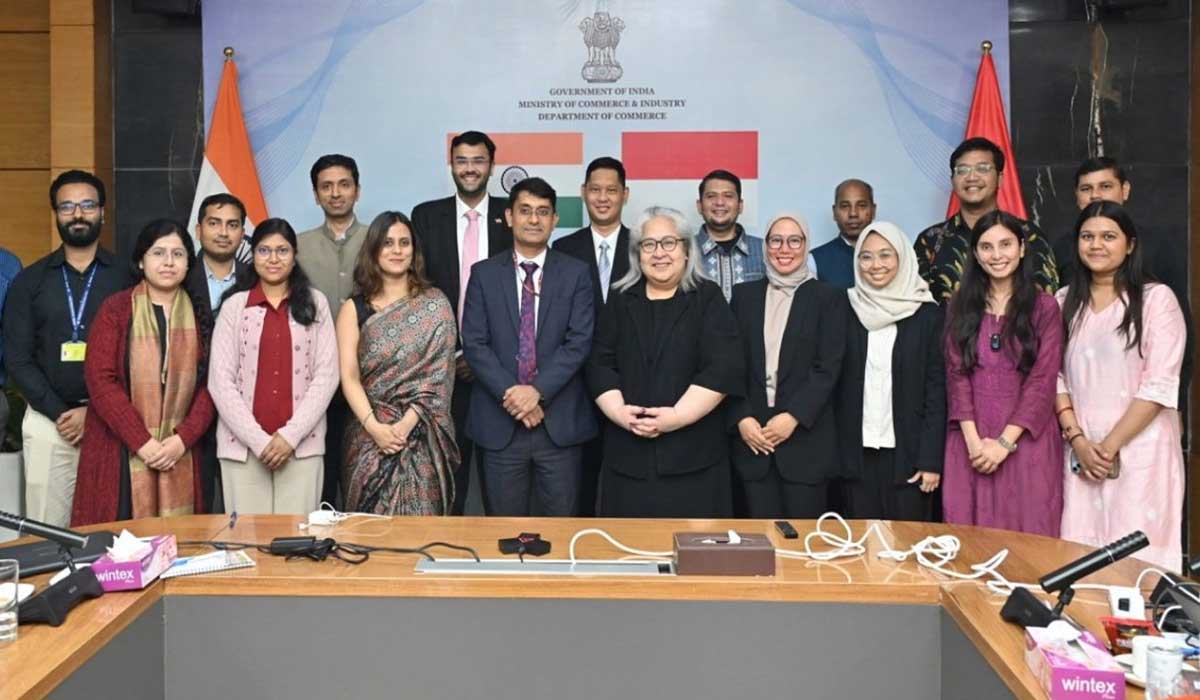
The second meeting of the India-Indonesia Working Group on Trade and Investment (WGTI), held in hybrid mode at Vanijya Bhawan, New Delhi, on Thursday, provided an important platform for reviewing bilateral economic relations and identifying areas for future cooperation.
Bilateral trade between India and Indonesia stood at USD 24.78 billion in FY 2025–26. Indonesia accounted for 19.30 per cent of India’s total trade with the Association of Southeast Asian Nations (ASEAN), making it India’s second-largest trading partner within the regional grouping.
The Indian delegation was led by Amit Verma, Joint Secretary in the Department of Commerce, Ministry of Commerce and Industry, while the Indonesian delegation was headed by Basaria Tiara Desika L. Gaol, Director of Bilateral Negotiation in Indonesia’s Ministry of Trade. Representatives from relevant ministries, departments and organisations of both countries also participated.
Trade Diversification and Market Access
Addressing market access barriers and facilitating smoother trade emerged as key priorities during the discussions. India highlighted export opportunities in pharmaceuticals, vaccines, medical devices, automobiles, machinery, agricultural products, electronics and solar energy-related products.
Both sides discussed trade-related challenges, including agricultural and animal product access, certification requirements, pharmaceutical registration and product standards. Improved coordination between relevant agencies could help address these concerns and create a more favourable environment for businesses.
Diversifying the range of goods and services exchanged between the two countries will also be important in building a more balanced and resilient trade relationship.
Investment and Manufacturing: New Areas of Growth
Investment cooperation offers considerable potential for strengthening bilateral economic relations. Greater participation by Indian and Indonesian companies in each other’s markets could encourage industrial partnerships, technology exchange and stronger regional supply chains.
Manufacturing, engineering, automobiles, pharmaceuticals and industrial machinery are among the sectors where businesses could explore new opportunities. Cooperation in infrastructure and logistics could further support commercial engagement and improve the movement of goods between the two economies.
Stronger investment partnerships would also help create employment, support industrial development and encourage long-term business collaboration.
Digital Economy and Services Cooperation
The services sector is emerging as another important dimension of India-Indonesia economic relations. Discussions covered opportunities in digital services, healthcare, education, tourism, social security and professional mobility.
India’s strengths in information technology, digital platforms and financial services offer opportunities for greater engagement with Indonesia’s growing economy.
An important area of potential cooperation is the linkage between India’s Unified Payments Interface (UPI) and Indonesia’s Quick Response Code Indonesian Standard (QRIS). Such digital payment connectivity could make cross-border transactions more convenient for businesses, travellers and consumers, while supporting wider financial integration.
Clean Energy and Critical Minerals
Energy and resource cooperation could become significant drivers of the future partnership. Both countries explored opportunities relating to renewable energy, green hydrogen, biofuels, fertilisers, critical minerals and mining.
Indonesia’s resource base and India’s expanding industrial and clean-energy capabilities provide opportunities to explore mutually beneficial investment and technology partnerships.
Cooperation in solar energy, bioenergy and green hydrogen could support sustainable development while opening new avenues for commercial engagement.
Future Prospects: Building a Stronger Economic Partnership
The India-Indonesia economic relationship has considerable potential to expand beyond its existing trade volumes. Greater cooperation in manufacturing, digital services, pharmaceuticals, renewable energy, infrastructure and critical minerals could provide fresh momentum to bilateral economic engagement.
Improving market access, facilitating business operations and encouraging private-sector participation will be essential to translating discussions into practical outcomes. Both countries also emphasised the importance of regional trade integration, including an early conclusion of the review of the ASEAN-India Trade in Goods Agreement (AITIGA).
Regular institutional engagement through the Working Group on Trade and Investment can help maintain progress and address emerging challenges. The next WGTI meeting is scheduled to take place in Indonesia.
For India, stronger economic engagement with Indonesia can deepen its commercial presence in Southeast Asia. For Indonesia, closer cooperation with India offers opportunities to expand market access, attract investment and strengthen industrial and services-sector partnerships.
Ultimately, the opportunity extends beyond increasing trade figures. A stronger India-Indonesia economic partnership can promote investment, encourage innovation, improve regional connectivity and create new opportunities for businesses in both countries.
As two important economies in the Indo-Pacific, India and Indonesia have the potential to transform their growing trade relationship into a more diversified, investment-driven and sustainable economic partnership.