

Indonesia’s BRICS Moment: Prabowo Pushes Global South Unity and a Stronger Multilateral Order
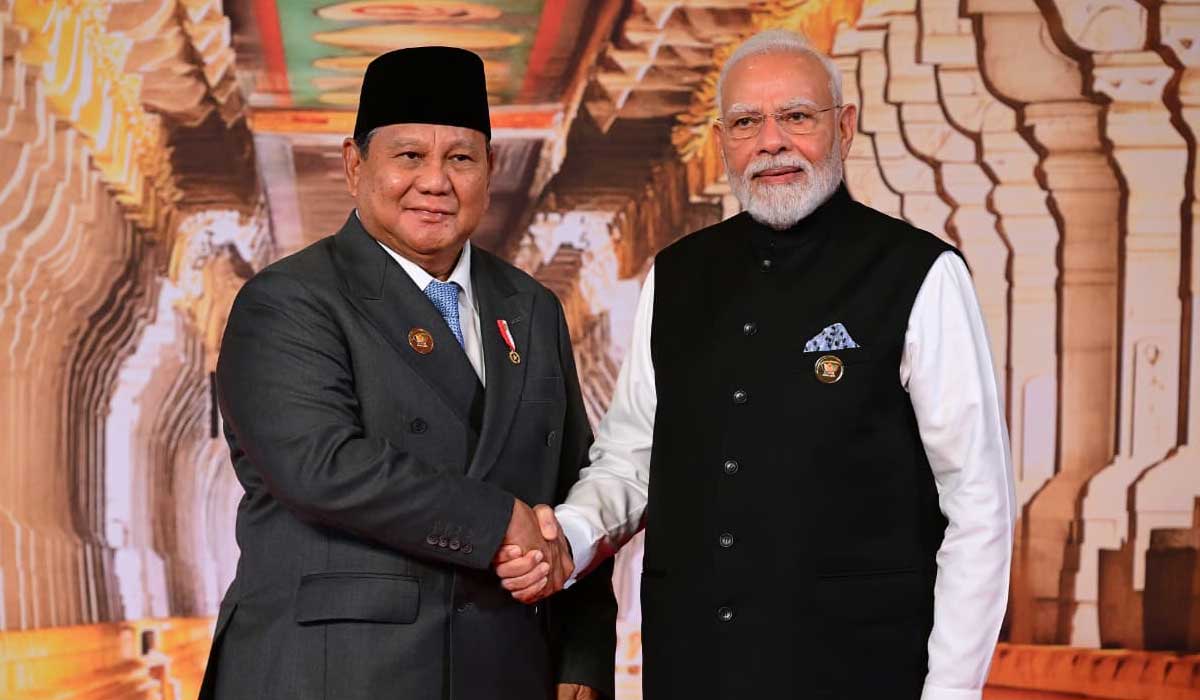
Indonesia used the 18th BRICS Summit in New Delhi to underline its growing role in the Global South, with President Prabowo Subianto calling for stronger multilateral cooperation, greater economic resilience and closer coordination among developing nations.
Prabowo’s participation in the September 12–13 summit came as Indonesia seeks to translate its relatively recent BRICS membership into a more active role in shaping discussions on global governance. The summit, hosted by India under the theme “Building for Resilience, Innovation, Cooperation, and Sustainability,” provided Jakarta with a platform to present its priorities while strengthening strategic partnerships with fellow BRICS members.
From membership to an active role
For Indonesia, the New Delhi summit was more than a diplomatic gathering. It offered an opportunity to position the country as a bridge among different interests within an increasingly diverse Global South.
According to Indonesia’s Presidential Secretariat, Prabowo used his participation to convey Jakarta’s national positions on global issues and to reaffirm its commitment to multilateral cooperation. Indonesia also presented itself as a country seeking to strengthen solidarity among developing nations while contributing to a more equitable, resilient and sustainable international order.
The message reflects Jakarta’s broader diplomatic approach: rather than viewing BRICS simply as an economic grouping, Indonesia sees the bloc as a platform through which developing countries can gain a stronger voice in global decision-making.
The Bandung spirit returns to New Delhi
One of the defining elements of Prabowo’s intervention was his reference to the Bandung spirit, linking Indonesia’s role in BRICS to the legacy of the 1955 Asian-African Conference in Bandung.
Speaking during a limited session on “Inclusive Global Governance and Strengthening Multilateralism,” Prabowo invoked the Indonesian proverb “Bersatu kita teguh, terpecah kita runtuh” — “United we stand, divided we fall” — as a reflection of the importance of unity among Global South countries.
He argued that the spirit that brought Asian and African nations together in Bandung remains relevant in today’s changing international order. For countries with a shared history of colonialism and struggles for independence, he said, collective action can provide greater leverage in defending national interests and ensuring that their voices are heard.
Prabowo’s reference to Bandung therefore served a broader purpose. It framed Indonesia’s BRICS engagement not only in terms of trade or economic cooperation, but also as part of a longer diplomatic tradition centered on sovereignty, equality among nations and greater representation for developing countries.
BRICS and global resilience
Economic resilience was another central theme of Indonesia’s message.
Prabowo argued that BRICS possesses significant collective strength because it brings together major markets, energy producers and a substantial share of the world economy and population. He said this capacity could be used more effectively to strengthen food and energy security, finance infrastructure and development, and expand opportunities for developing countries.
The Indonesian president also emphasized the importance of connecting the bloc’s markets, capital, natural resources, technology and knowledge. Greater connectivity, he suggested, could allow developing countries to mobilize their own resources more effectively and reduce their dependence on external sources of financing and expertise.
For Jakarta, this approach gives BRICS a practical dimension: the bloc’s collective weight should be translated into concrete economic opportunities rather than remaining primarily a political platform.
Reforming global governance
Prabowo also used the summit to advocate reform of the existing multilateral system.
He argued that the United Nations should remain at the center of international multilateralism, while becoming more representative, responsive and capable of delivering concrete results. He also called for the evolution of international financial institutions and warned against the weaponization of trade and currencies.
The position places Indonesia within a broader BRICS discussion over the future of global governance. As the bloc expands and includes countries from Asia, Africa, the Middle East and Latin America, its members have increasingly called for greater representation of developing countries in international institutions.
At the same time, Indonesia’s emphasis on multilateralism allows Jakarta to pursue a stronger voice without presenting BRICS as an exclusive geopolitical alignment. Its message at the New Delhi summit was instead centered on cooperation, strategic partnerships and a more balanced international system.
A wider diplomatic role for Indonesia
Indonesia’s participation also reflects the significance of its entry into BRICS. As the bloc continues to expand, Indonesia brings the perspective of Southeast Asia’s largest economy and one of the region’s most influential diplomatic actors.
Prabowo’s message in New Delhi sought to connect three elements of Indonesia’s foreign-policy identity: its historical role in championing solidarity among developing countries, its interest in strengthening economic resilience, and its ambition to play a more influential role in shaping global governance.
The challenge now is to turn that diplomatic positioning into practical outcomes. For Indonesia, BRICS offers access to major markets, investment and cooperation opportunities, but its value will ultimately depend on the ability of members to convert their collective economic and political weight into tangible benefits.
In New Delhi, Prabowo made clear that Indonesia intends to be an active participant in that process — one that advocates for Global South solidarity while seeking a more inclusive and resilient multilateral order.
About the Author