



Quad in New Delhi: Japan Calls for Strategic Cohesion as Indo-Pacific Dynamics Enter a New Phase
The Quadrilateral Security Dialogue (Quad) Foreign Ministers’ Meeting held in New Delhi on Tuesday underscored the growing strategic significance of the Indo-Pacific amid intensifying geopolitical competition, maritime security concerns, and global economic uncertainty.
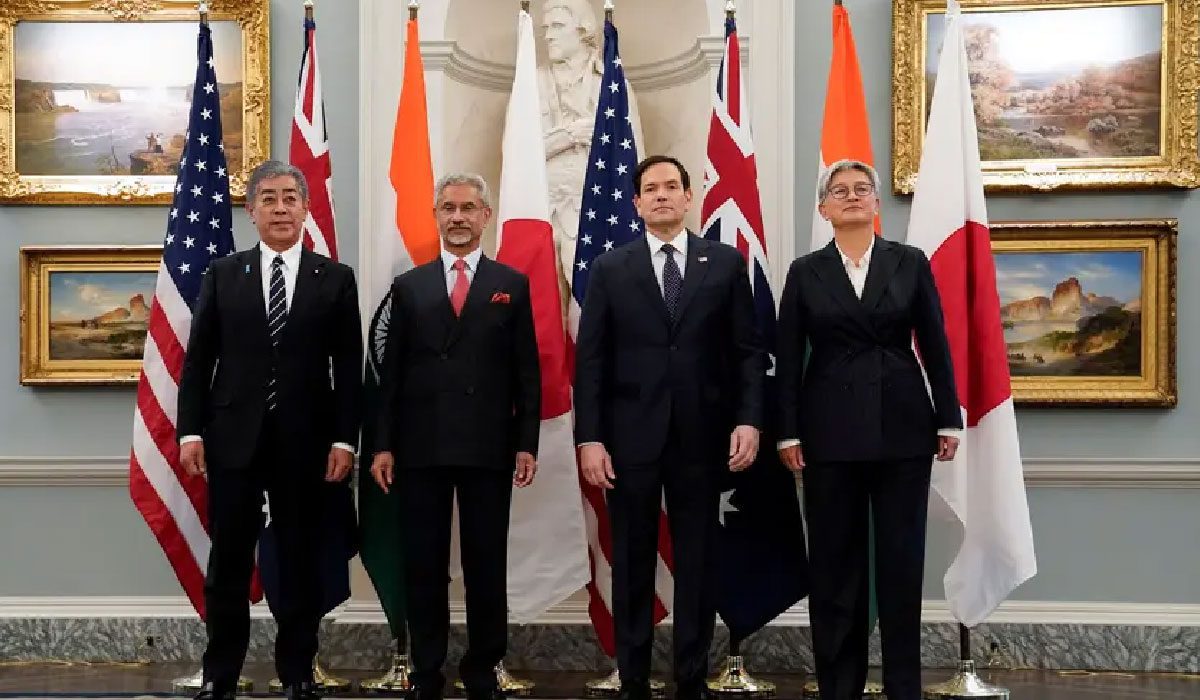
Hosted by S. Jaishankar, the high-level meeting brought together senior representatives from India, Japan, United States, and Australia to discuss regional security, resilient supply chains, critical minerals, maritime cooperation, and energy security across the Indo-Pacific region.
The meeting took place at a time of accelerating global realignments, with rising tensions in strategic waterways, instability in the Middle East, and increasing concerns over economic vulnerabilities linked to supply chain dependencies and energy disruptions.
A central focus of the discussions was the Quad’s expanding role as a practical and action-oriented Indo-Pacific coordination framework. The four nations reaffirmed their commitment to a “free, open, inclusive, and rules-based Indo-Pacific,” while emphasizing cooperation in areas ranging from maritime domain awareness to infrastructure connectivity and emerging technologies.
Among the participating nations, Japan delivered one of the strongest strategic messages during the meeting, reflecting Tokyo’s increasingly proactive diplomatic posture in regional affairs.
Japanese officials stressed that the Indo-Pacific is entering a critical phase requiring deeper coordination among democratic partners to preserve stability, secure international trade routes, and strengthen resilience against geopolitical and economic shocks. Tokyo also reiterated its long-standing vision of a “Free and Open Indo-Pacific,” which has become a defining pillar of Japan’s regional foreign policy strategy.
Japan particularly emphasized the importance of economic security as an integral component of national and regional stability. Discussions highlighted cooperation on critical minerals, semiconductor supply chains, clean energy technologies, and strategic infrastructure development – sectors increasingly viewed as essential to long-term geopolitical resilience.
The Quad also announced new initiatives aimed at strengthening connectivity and regional development, including cooperation projects in the Pacific region and support for maritime infrastructure initiatives. For Japan, these efforts align closely with its broader diplomatic outreach across Southeast Asia and the Pacific, where Tokyo has steadily expanded its strategic and developmental engagement over the past decade.
Maritime security remained another major pillar of the New Delhi discussions. The four countries explored enhanced coordination on maritime surveillance, navigation security, and regional domain awareness amid continued concerns surrounding the South China Sea and broader Indo-Pacific sea lanes.
Although the meeting avoided direct references to China, the broader strategic undertones reflected increasing concerns among Quad members regarding coercive regional behavior and the future balance of power in Asia.
For Tokyo, the New Delhi gathering represented more than routine diplomatic engagement. It reinforced Japan’s intention to play a leading role in shaping regional strategic cooperation while deepening its partnership with India — a relationship increasingly viewed as a cornerstone of the Indo-Pacific’s evolving geopolitical landscape.
As the international order continues to undergo significant transformation, the Quad meeting in New Delhi demonstrated the grouping’s growing relevance in addressing both traditional security concerns and emerging economic challenges, with Japan positioning itself at the forefront of efforts to strengthen regional strategic cohesion.