

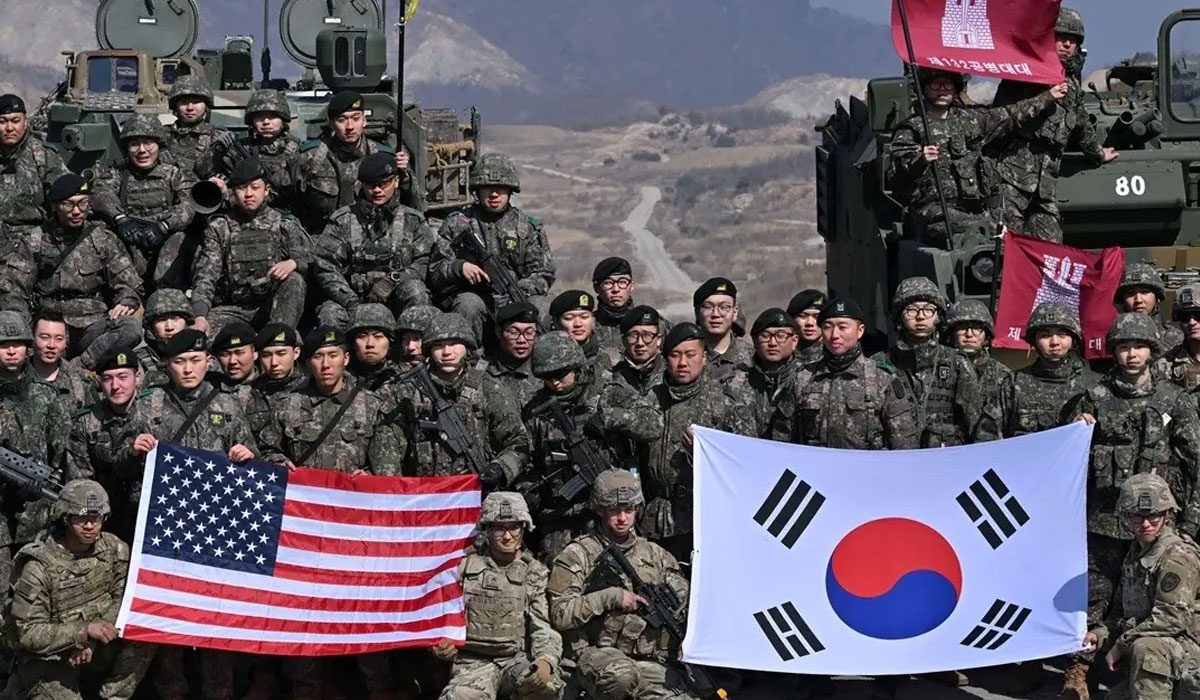
U.S.–South Korea Drills Cut Short: Is Washington Balancing Military Deterrence With Diplomacy?
The early conclusion of Ulchi Freedom Shield 2026 highlights a delicate balance between maintaining alliance readiness and creating space for dialogue on the Korean Peninsula
A Significant Adjustment
The United States and South Korea have concluded their annual Ulchi Freedom Shield (UFS) military exercise six days earlier than originally scheduled, bringing an important moment of adjustment to the allies’ security cooperation.
The exercise began on August 17 and was initially planned to continue until August 27. Following a U.S. decision to substantially reduce the drills, Washington and Seoul agreed to conclude the exercise on August 21. Field-training activities were also reduced.
The change is noteworthy because UFS is one of the principal annual combined exercises through which the two allies maintain operational coordination and readiness on the Korean Peninsula.
Readiness Remains Important
Despite the shorter schedule, the exercise continued to serve its core purpose of improving coordination between U.S. and South Korean forces.
For Seoul, maintaining a capable defence posture remains an important element of national security. For Washington, the exercise remains part of its broader commitment to its alliance with South Korea.
The reduction therefore does not mean that bilateral defence cooperation has ended. Rather, it represents a change in the scale and format of this year’s exercise.
The Diplomatic Dimension
The decision also carries a diplomatic dimension.
U.S. President Donald Trump ordered a substantial reduction in the drills, citing their cost and his relationship with North Korean leader Kim Jong Un. The move has been widely viewed as creating additional space for possible engagement with Pyongyang.
For diplomacy, the development presents an interesting question: can Washington and Seoul maintain credible defence preparedness while simultaneously reducing activities that North Korea regards as threatening?
That balance will be important if efforts to reopen dialogue with Pyongyang gain momentum.
North Korea Responds
North Korea has traditionally opposed U.S.–South Korea military exercises, describing them as preparation for conflict. The latest reduction, however, has not produced an immediate change in Pyongyang’s position.
On Thursday, North Korea launched more than 10 short-range ballistic missiles toward waters off its eastern coast, according to South Korean officials. The launches came shortly after Pyongyang criticised the continued exercises.
The response suggests that reducing the scale of military exercises alone may not be sufficient to create a broader diplomatic breakthrough.
A Delicate Balance for Seoul
South Korea now faces the familiar challenge of balancing two important objectives: maintaining a strong alliance with Washington and supporting efforts that could reduce tensions on the Korean Peninsula.
President Lee Jae Myung’s government has expressed support for peaceful coexistence and dialogue, while also maintaining the importance of national defence capabilities.
For Seoul, therefore, the issue is not simply the number of days of a military exercise. It is how military readiness, alliance cooperation and diplomacy can work together over the longer term.
What It Means for Washington
For Washington, the decision reflects an effort to explore whether a different approach can create diplomatic opportunities with Pyongyang while maintaining essential military preparedness.
The challenge will be ensuring that any reduction in exercises does not create uncertainty about the broader U.S. commitment to South Korea’s security.
At the same time, continued communication with Seoul will remain important as both countries assess the future shape of their combined training.
A Wider Indo-Pacific Question
The development also has implications beyond the Korean Peninsula.
The U.S.–South Korea alliance is an important component of the wider security environment in Northeast Asia. Japan, China and other regional actors will closely observe how Washington and Seoul manage the relationship between defence preparedness and diplomacy.
The central issue is therefore not simply whether military exercises become larger or smaller, but whether the allies can maintain credible readiness while supporting diplomatic avenues for stability.
Between Deterrence and Dialogue
The conclusion of Ulchi Freedom Shield 2026 offers no simple answer to the future of the Korean Peninsula.
What it does demonstrate is the continuing importance of finding a practical balance between military preparedness and diplomatic engagement. The United States and South Korea remain security partners, while Washington is also signalling an interest in creating space for renewed communication with Pyongyang.
For the Korean Peninsula, the most constructive path may ultimately depend on keeping both channels open: a capable defence posture to preserve stability and diplomacy to pursue lasting peace.
The coming months will show whether this adjusted approach can contribute to meaningful dialogue while maintaining confidence in the U.S.–South Korea security partnership.