




Dignity Before Development: Reimagining Cooperation on the Mahakali
For three decades, a 315-meter ghost has haunted the canyons of the Far-West. The Pancheshwar Multipurpose Project (PMP), the centerpiece of the 1996 Mahakali Treaty, was promised as a "Project of the Century" that would transform Nepal into an energy powerhouse. Yet today, as the snow melts into the Mahakali River, the project remains an expensive blueprint—a victim of a widening trust deficit and a fundamental clash over territorial integrity.
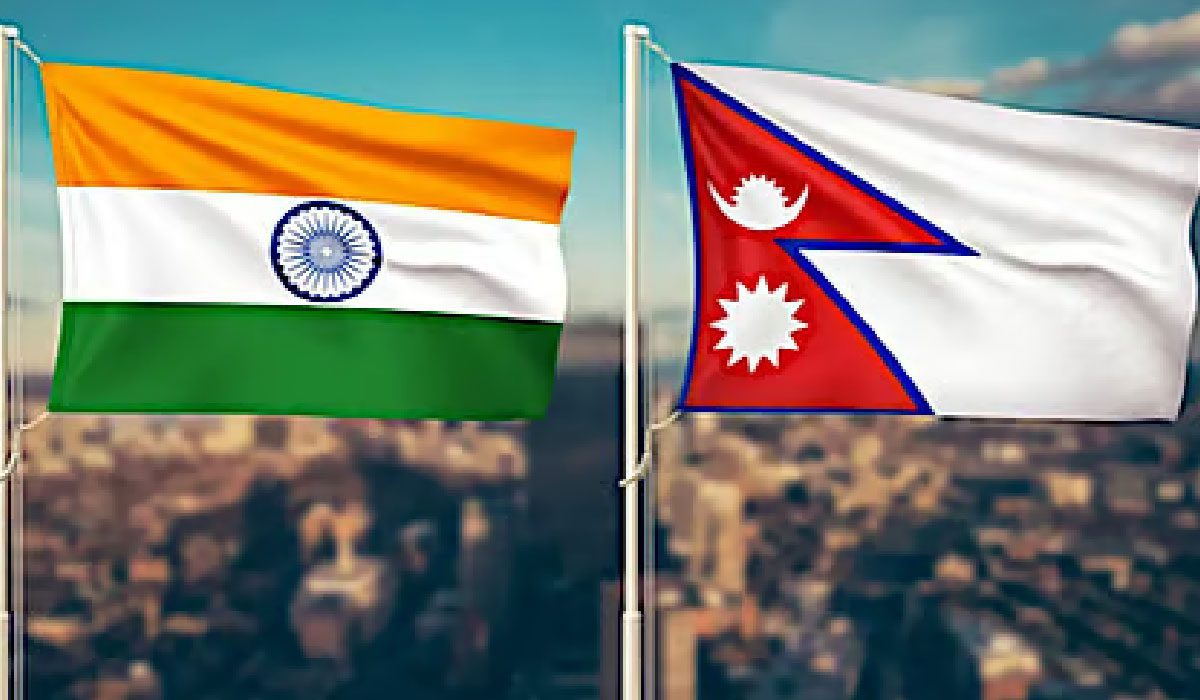
As Nepal asserts a new era of "Water Sovereignty," the Pancheshwar deadlock has become more than an engineering puzzle; it is the ultimate test of whether India can treat its smaller neighbor as an equal partner or merely a junior stakeholder in the Himalayan watershed.
The Cartographic Red Line
The primary hurdle is no longer financial; it is existential. Under the 1816 Treaty of Sugauli, the Mahakali River was established as Nepal’s western boundary. However, the exact origin of that river has become the most sensitive flashpoint in South Asian diplomacy.
In April 2026, tensions reached a fever pitch when India announced the resumption of the Kailash Mansarovar Yatra through the Lipulekh Pass. Kathmandu’s response was swift and uncompromising. Invoking the "New Map" adopted in 2020, Nepal maintains that the river originates at Limpiyadhura, placing the Kalapani and Lipulekh regions firmly within Nepali borders.
For the Nepali public, building a massive dam on a "boundary river" while that boundary is being unilaterally redefined by a neighbor is a non-starter. This stance was codified on May 3, 2026, when Nepal issued rare, dual diplomatic notes to both New Delhi and Beijing. As Foreign Ministry spokesperson Lok Bahadur Paudel Chhetri stated in an official briefing this week: "Sovereignty, in 2026, is not up for negotiation in exchange for megawatts."
The ‘Regulated Water’ Heist
Beyond the map lies a complex economic injustice that critics call the "Great Water Heist." The Pancheshwar Dam is designed to provide massive "downstream benefits"—specifically irrigation and flood control for millions of hectares in the Indian states of Uttar Pradesh and Bihar.
According to technical briefs from the Nepal Electricity Authority (NEA), India would receive nearly 90% of the irrigation benefits while Nepal receives only 7%. Despite this, New Delhi has resisted paying a "service fee" for the regulated water, arguing instead that water is a natural flow.
Nepal’s stance has matured. Following the "Avoided Cost Principle," Kathmandu argues that India should compensate Nepal for the billions of dollars India saves in flood damage and agricultural gains. "We are providing a geological service by allowing our mountains to be used as a reservoir," says one senior energy analyst. "In any other international deal, that service has a price."
A New Strategic Leverage
The Nepal of 2026 is not the power-starved nation of 1996. The dynamic has shifted:
• Export Power: In the first five months of the 2025/26 fiscal year, Nepal earned over Rs. 18.2 billion from electricity exports to India and Bangladesh.
• The Bangladesh Factor: With the successful launch of trilateral power trade using the Indian grid, Nepal has proven it is no longer locked into a single-buyer monopsony.
• Seismic Risks: Modern geological studies released in March 2026 warn that a 315-meter dam in the "Central Himalayan Seismic Gap" poses a catastrophic risk to Nepal’s ecology.
Dignity Over Development
Pancheshwar is at a crossroads. For India, it is a path to green energy and agricultural security. For Nepal, it is a test of whether a small state can protect its "White Gold" and its borders simultaneously.
The message from Kathmandu to the world is clear: The era of lopsided water deals—from the Koshi to the Gandak—is over. A "Masterpiece" of Himalayan diplomacy can only be achieved if it respects the 1816 Sugauli line and acknowledges that water regulation is a sovereign service, not a free gift. Until then, the Mahakali will continue to flow wild, an untamed symbol of a nation that refuses to let its future be dammed by a lack of respect.
About the Author