

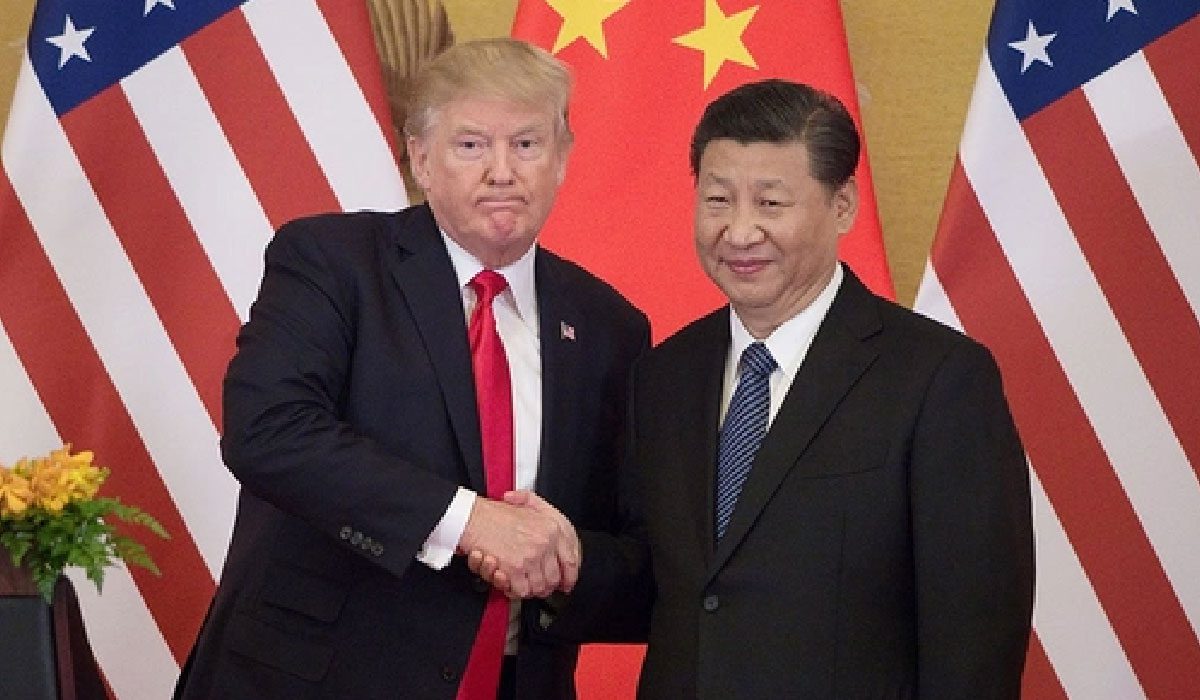
Assessing Trump-Xi Summit
The world's perception of Donald Trump's state visit to China, which was set for May 13–15, 2026, is changing. This is Trump's second state after he resumed second term office in 2017. In light of the ongoing Iran-US conflict, Trump's visit to Beijing highlights expectations that range from symbolic amity to highly stressful circumstances involving the conflict, trade tensions, and upcoming talks to reopen the Strait of Hormuz.
The latest summit was scheduled at a far tougher moment in US-China relations as Washington is striving hard to convince Iran into reopening the Strait of Hormuz. President Trump’s return to China after a hiatus of nine years has not just sent the world into speculation but is going to show an outsized following of the meeting of the two superpowers. For years, US-China had not been a top priority for Washington unless the war and military operations in the West started becoming a great concern. At a time when global trade tensions are escalating in Taiwan and the AI threat is overshadowing the world, the USA’s tilt in the Eastern Hemisphere points toward China’s growing global impact. The Iran-US war has surely caused a dent in China’s economic progress, but ideologically and politically it has gained an upper hand.
In the view of this, what makes China a clear winner even before the summit is its ability to bluntly issue a warning to Trump to steer clear of the Taiwan-China affair. It was instructive that Xi felt empowered to enact the measure right away, considering that Trump lashes out at even the smallest perceived slight, such as withdrawing 5,000 American troops from Germany after Chancellor Friedrich Merz claimed the United States had been "humiliated" in Iran. Xi’s body language and discordant warnings, without any real concern for the displeasure from Trump, exhibit China’s resilient strength and insinuate an eastward shift of global power.
China’s trade record of a 1.2 trillion surplus in FY2025, given the US tariff of 145 percent, remarkably holds the answer to its power-conviction. In April alone China reported the monthly export rise of 14.1% owing to increasing demand for green technology products, from electric vehicles to wind turbines and batteries, representing its potential to create opportunities even in disruptive times like war. As far as the conflict is concerned, China is smartly using its soft power image over Washington’s marring its international image. Even when China's and Iran's oil purchasing is marked with clear constraints during the crisis, it owes its efficient energy mechanics to huge reserves, overline energy pipelines, and green energy infrastructure.
As an active struggle for a prize, China views the US as a warmonger for its own benefits, which is quite different from China's own policy of elevating self-worth through military, infrastructure and economy. China is leveraging the ongoing US-Iran war crisis and global economic friction to accelerate a structural pivot by agreeing to buy double-digit billions of American agricultural products over the next three years. Whether China holds the upper hand in negotiations with the U.S. is under scrutiny and remains a subject of long-term debate. However, Beijing wields significant leverage over Washington by demanding Nvidia’s advanced AI-powered semiconductor chips while pressuring the U.S. to suspend the pending $13 billion arms sale to self-ruling Taiwan. While US-China relations deteriorated in 2025, with the US levying high tariffs on Chinese goods, Beijing retaliated by blocking the exports of key rare earth elements and critical minerals. This move dealt a significant blow to American manufacturing.
The Sino-US summit may be labelled as a “success” but Xi’s words did not signal any semblance of partnership with US indicating China stands not as partner but as a peer.
Takeaway from US-Sino Summit
1. Trade & Economic Cooperation
• New institutions: Agreed to create a US-China Board of Trade and US-China Board of Investment to handle bilateral trade and investment issues through structured govt mechanisms.
• Agriculture deal: China committed to buying at least $17B/year in US agricultural products for 2026-2028, on top of existing soybean commitments.
• Aviation: China approved 200 Boeing aircraft for Chinese airlines, the first major order since 2017.
• Business presence: 17 US business leaders including Musk, Cook, and Fraser joined Trump, signalling intent to stabilize trade ties.
2. Critical Minerals & Supply Chains
China agreed to address US concerns over rare earth and critical mineral supply shortages, including yttrium, scandium, neodymium, and indium. Both sides framed this as part of stabilizing market expectations.
3. Geopolitical Alignment
• Iran: Agreed Iran should not possess nuclear weapons and called for reopening the Strait of Hormuz.
• North Korea: Reaffirmed joint objective to denuclearize.
4. AI: Discussed cooperation on AI as a new frontier for US-China collaboration.
5. Diplomatic Signalling: Both pledged to support each other during upcoming G20 and APEC summits.
6. Heavy emphasis on people-to-people ties: Chinese railroad workers, basketball, ping-pong diplomacy 55th anniversary.
7. What’s Still Unresolved Taiwan: Discussed but not in the public White House fact sheet.
8. Tech export controls: No breakthrough on stalled chip export licenses for advanced Nvidia chips.
The recent US-China Summit highlights a geopolitical shift where Washington and Beijing do not seek submission but rather manage strategic stability. At the same time China’s path to global hegemony remains nuanced. It dominates sectors like global manufacturing and clean energy supply and is surging ahead in artificial intelligence, challenging long-standing American areas. But that doesn’t categorize China as a superpower because it still lacks the financial might of the US. The Chinese currency, the renminbi, accounts for only about 2% of global central bank reserves. The tone of modern bilateral summits—such as U.S. President Donald Trump's high-profile summit with Chinese President Xi Jinping in Beijing—has shifted. China used the engagement to project global centrality and frame a new world order of "stable competition between equals" rather than conceding to U.S. demands.
About the Author