


India-Russia Relations: Defence, Energy and BRICS Collaboration
“Nations do not sustain partnerships merely through history, but through the continued convergence of strategic interests.”
The Enduring Trinity
As global geopolitics enters an era of intensified fragmentation, sanctions, technological rivalry and shifting alliances, the India–Russia relationship continues to stand out as one of the most resilient strategic partnerships of the modern international system.
What began as a Cold War-era alignment between New Delhi and Moscow has evolved into a multidimensional relationship rooted not in ideology, but in pragmatic convergence.
Today, the India–Russia partnership is anchored by three enduring pillars — defence cooperation, energy security and multilateral coordination through BRICS.
Together, these three sectors form the strategic trinity sustaining bilateral ties despite mounting geopolitical pressures and changing global equations.
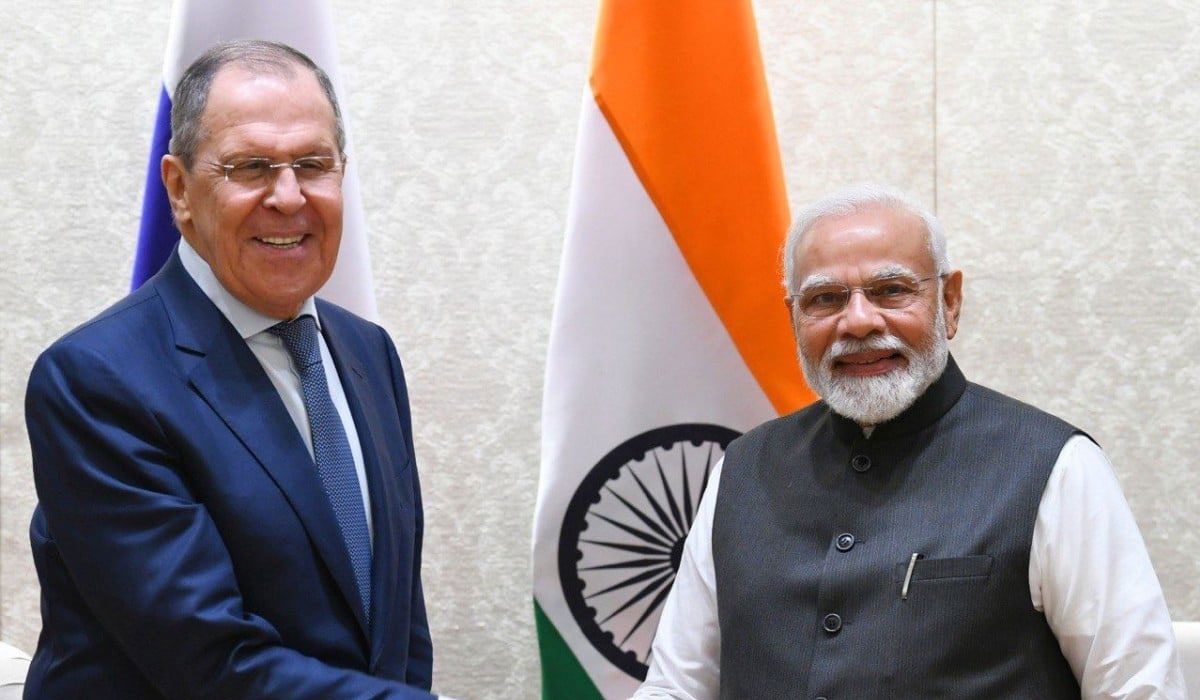
The significance of this partnership was reaffirmed during the high-level India–Russia consultations held in May 2026 in New Delhi, where both nations reviewed defence cooperation, explored new avenues for operational synergy and reiterated their commitment to a “Special and Privileged Strategic Partnership.”
Russian Foreign Minister Sergey Lavrov’s discussions with Prime Minister Narendra Modi and External Affairs Minister Dr S. Jaishankar further emphasised joint defence production, energy cooperation, space collaboration and mechanisms to shield bilateral trade from “unfriendly pressure from third countries.”
These engagements acquire added geopolitical significance ahead of Russian President Vladimir Putin’s expected visit to India in September 2026 under India’s BRICS Chairmanship.
At a time when India deepens engagement with the West while preserving strategic autonomy and Russia pivots increasingly toward Asia amid Western sanctions, the India–Russia equation remains both relevant and adaptive.
Defence: The Strategic Backbone of Trust
Defence cooperation remains the strongest and most institutionalised pillar of India–Russia relations.
For nearly seven decades, Moscow has played a central role in India’s military modernisation. Even today, approximately 60–70 percent of India’s military hardware has Soviet or Russian origins, making Russia indispensable to India’s operational readiness.
From MiG fighter aircraft and Sukhoi Su-30MKIs to T-90 tanks, nuclear submarines, aircraft carriers and advanced missile systems, Russian platforms continue to constitute the backbone of India’s defence infrastructure.
However, the bilateral defence relationship is no longer confined to a traditional buyer-seller model. It is increasingly evolving toward co-development, joint manufacturing, technology transfer and indigenous production under India’s “Make in India” initiative.
The BrahMos supersonic cruise missile project remains the finest example of successful Indo-Russian military-industrial collaboration. Beyond procurement, it demonstrated the possibility of creating globally competitive defence technologies through strategic partnerships.
The May 2026 5th Sub Working Group (Land) meeting between Indian and Russian military officials further reflected this evolution. Discussions focused on expanding military training, operational coordination, logistics cooperation and interoperability between the Indian Army and Russian Land Forces.
The Russian delegation’s visit to the Shatrujeet Brigade highlighted ongoing efforts to deepen tactical cooperation and operational synergy.
Equally significant are discussions surrounding reciprocal logistics frameworks and enhanced defence-industrial cooperation. Both nations are working toward manufacturing spare parts and upgrading legacy systems within India, thereby reducing supply-chain vulnerabilities while supporting India’s self-reliance objectives.
India’s continued acquisition of Russian defence systems despite pressure from Western capitals reflects New Delhi’s commitment to strategic autonomy.
The S-400 missile defence system became more than a defence purchase; it emerged as a geopolitical statement that India would pursue national security decisions independent of bloc politics.
Nevertheless, challenges persist.
India’s diversification of defence imports from the United States, France and Israel has gradually reduced Russia’s dominance in India’s arms market.
Simultaneously, Russia’s growing strategic proximity with China generates concern in New Delhi, particularly amid unresolved India-China border tensions.
Yet both nations recognise that their defence relationship remains mutually indispensable. Russia continues to view India as one of its most important defence partners, while India sees Russia as critical in areas such as nuclear submarines, missile technologies, aerospace systems and strategic deterrence.
The future of India–Russia defence cooperation will likely depend not on volume-based arms transfers, but on high-end collaboration in advanced military technologies, cyber defence, artificial intelligence, space security and next-generation weapons systems.
Energy: The New Engine of Strategic Interdependence
If defence represents the historical foundation of India–Russia relations, energy has emerged as its most dynamic contemporary pillar.
The Russia-Ukraine conflict and subsequent Western sanctions dramatically reshaped global energy flows, creating a new strategic opportunity for India and Russia.
As Europe reduced dependence on Russian energy imports, Moscow sought alternative markets, while India, facing rising energy demands and inflationary pressures, pursued affordable and stable supplies.
The result was a remarkable expansion in bilateral energy cooperation.
India’s imports of Russian crude oil surged exponentially between 2022 and 2026, transforming Russia into one of India’s largest energy suppliers. Discounted Russian crude enabled India to shield its economy from severe global price shocks while maintaining domestic economic stability.
Importantly, India’s energy decisions reflected strategic pragmatism rather than ideological positioning. New Delhi consistently defended its purchases based on national interest, energy affordability and developmental priorities.
The energy partnership, however, extends far beyond oil imports.
Russia remains one of India’s most important partners in civilian nuclear energy. The Kudankulam Nuclear Power Plant in Tamil Nadu continues to symbolize long-term strategic trust between the two nations. Multiple reactors are operational, while additional units remain under development with Russian assistance.
Nuclear cooperation has strengthened India’s clean energy transition while reinforcing Russia’s role as a trusted long-term technological partner.
Beyond oil and nuclear energy, both nations are expanding discussions around liquefied natural gas (LNG), fertilisers, rare earth minerals, Arctic exploration, hydrogen energy and critical supply chains.
The Russian Far East has also emerged as an important frontier for economic and energy cooperation. Indian investments in energy infrastructure and connectivity projects reflect growing interest in deeper geo-economic integration.
Equally important is the effort to create alternative financial and payment systems insulated from the Western sanctions architecture.
Bilateral trade settlements increasingly utilise national currencies and non-dollar mechanisms, reflecting broader global discussions around de-dollarisation and financial multipolarity.
India and Russia have also set an ambitious target of achieving bilateral trade worth $100 billion by 2030. Connectivity projects such as the International North-South Transport Corridor (INSTC) and the Chennai-Vladivostok Maritime Corridor are expected to play critical roles in achieving this objective.
In many ways, energy cooperation has transformed the India–Russia relationship from a largely defence-centric partnership into a broader geo-economic alignment.
BRICS: The Geopolitical Multiplier
The third and increasingly influential pillar of India–Russia ties is BRICS.
Originally conceptualised as an economic grouping of emerging powers, BRICS has evolved into a major geopolitical platform advocating multi-polarity, reform of international institutions and greater representation for the Global South.
For both India and Russia, BRICS serves as a strategic instrument to reshape global governance structures that remain heavily influenced by post-World War II Western dominance.
The expansion of BRICS to include countries such as Iran, Egypt, the United Arab Emirates, Ethiopia and others has further strengthened the bloc’s geopolitical and economic weight. Collectively, BRICS nations now account for nearly half of the global population and a substantial share of global GDP.
India and Russia share broad convergence within BRICS on several critical issues:
• Reforming international institutions such as the United Nations Security Council, the IMF and the World Bank
• Promoting sovereign equality and non-interference
• Reducing excessive dependence on Western financial systems
• Enhancing South-South cooperation
• Strengthening energy and supply-chain resilience
• Counterterrorism cooperation
Under India’s BRICS Chairmanship in 2026, these themes are expected to dominate the agenda during the upcoming summit in New Delhi.
President Putin’s expected participation in the September summit carries significant symbolic and strategic importance.
It reflects Russia’s continued emphasis on India as a major global partner and highlights BRICS as a platform capable of insulating emerging powers from geopolitical polarisation.
Importantly, BRICS allows India to balance multiple strategic relationships simultaneously. While New Delhi strengthens ties with the United States through platforms such as the Quad, it simultaneously engages Russia and the Global South through BRICS.
This reflects India’s larger doctrine of multi-alignment, maintaining strategic flexibility without entering rigid alliance structures.
For Russia, BRICS provides diplomatic legitimacy and reduces overdependence on China. Moscow recognises India as a stabilising force capable of contributing to a more balanced multipolar order.
Yet BRICS is not free from internal contradictions. India remains cautious about any attempt to transform BRICS into an overtly anti-Western platform or one dominated by China. Similarly, Russia must balance its strategic closeness with Beijing against its long-term interest in preserving an independent partnership with New Delhi.
Nevertheless, BRICS continues to function as a valuable geopolitical shock absorber in an increasingly polarised international environment.
The Future of the Partnership
Despite external pressures and evolving geopolitical realities, the structural foundations of India–Russia relations remain deeply entrenched.
The partnership survives because it serves core strategic interests for both nations.
For India, Russia remains essential for defence modernisation, energy security, and geopolitical balancing. For Russia, India represents a trusted Asian partner capable of offering economic engagement, diplomatic legitimacy and strategic diversification beyond China.
The relationship is no longer defined by Cold War nostalgia. Instead, it has become a mature, pragmatic partnership driven by strategic necessity.
The coming decade will test the adaptability of this partnership amid rising great-power competition, technological disruption and competing geopolitical alignments.
Yet the India–Russia relationship has repeatedly demonstrated resilience precisely because it is rooted in long-term strategic convergence rather than temporary tactical convenience.
Defence provides the strategic trust. Energy ensures economic resilience. BRICS offers the geopolitical roadmap.
Together, these three pillars form the enduring trinity anchoring India–Russia ties in a rapidly transforming world order.
As the world enters a new era of geopolitical realignment, the India–Russia relationship is likely to continue evolving not as an ideological alliance, but as a partnership of enduring strategic necessity.
“In an age of shifting alliances and geopolitical uncertainty, enduring partnerships are built not on dependency, but on the ability to evolve together.”
About the Author