

India and Russia in the Emerging Multipolar Order: Cooperation Beyond Geopolitics
For decades, India and Russia have maintained one of the world’s most enduring strategic partnerships. Yet in recent years, the relationship has evolved beyond its traditional defense foundations into a broader framework encompassing energy security, technological cooperation, connectivity, trade, and geopolitical coordination within multilateral platforms such as BRICS and the Shanghai Cooperation Organization (SCO).
As global power structures continue to shift toward multipolarity, the India–Russia relationship remains a critical pillar in Eurasian geopolitics and an increasingly important factor in shaping the strategic balance across the Global South.
From Historical Partnership to Strategic Convergence
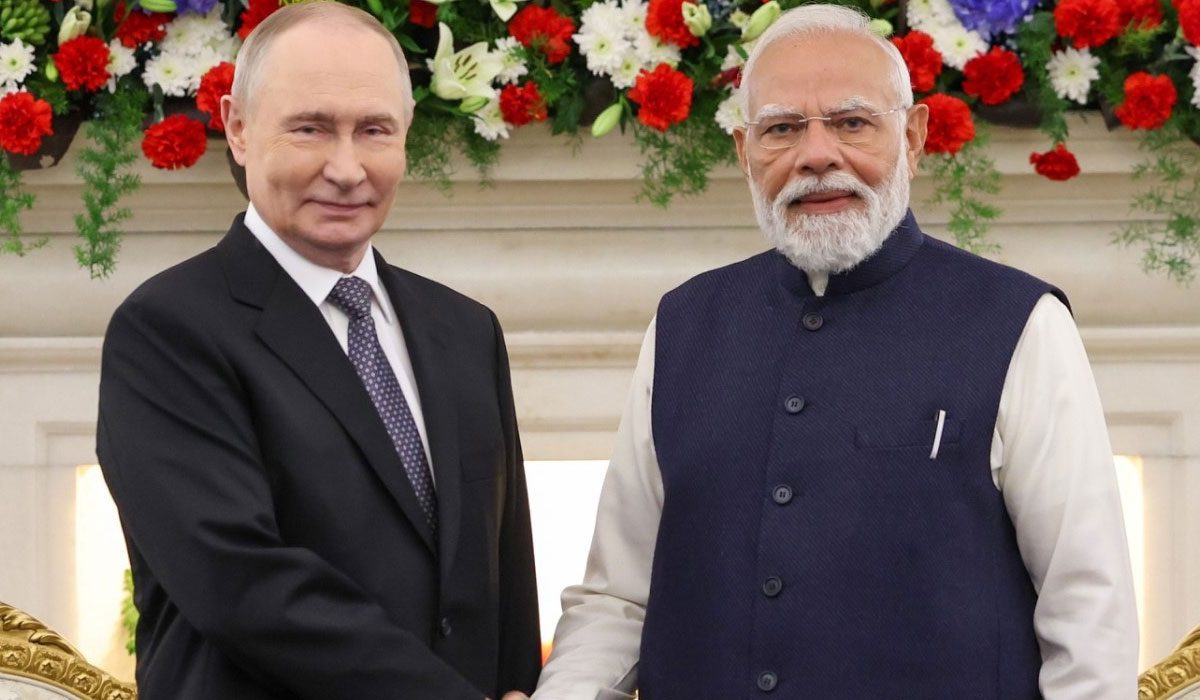
India and Russia formally elevated their relationship to a “Strategic Partnership” in 2000, later upgrading it to a “Special and Privileged Strategic Partnership.” Since then, annual summits between leaders of both countries have institutionalized cooperation across political, economic, defense, scientific, and cultural sectors.
Despite changing global alignments and growing geopolitical competition, New Delhi and Moscow have consistently emphasized strategic autonomy and mutual respect for national interests as defining principles of their partnership.
Today, India views Russia not only as a long-term defense partner but also as a major energy supplier and an important geopolitical actor in Eurasia. Russia, meanwhile, sees India as a stable strategic partner, a major emerging economy, and a balancing force within the evolving global order.
Defense Cooperation: The Backbone of Bilateral Relations
Defense cooperation continues to form the backbone of India–Russia relations. According to official Indian government data, a substantial portion of India’s military inventory remains linked to Russian-origin platforms and technologies. Over the years, the partnership has evolved from a buyer-seller model toward joint production and technology transfer.
Among the most notable examples is the BrahMos supersonic cruise missile project, widely considered one of the most successful defense joint ventures globally. The two countries have also cooperated in areas including fighter aircraft, air defense systems, submarines, military logistics, and advanced weapons systems.
Recent discussions between the two sides have focused increasingly on co-production under India’s “Made in India” initiative, alongside collaboration in defense manufacturing and advanced military technologies.
In 2025, India and Russia further deepened military logistics cooperation through the Reciprocal Exchange of Logistics Agreement (RELOS), which allows mutual logistical support and operational access between the armed forces of both countries. The agreement reflected a broader strategic effort to modernize bilateral defense coordination amid changing regional security dynamics.
Energy Partnership Driving Economic Ties
Energy has emerged as the single most important driver of India–Russia economic relations in recent years.
Following major changes in global energy markets, Russia became one of India’s largest suppliers of crude oil. Bilateral trade witnessed unprecedented growth, reaching nearly US$70 billion in 2024–25, according to Indian trade and industry data. Both governments have since set an ambitious target of increasing bilateral trade to US$100 billion by 2030.
The energy partnership now extends beyond crude oil to include natural gas, petrochemicals, and civil nuclear cooperation. The Kudankulam Nuclear Power Plant remains one of the flagship examples of Indo-Russian strategic energy cooperation.
Indian refiners have significantly increased imports of discounted Russian crude, helping India diversify energy sources and strengthen long-term energy security. Russia, meanwhile, has accelerated its pivot toward Asian markets as part of its broader economic diversification strategy.
Technology, Connectivity, and Scientific Cooperation
Although defense and energy dominate headlines, India and Russia are increasingly expanding cooperation in science, technology, digital innovation, and connectivity.
Official bilateral initiatives now include collaboration in information technology, pharmaceuticals, artificial intelligence, quantum technologies, cybersecurity, outer space, and higher education exchanges. Scientific cooperation mechanisms between the two countries continue to support joint research and innovation projects.
Connectivity has also become a growing strategic priority. Both countries have emphasized the importance of the International North-South Transport Corridor (INSTC) and the Chennai–Vladivostok Maritime Corridor as alternatives capable of reducing logistical costs and strengthening Eurasian trade connectivity.
For India, these corridors offer improved access to Central Asia and Russia. For Moscow, they support broader efforts to diversify trade routes and reduce dependence on Western-controlled logistical networks.
BRICS and the Multipolar Vision
India and Russia also share converging views regarding the emergence of a multipolar international order.
Both countries consider BRICS a strategic platform for reforming global governance institutions and increasing the influence of emerging economies in international decision-making. Within BRICS, New Delhi and Moscow have coordinated on issues ranging from financial reform and local currency settlements to technology cooperation and development financing.
Russia has publicly supported India’s expanding role within BRICS and repeatedly endorsed stronger South-South cooperation frameworks. India, meanwhile, continues to balance its Western partnerships while maintaining strong engagement with Russia and other Eurasian powers.
This balancing strategy reflects India’s broader doctrine of “multi-alignment,” while Russia views India as a key strategic partner capable of contributing to regional and global stability.
Soft Power and Cultural Diplomacy
Cultural and educational cooperation remains an important — though often underestimated — dimension of India–Russia relations.
For decades, Russian literature, cinema, science, and higher education have maintained significant influence in India, while Indian culture, cinema, yoga, and philosophy continue to enjoy wide popularity in Russia.
Academic exchanges, scholarships, cultural festivals, and scientific collaboration programs continue to strengthen people-to-people ties between the two societies. These soft power dimensions provide the relationship with a level of societal resilience that extends beyond political leadership or short-term geopolitical calculations.
Strategic Partnership in Transition
India–Russia relations today are undergoing a strategic transition rather than a strategic decline.
While defense cooperation remains central, the partnership is increasingly diversifying into energy security, trade connectivity, technological collaboration, and multilateral coordination within BRICS and the broader Global South.
In an era marked by geopolitical fragmentation and economic uncertainty, both countries continue to pursue a relationship grounded in strategic autonomy, pragmatic cooperation, and long-term geopolitical balancing.
As global alignments continue to evolve, the India–Russia partnership is likely to remain one of the defining relationships shaping Eurasian stability and the future architecture of the multipolar world order.
About the Author