



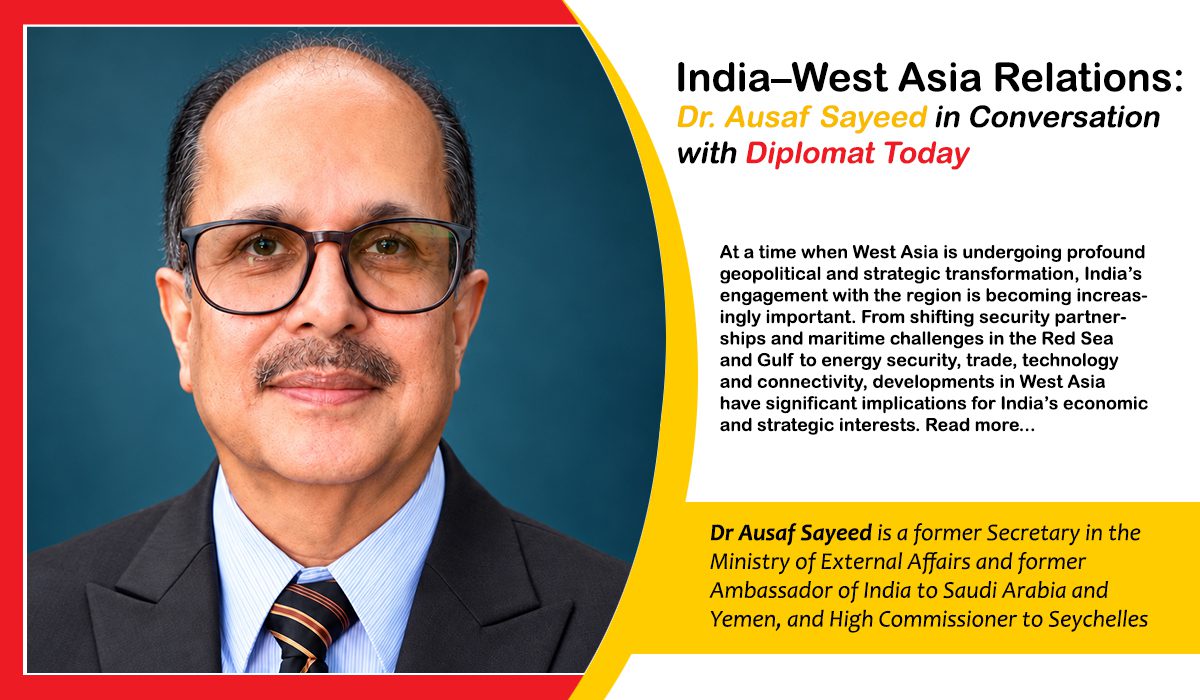
Navigating a New West Asia: India’s Strategic Choices Ahead
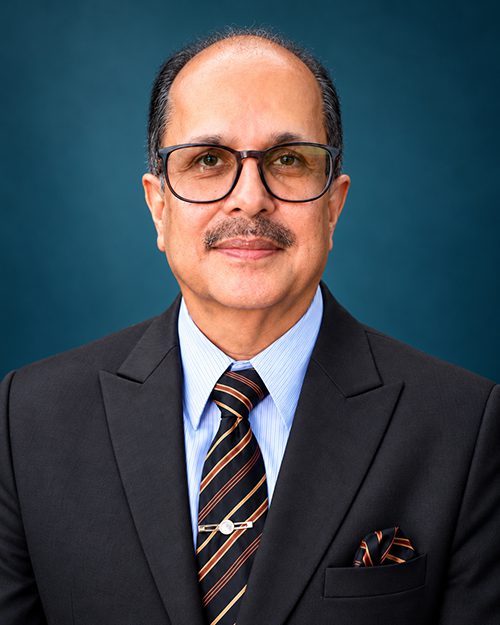
West Asia is experiencing significant geopolitical changes. How do you see the region’s strategic landscape evolving in the coming years?
Dr Ausaf: West Asia is moving towards a more plural and transactional order. The United States will remain the region’s strongest external military actor and an indispensable security partner for the Gulf, despite its complete withdrawal from Iraq. It is no longer able or always willing to define outcomes on its own, and its policies are increasingly selective. China’s economic reach, Russia’s selective security role, and the greater autonomy of Saudi Arabia, the UAE, Türkiye, Iran and Israel are producing overlapping partnerships rather than a clean transfer of primacy from one power to another.
The immediate drivers are conflict diffusion and strategic vulnerability. The Gaza war and the unresolved Palestinian question continue to constrain Arab–Israeli normalisation. Confrontation involving Iran can spread rapidly across Iraq, Lebanon, Syria, Yemen and the Gulf, and armed non-state groups retain the capacity to impose costs on larger states. At the same time, pressure on Hormuz and Bab el-Mandeb has made maritime access, energy infrastructure and resilient supply chains central to national security. Saudi–UAE differences and the divergent foreign policy priorities among Gulf states may also prevent the region from acting as a single bloc.
The likely outcome is managed multipolarity, not a stable balance of power. Regional states will hedge among partners, build issue-based coalitions, and invest more in their military, technological, and diplomatic capabilities. Periodic crises will persist, but so will de-escalation efforts, as all major regional economies depend on uninterrupted trade and investment. A more durable order would require limits on cross-border escalation, stronger states in the region’s conflict zones, and credible regional mechanisms to manage rivalry.
Saudi Arabia and other Gulf countries are developing new partnerships and strengthening regional cooperation. What could this mean for the future security architecture of the Gulf?
Dr Ausaf: The Gulf’s emerging security system will be layered. US bases, intelligence and advanced defence systems are likely to remain the foundation, but Gulf states are also building European partnerships, strengthening coordination with Asian powers and enhancing national capabilities. Emerging Saudi coordination with Pakistan and Türkiye in the form of the Mecca Joint Defence Agreement signed in August 2026 reflects this search for options. It is better seen as an effort to diversify security partnerships than as an emerging “Muslim NATO”, since differences in political priorities, threat perceptions and defence commitments continue to limit the prospects for a cohesive collective-security alliance.
The operational core of this architecture should be strengthened through better coordination on early warning, air and missile defence, counter-drone capabilities, maritime surveillance, and the protection of critical infrastructure. GCC institutions can provide the broader framework, supplemented by smaller groupings for specific operational tasks. Progress, however, will depend on managing Saudi–UAE differences over Yemen, Sudan, and wider regional alignments, while ensuring that new partnerships do not evolve into competing blocs.
A sustainable architecture therefore requires both external deterrence and internal confidence-building. Regular crisis contacts, notifications of exercises, agreed rules for naval and air encounters, and structured dialogue with Iran would reduce the risk of miscalculation. Qatar and Oman can continue to mediate, while the GCC and the Arab League can provide political legitimacy, even if they cannot enforce settlements. The most plausible future is a networked system that shares burdens and manages rivalry, not a single alliance that replaces the United States.
The security situation around Yemen, the Red Sea and Bab el-Mandeb remains important for international trade. What role can India play in promoting stability and protecting its economic and maritime interests?
Dr Ausaf: India has a direct stake in the security of the Red Sea–Suez route and Bab el-Mandeb, which connect Indian trade to Europe, the Mediterranean and East Africa. Disruption lengthens voyages, raises freight and insurance costs, and exposes Indian seafarers and overseas citizens. The risk is compounded by India’s dependence on Gulf energy: in March 2026 the Government assessed that India imported about 60 per cent of its LPG consumption and that roughly 90 per cent of those imports moved through Hormuz.
India should maintain a persistent but calibrated naval presence from the Gulf of Aden to the Gulf of Oman. Escort operations, anti-piracy patrols, hydrographic support, humanitarian assistance and rapid evacuation planning can protect Indian interests without drawing India into a combat coalition. India’s full membership of the Combined Maritime Forces, together with the Information Fusion Centre–Indian Ocean Region, IONS and IORA, gives it platforms for information-sharing while preserving operational autonomy.
Naval action must be paired with diplomacy and measures to reduce India’s economic exposure. India can support UN and Omani efforts towards a political settlement in Yemen, use its channels with Saudi Arabia, the UAE and Iran to advocate restraint, and press for accepted rules that keep both Hormuz and Bab el-Mandeb open to commercial shipping. At home, larger strategic reserves, diversified suppliers, flexible LNG and LPG contracting, contingency arrangements with shipowners and insurers, and greater use of ports on Oman’s Arabian Sea coast would reduce the cost of the next disruption. Operation Rahat’s evacuation of more than 4,600 people from Yemen in 2015 remains a useful benchmark for readiness.
India has strong historical, economic and people-to-people ties with the Gulf region. How can India continue to deepen these relationships while engaging constructively with all regional partners?
Dr Ausaf: Nearly 9.93 million Indians were living in the GCC states as of January 2026. In 2024–25, the GCC accounted for about 38 per cent of India’s total remittances, or US$52.44 billion, while trade with the GCC reached US$178.56 billion, more than 15 per cent of India’s global trade. India should deepen the institutionalisation of its Gulf ties. The India–UAE CEPA, the India–Oman CEPA, ongoing India–GCC FTA negotiations, and the India–GCC Joint Action Plan for 2024–28 provide a strong institutional framework. The priority is implementation: predictable market access, investment facilitation, energy and fertiliser security, and routine ministerial and working-level reviews.
People-to-people ties should be treated as strategic infrastructure. India and Gulf governments can improve recognition of skills, transparent recruitment, worker protection and digital grievance systems, while expanding cooperation in higher education, healthcare, tourism and startups. Faster consular coordination and regularly tested evacuation plans are essential during crises. A partnership that serves skilled professionals, entrepreneurs and students, as well as traditional labour flows, will be more resilient and balanced.
India should continue to engage each regional partner on its own merits. Its security and technology ties with Israel, economic partnerships with Arab states, connectivity interests through Iran and Chabahar, and support for Palestinian statehood can coexist if policy remains consistent on sovereignty, civilian protection, freedom of navigation, and peaceful dispute settlement. Strategic autonomy in this context means active engagement across divides, not equidistance for its own sake. India’s value lies in being a reliable partner that can cooperate without demanding exclusive alignment.
Looking beyond current conflicts, where do you see the greatest opportunities for India–West Asia cooperation in areas such as energy, investment, infrastructure, technology and connectivity?
Dr Ausaf: The largest opportunity is to move from commodity trade to shared assets and long-term value chains. In hydrocarbons, this means upstream stakes, strategic storage, refining and petrochemicals, backed by long-term LNG supply such as the QatarEnergy–Petronet arrangement beginning in 2028. In clean energy, Gulf capital and low-cost renewable resources can combine with Indian engineering and demand in green hydrogen, ammonia, grid interconnection and industrial decarbonisation. Success will depend on competitive costs, reliable offtake, common certification standards and timely commissioning.
Investment and trade can become a second engine. Recorded GCC FDI equity inflows into India totalled about US$31.58 billion from January 2000 to March 2026, with the UAE accounting for most of the stock. Gulf sovereign funds and private firms already invest in infrastructure, logistics, telecommunications and renewable energy. The India–GCC FTA negotiations, local-currency settlement, payments connectivity and investment-protection mechanisms can widen this flow. India should prepare bankable project pipelines and distinguish announced pledges from capital actually deployed.
As regional conditions permit, India should pursue connectivity through complementary routes rather than a single flagship. IMEC can link Indian ports to Gulf logistics, rail, energy and digital networks heading towards Europe, while Chabahar and the International North–South Transport Corridor provide access to Iran, Central Asia and Eurasia. Their value will depend on addressing gaps in infrastructure, customs interoperability, financing, insurance and security. Port partnerships in Oman and the UAE, resilient food and fertiliser supply chains, and modern storage and cold-chain systems can deliver gains even before the full corridors become operational.
Technology and human capital may yield the fastest visible results. Priorities include interoperable digital payments, artificial intelligence and data centres, cybersecurity, space applications, health technology, water management, education and startup finance. Joint research and industry partnerships would help translate these capabilities into commercially viable regional solutions. Over time, cooperation can also extend to reconstruction and triangular projects in Africa and the wider Indian Ocean, provided local political conditions and financing are sound.