


India and Africa: A Strategic Alliance Reshaping the Future of the Global South
India is set to host the fourth India-Africa Forum Summit this year, where leaders and representatives from across the African continent will convene to launch a new chapter in one of the most enduring, long-standing, and dynamic partnerships in the Global South.
The upcoming fourth India-Africa Forum Summit represents a renewed commitment to a shared future built on prosperity, innovation, and resilience. It provides a structured platform for translating political will into actionable frameworks. Economic cooperation between India and Africa is expected to be further strengthened in the areas of fintech, ICT, the digital economy, renewable energy and electric mobility, pharmaceuticals and healthcare, agro-processing and agriculture, and bio-minerals and manufacturing.
Egypt: A Gateway to Africa
As the partnership between India and Africa deepens, Egypt remains at the heart of this growing relationship. Egypt is a key partner for India in Africa and serves as a "gateway to Africa." Strong ties between India and Egypt in trade, investment, capacity building, and technology contribute to strengthening solidarity and cooperation between the two countries. Egypt plays a pivotal role in connecting nations and opening new avenues for economic and strategic cooperation. India and Africa are not merely partners, but active partners in shaping a more inclusive and balanced global order.
The India-Africa Summit Forum, launched in 2008, is the primary platform for cooperation in political, economic, and developmental fields. The 2008 Delhi Declaration laid the foundation for a partnership based on the principles of equality, capacity building, and the provision of concessional credit lines, along with a call for reform of the global governance system. The 2011 Addis Ababa Declaration focused on implementation, aligning with Africa's priorities, with a commitment to provide $5 billion in credit lines and expand cooperation in infrastructure, health, education, agriculture, and information and communication technology.
The third India-Africa Forum Summit (New Delhi, 2015) marked a significant turning point, with the participation of all 54 African countries and more than 40 heads of state/government. The "Delhi Declaration 2015" adopted the India-Africa Strategic Cooperation Framework (2015–2025), expanding cooperation to include key sectors and elevating relations to a comprehensive strategic partnership between India and Africa.
India was scheduled to host the fourth India-Africa Forum Summit from May 28 to 31, 2026. However, the Government of India and the African Union jointly decided to postpone the summit to a later date, taking into account the evolving global health situation in Africa.
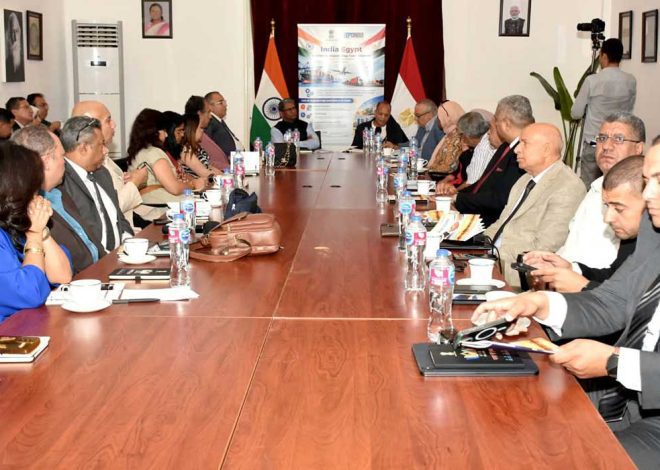
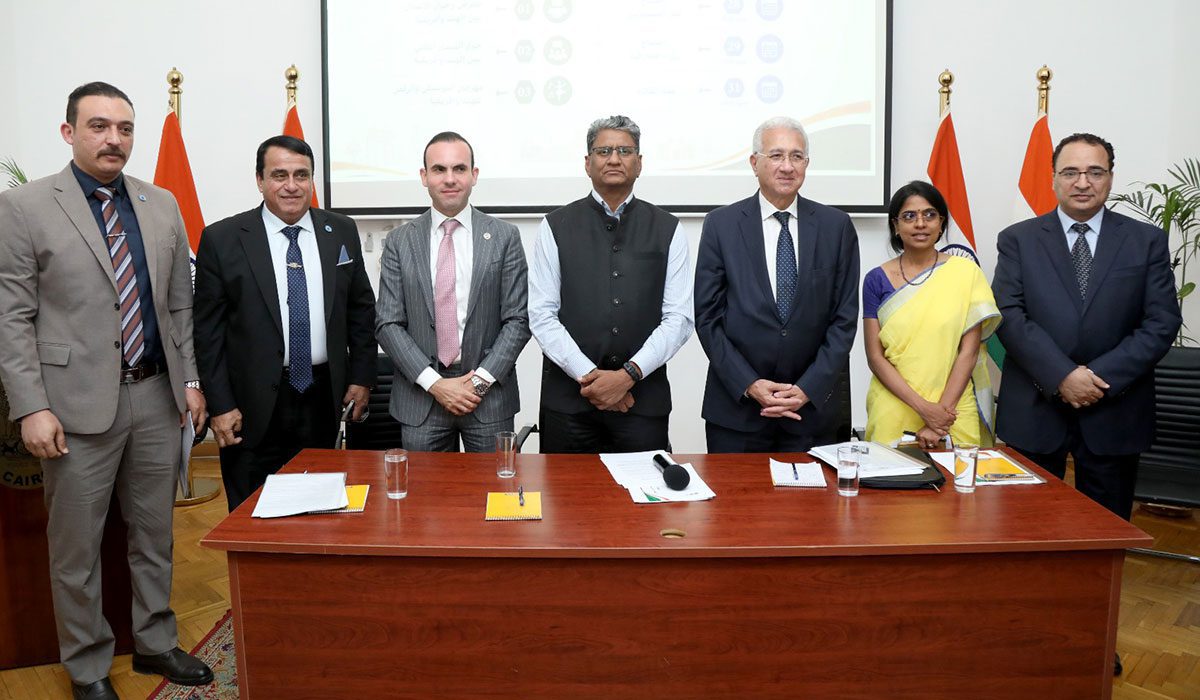
Prior to the fourth India-Africa Forum Summit this year, the Embassy of India in Cairo organized a conference to discuss the Forum and the history of India-Africa relations. The Embassy expressed its deep appreciation for the strong interest shown by all partners in the Summit and the India-Africa partnership, and looked forward to continued cooperation to further strengthen this vital partnership.
• Significant Positive Developments in India-Africa Relations
Indian Ambassador to Cairo, Suresh K. Reddy, affirmed the strong partnership between India and Egypt, noting that the India-Africa Forum Summit, scheduled to be hosted by New Delhi this year, will be the fourth edition of the forum. The third edition, held in 2015, saw the largest participation of African heads of state, reflecting the depth of the historical partnership between India and its African allies.
He explained that relations between India and Africa have witnessed significant positive developments over the past ten years since the last summit, pointing out that the volume of trade between the two sides has reached nearly $100 billion, while Indian investments in the African continent have exceeded $80 billion.
• 80,000 Scholarships from India to Africa Over 10 Years
He added that India has played a key role in supporting capacity-building efforts within the African continent by providing approximately 80,000 scholarships to government officials, students, and researchers from African countries, at a rate of between 8,000 and 10,000 scholarships annually. The Indian Ambassador to Cairo noted that political relations between India and Africa have also witnessed significant activity, with over 100 high-level visits exchanged and 17 new Indian embassies opened in Africa during this period, underscoring New Delhi's commitment to strengthening its presence and partnerships on the continent.
* Exchanging Visions and Ideas to Expand Areas of Cooperation and Partnership
Regarding the objectives of the fourth edition of the forum, Reddy explained that the world is currently facing increasing challenges in light of international conflicts and rapid technological advancements. He emphasized that the summit will discuss ways to enhance the strategic partnership between India and Africa in the areas of innovation, resilience, and inclusive transformation.
He added that the fourth edition of the forum will also include a meeting of the foreign ministers of India and African countries, as well as another meeting with diplomats from both sides, aimed at exchanging visions and ideas on expanding areas of cooperation and partnership between India and African nations.
• India’s Technology Offers a Practical Model for Africa’s Development
He noted that in recent years, India has made remarkable progress in advanced technologies, from space missions like Chandrayaan-3 and Aditya-L1 to artificial intelligence, digital public infrastructure, and the national mission for quantum technologies, reflecting India’s ability to deliver low-cost and scalable innovations.
He explained that as Africa faces similar challenges in infrastructure, financial inclusion, access to healthcare, and education, Indian technological solutions offer a practical model for inclusive and sustainable development, making them a cornerstone of India-Africa cooperation.
• Mutual Respect and Appreciation Between the Egyptian and Indian Peoples
For his part, Ambassador Mohamed Hegazy, former Assistant Minister of Foreign Affairs of Egypt, former Egyptian Ambassador to India, and a member of the Board of Directors of the Egyptian Council on Foreign Relations (ECFA), stated that Egyptian-Indian relations represent a model of genuine partnership based on mutual respect and cultural and human affinity. He explained that if we examine the history of Egyptian-Indian relations, we find that Pharaonic civilization was also linked to Indian civilization.
• India is a sincere and genuine partner for Africa
Hegazi recalled his participation in the first India-Africa Summit in 2008, noting that the Indian approach to dealing with the African continent differs from traditional Western models. He explained that it is based on a “genuine desire to advance the continent and achieve mutual benefit,” rather than imposing conditions or exerting hegemony.
He further explained that during the first India-Africa Summit, India offered a substantial support package for Africa, including 50,000 scholarships, along with grants and concessional financing through the Export-Import Bank of India (Exim Bank) at low interest rates. He also mentioned the availability of Indian technology to African countries. He emphasized that 54 African countries participated in the summit, all eager to acquire technology that they could not obtain from Western countries and to build their developmental capacities.
He pointed out that India has presented a model for economic integration based on technology transfer and localization within African countries, contributing to the stability of people in their homelands through development and mutual investment.
He added that the Indian model is one for developing the capabilities of the African continent while respecting its resources and history, creating a partnership rather than simply exporting goods or products, and localizing technology—something the African continent needs. This relationship is poised for further success.
He concluded by emphasizing that the India-Africa Summit represents an important mechanism amidst current regional and international turmoil, as it offers a model based on “friendship, development, and technology,” stressing that discussions about India and Africa “always come from the heart.”
About the Author